Blog

Rigging Lab Academy CORE Squad Training

Why Growing Rescue Programs Use RLA CORE Squad

Squad Is Where Rescue Training Stops Being Informal Most rescue organizations begin with motivated individuals. A few strong technicians train consistently, absorb outside instruction, attend conferences, build systems together, and gradually become the operational backbone of the team. Over time, these individuals start carrying increasing responsibility inside the organization. One person becomes the training officer. […]

Why Growing Rescue Programs Use RLA CORE Squad Read More »

RLA CORE Team Subscription

Why Rescue Departments Use RLA CORE Team for Operational Consistency

As Rescue Organizations Grow, Training Drift Multiplies Small crews can often maintain consistency through close operational proximity. Team members train together regularly, communicate frequently, and naturally reinforce each other’s understanding over time. Once organizations begin scaling beyond that size, the challenge changes completely. Different shifts begin developing different habits. Instructors emphasize different priorities. Operational terminology

Why Rescue Departments Use RLA CORE Team for Operational Consistency Read More »

RLA CORE CREW

Why Small Rescue Crews Use RLA CORE for Technical Rescue Consistency

Small Rescue Crews Operate Differently Than Large Departments Most small rescue teams do not have the luxury of large training divisions, dedicated instructional staff, or personnel assigned to a single operational discipline. Crew members often wear multiple hats. The same person handling anchors during one evolution may transition into edge operations, litter management, haul systems,

Why Small Rescue Crews Use RLA CORE for Technical Rescue Consistency Read More »

RLA CORE Essentials

Why Individual Rescuers Choose RLA CORE Essentials for Rope Rescue Training

RLA CORE Essentials Was Built for the Individual Rescuer Not every rescuer trains inside a large department with unlimited resources, dedicated instructors, or highly structured operational development. Many technicians are responsible for building their own competency outside of scheduled drills, annual refreshers, or occasional certification courses. That reality creates a problem. Without a consistent training

Why Individual Rescuers Choose RLA CORE Essentials for Rope Rescue Training Read More »

Rigging Lab Academy CORE

Why Teams Choose RLA CORE for Technical Rescue Training

Why Rescue Teams Are Moving Toward Structured CORE Training Most rescue teams do not struggle because they lack effort. They struggle because knowledge becomes fragmented over time. Different instructors teach different methods. Team members develop habits based on local culture rather than system logic. Equipment changes faster than operational understanding. Eventually, even experienced teams begin

Why Teams Choose RLA CORE for Technical Rescue Training Read More »

BFA Anchor- working near the edge

Anchors and Anchor Systems in Rope Rescue

Anchors and Anchor Systems in Rope Rescue Every rope rescue system begins with one decision: what will hold the load? Before the haul systems, before the litter movement, before the edge transition, there is the anchor. It is the structural foundation that determines whether the entire operation functions smoothly or fails under pressure. In technical

Anchors and Anchor Systems in Rope Rescue Read More »

patient packaging and litter movement

Litter Operations and Patient Evacuation in Technical Rescue

Litter Operations and Patient Evacuation in Technical Rescue Technical rescue environments rarely fail because of a lack of gear. More often, they fail because teams underestimate movement, terrain transitions, communication breakdowns, or the physical demands of transporting a patient through difficult ground. Litter operations sit at the center of all of it. From low-angle wilderness

Litter Operations and Patient Evacuation in Technical Rescue Read More »

Arizona Vortex Guidebook

Arizona Vortex Configuration Guide for Directional and Anchor Frame Rescue Systems

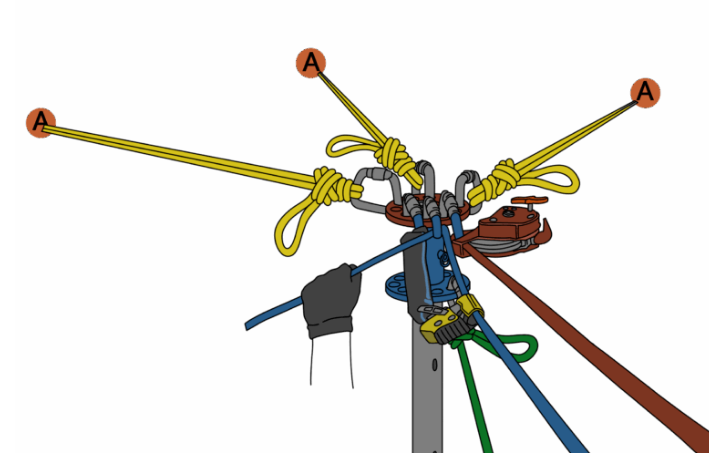
The Arizona Vortex is often taught as a collection of individual configurations: tripod, A-frame, gin pole, sideways A-frame, and easel-leg variants. But in the field, those configurations are never selected in isolation. Terrain, edge conditions, anchor availability, hauling direction, team size, load path, and operational constraints all shape the decision. This project reframes the Vortex

Arizona Vortex Configuration Guide for Directional and Anchor Frame Rescue Systems Read More »

two tensioned system raise

Teaching the Twin Tension Rope System in the Classroom

The Twin Tension Rope System — TTRS — represents one of the most significant shifts in rescue rigging philosophy in recent decades. For a long time, the standard approach meant one tensioned mainline doing the work while a second rope sat in a slack belay configuration, ready to catch a failure but contributing nothing to

Teaching the Twin Tension Rope System in the Classroom Read More »

pretension-back-tie-anchor-system

Mechanical Advantage and Anchor Systems in Rope Rescue

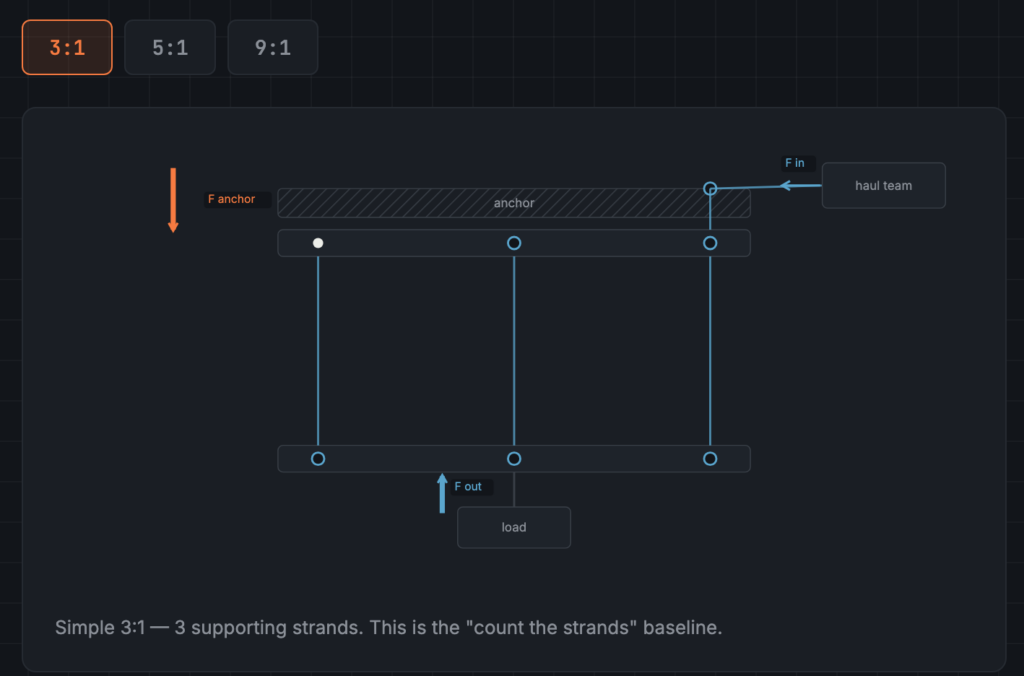
In rope rescue, mechanical advantage and anchor systems are never separate subjects. Every haul system depends on an anchor, and every anchor must be capable of resisting the forces a mechanical advantage system creates. That relationship is often misunderstood. Rescuers may focus on the efficiency of a 3:1 or 5:1 system, yet overlook how redirects,

Mechanical Advantage and Anchor Systems in Rope Rescue Read More »

Elevated Anchor Systems in Technical Rescue

Elevated Anchor Systems in Technical Rescue

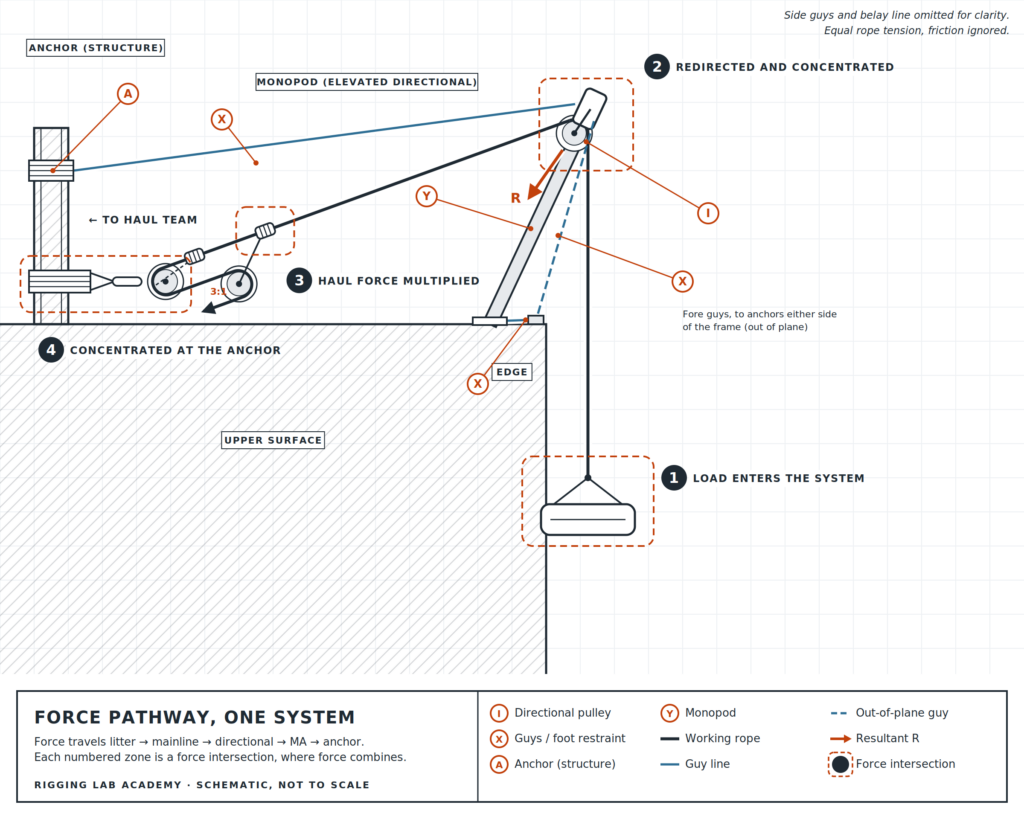
Understanding Artificial High Directionals as Structural Systems Artificial High Directionals, often referred to as elevated anchor systems, are sometimes treated as specialized accessories used only when terrain or structure presents a difficult edge. In practice, they are much more significant. These systems function as structural components that influence geometry, manage force vectors, improve movement efficiency,

Elevated Anchor Systems in Technical Rescue Read More »

Anchor Force Distribution in Technical Rescue Rigging

Anchor Force Distribution in Technical Rescue Rigging

Anchor Force Distribution in Technical Rescue Rigging Understanding anchor force distribution in technical rescue is the difference between a technician who follows rules and one who understands why those rules exist. This tool makes that understanding tangible — not through charts or formulas alone, but through live, interactive geometry that responds to your input and

Anchor Force Distribution in Technical Rescue Rigging Read More »

why nothing in technical rope rescue stands alone

Why Nothing in Technical Rope Rescue Stands Alone

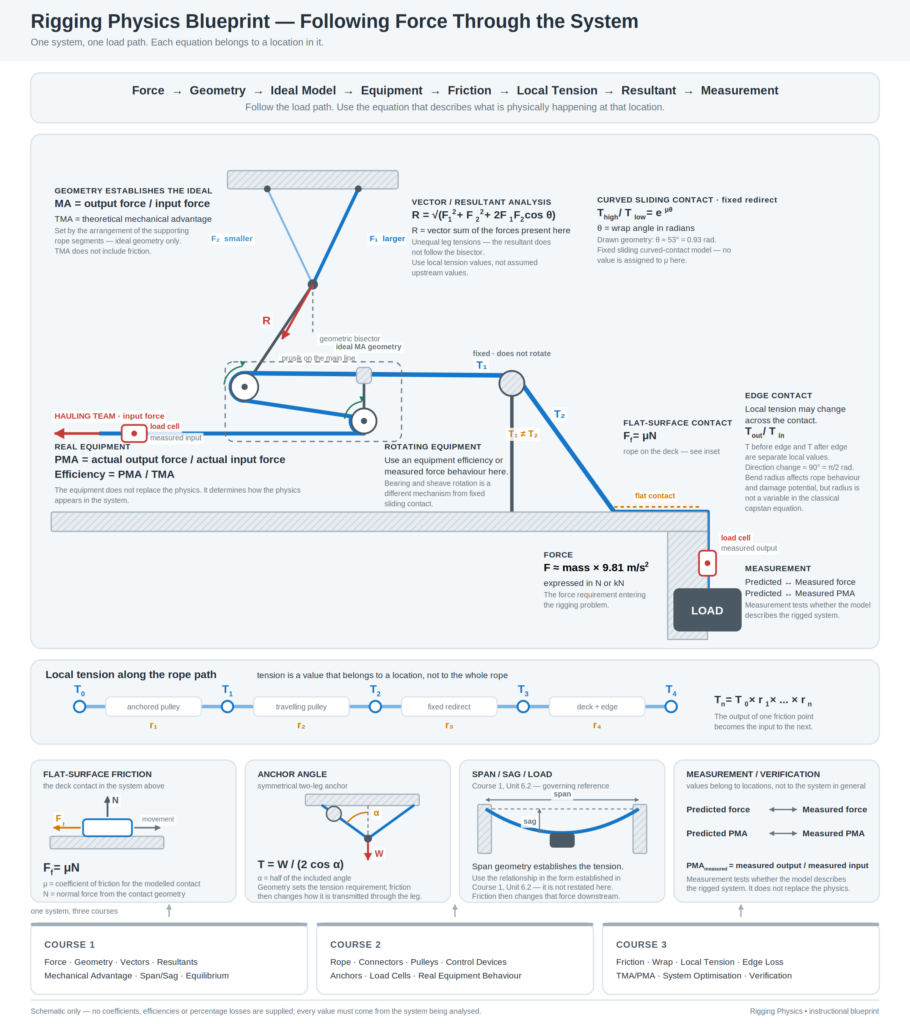
Why Nothing in Technical Rope Rescue Stands Alone Ask any experienced rope rescue practitioner what separates a competent technician from a truly dangerous one, and you will hear some version of the same answer: the dangerous one knows the pieces but not how they fit together. They can build a mechanical advantage system — but

Why Nothing in Technical Rope Rescue Stands Alone Read More »

course finder for technical rigging

Course Finder for Technical Rigging Training at Rigging Lab Academy

Course Finder for Technical Rigging Training at Rigging Lab Academy You know you need to learn more. The discipline is clear, the commitment is there, and somewhere in the RLA course library is exactly what you need — study guides, video demonstrations, reference materials, and critical analysis frameworks. The curriculum is comprehensive. Which is part

Course Finder for Technical Rigging Training at Rigging Lab Academy Read More »

scenario analysis for rigging

Scenario Analysis for Operational Rigging Decisions

Scenario Analysis for Operational Rigging Decisions You have a scenario. Not a question with a clean answer and not a system waiting to be verified — a situation with variables, constraints, and consequences that don’t resolve neatly on paper. The environment is a factor. The anchors are what they are. The load is moving in

Scenario Analysis for Operational Rigging Decisions Read More »

Technical Rescue Questions Answered from the RLA Knowledge Base

Technical Rescue Questions Answered from the RLA Knowledge Base

Technical Rescue Questions Answered from the RLA Knowledge Base You have a technical rescue question. Not a general one — a specific one. The kind that comes from being inside the discipline, from having studied the system or worked the scenario and landed on something you need answered precisely. You know enough to know the

Technical Rescue Questions Answered from the RLA Knowledge Base Read More »

rla-systems-check-hero

Rigging Pre-Operation Check Before the Load Goes On

Rigging Pre-Operation Check Before the Load Goes On You’ve built the system. The anchors are set, the rope is rigged, and the hardware is in place. You’ve run through it in your head more than once. And still — before you commit, before the load goes on, before the operation begins — there’s a moment

Rigging Pre-Operation Check Before the Load Goes On Read More »

rla-rigging-guidance-hero

Rigging Guidance When You Don’t Know Where to Start

Rigging Guidance When You Don’t Know Where to Start You’re somewhere between what you know and what you need to know. Maybe it’s a system configuration you haven’t built before. Maybe it’s a scenario that sits just outside your training. Maybe you’re a student who has absorbed the theory but hasn’t yet found the bridge

Rigging Guidance When You Don’t Know Where to Start Read More »

cross haul system

Cross Haul System Calculator — Building a Force Analysis Tool for Horizontal Rope Access

Building a Force Analysis Tool for Horizontal Rope Access TTRS Configuration  ·  Vortex AHD Leg Forces  ·  Exit Zone Analysis SPRAT Level 2 Required Skill  ·  Pre-operational Planning Tool Moving a package horizontally across a span — a patient in a litter, a gear load, a confined space casualty — sits at the intersection of

Cross Haul System Calculator — Building a Force Analysis Tool for Horizontal Rope Access Read More »

Highline Systems — Planning, Building, and Operating the Crossing

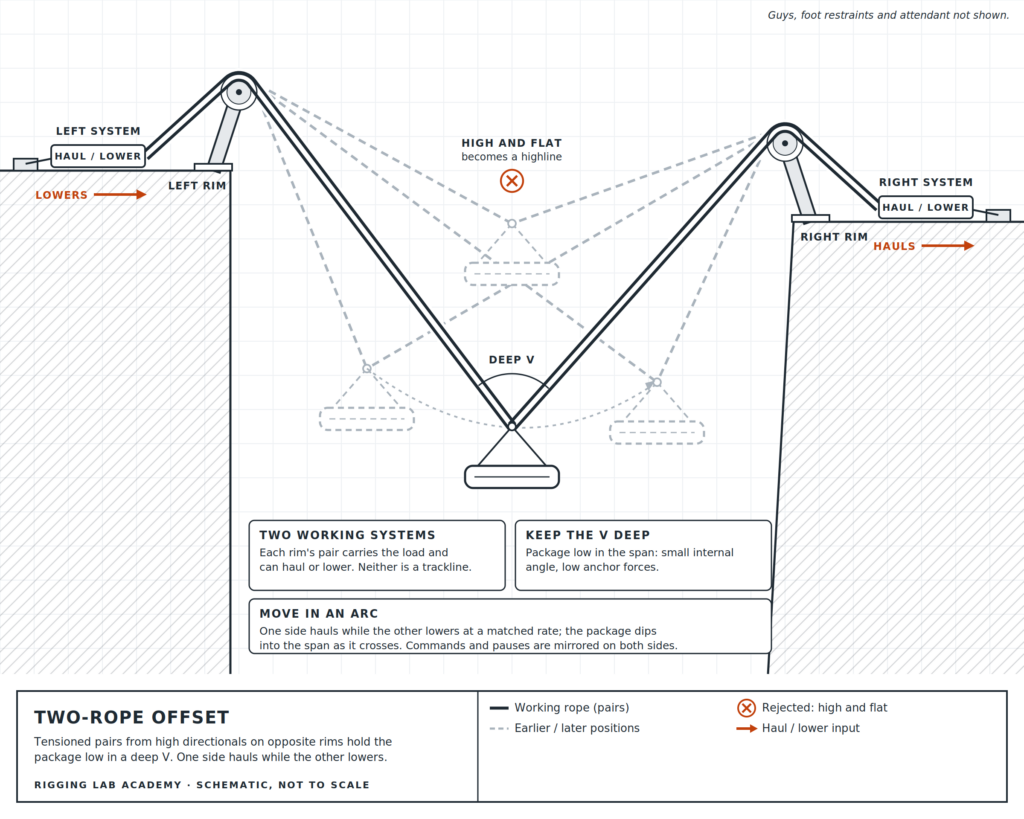
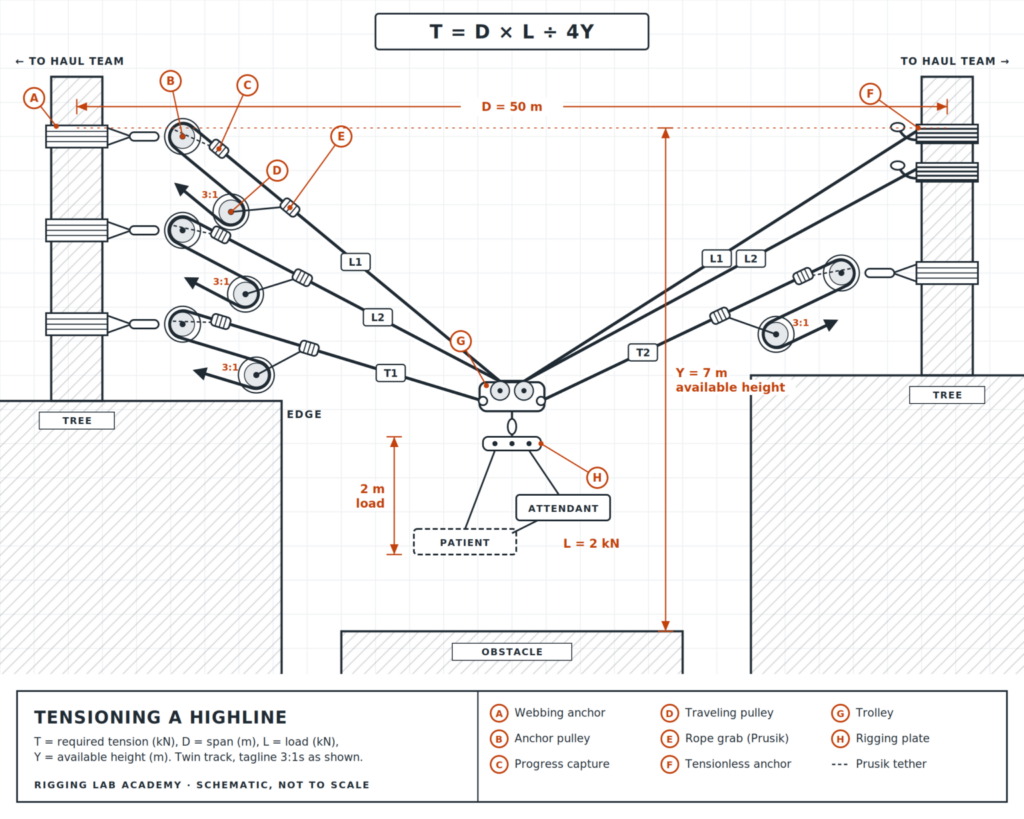
A highline is a tensioned rope system used to transport a rescuer and patient across a gap that cannot be crossed any other way — canyons, gorges, building-to-building, or industrial spans. When ground access isn’t an option, a highline is. This chapter covers both system types, the calculations that govern them, and how to operate

Highline Systems — Planning, Building, and Operating the Crossing Read More »