Floating Litter Operations on Tensioned Track Line Systems
Moving a patient through steep terrain often creates a conflict between control and efficiency. Ground-based litter movement can expose rescuers to unstable footing, vegetation, loose rock, and changing slope angles. Fully suspended systems eliminate terrain contact but may require more complex rigging and operational coordination. Floating litter operations provide an alternative approach by suspending the litter beneath a tensioned track line, allowing the load to move through the operational corridor while remaining separated from the terrain below.
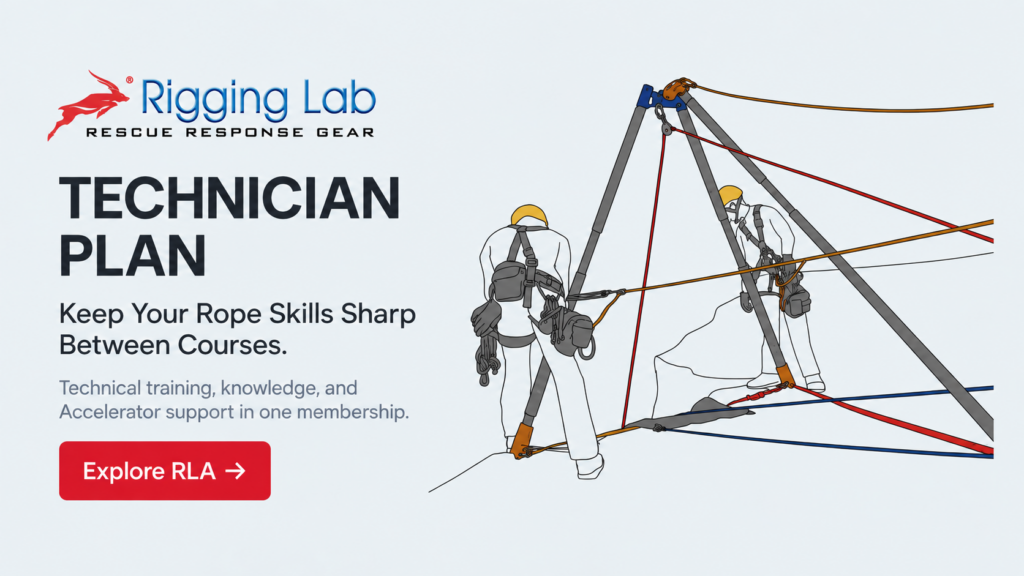
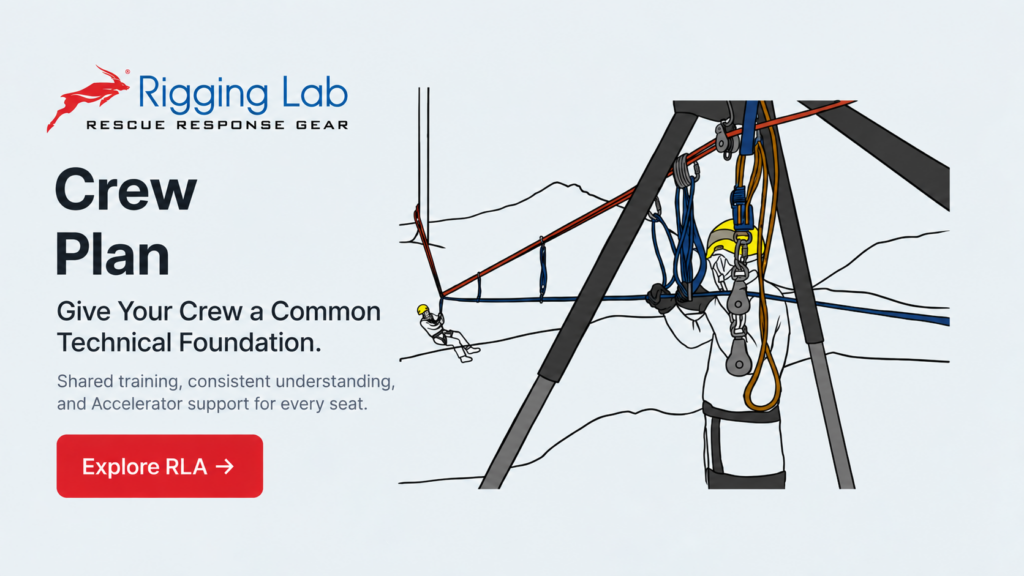
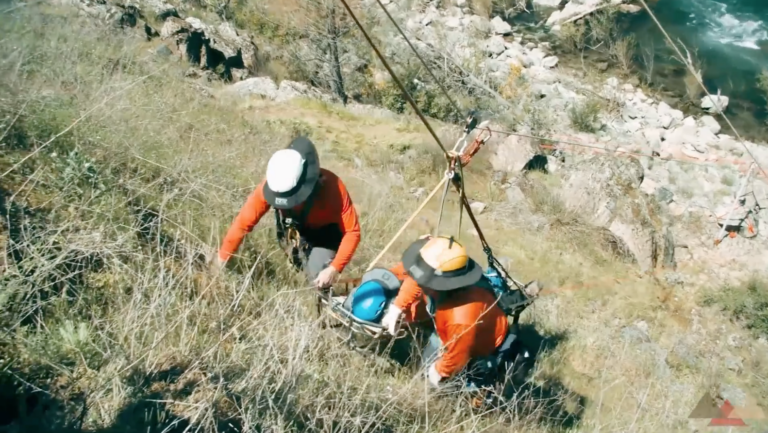
This evolution demonstrates a floating litter system supported by a tensioned track line anchored through an Arizona Vortex configured as a combination A-frame and gin pole structure. The system is established on a steep slope where rescuers must manage movement both downhill and uphill. Rather than dragging or carrying the litter across the terrain, the track line supports the suspended load while attendants guide the package through the movement corridor. The result is a controlled transportation system that combines terrain clearance, load stability, and coordinated movement management.
Understanding Floating Litter Systems
A floating litter operation is designed to maintain separation between the patient package and the terrain.
Rather than allowing the litter to contact the ground continuously, suspension components support the load beneath a tensioned track line.
This creates several operational advantages:
- Reduced terrain interference.
- Improved litter stability.
- Less physical handling of the patient.
- More predictable movement.
- Improved control through variable terrain.
The objective is not complete isolation from the environment. The objective is reducing the effects that terrain can have on patient movement and system performance.
The Role of the Tensioned Track Line
The track line serves as the primary movement corridor.
Once tensioned between anchor systems, the line establishes a predictable path through the operational area. Suspension components connect the litter to the track line and allow movement beneath the span while maintaining separation from the slope below.
The track line performs several functions simultaneously:
- Supports the movement corridor.
- Controls travel direction.
- Maintains terrain clearance.
- Provides a consistent route for the load.
Without the track line, rescuers would be forced to negotiate each terrain feature individually. With the track line established, movement becomes controlled by system geometry rather than terrain conditions.
Supporting the System with Artificial High Directionals
The Arizona Vortex serves as the structural support for the operation.
Configured as an A-frame and gin pole arrangement, the structure elevates the rope path and supports the tensioned track line system.
Its purpose is not simply anchoring.
The structure contributes by:
- Creating rope clearance.
- Improving line alignment.
- Supporting track line geometry.
- Establishing operational access.
- Maintaining consistent directional control.
The effectiveness of the floating litter system depends heavily on the geometry established by the support structure.
Suspending the Litter Package
The litter remains connected beneath the track line through a suspension system designed to support controlled movement.
Suspension components must maintain:
- Litter stability.
- Patient orientation.
- Controlled attachment.
- Consistent load transfer.
As the litter moves through the system, attendants remain with the package and provide guidance when required. Their role is not to carry the load but to help manage orientation, positioning, and movement through the operational corridor.
The suspension system becomes the interface between the patient package and the transportation system.
Moving Downhill and Uphill
One of the more significant aspects of this operation is the ability to support movement in both directions.
The system allows rescuers to:
- Walk the litter downslope while maintaining support.
- Reverse direction when required.
- Haul the litter uphill through the same corridor.
- Maintain continuous control during both phases.
This flexibility is important because many rescue environments require movement that cannot be defined solely as a raise or a lower.
Instead, rescuers must adapt to changing terrain and changing operational objectives while maintaining consistent control of the load.
Coordinated Control Across the System
Floating litter systems depend on coordination between multiple components.
Operators on both sides of the track line manage:
- Line tension.
- Load position.
- Travel rate.
- Suspension behavior.
- Terrain clearance.
Communication becomes a critical element of system performance.
Small adjustments to tension or positioning can influence how the litter moves beneath the track line. Effective coordination allows those adjustments to occur smoothly while maintaining stability throughout the operation.
Viewing the System as an Integrated Whole
The effectiveness of a floating litter operation does not come from any single component. The track line, suspension system, support structure, litter package, and operating teams all contribute to the movement of the load. Remove any one component and the system loses efficiency, control, or functionality.
This evolution demonstrates how those components work together as an integrated transportation system. The Arizona Vortex establishes the supporting geometry, the tensioned track line creates the movement corridor, the suspension system carries the litter, and rescuers on both sides coordinate movement throughout the operation. Together they create a controlled method for transporting a patient through terrain where conventional litter movement would be slower, more difficult, and significantly less efficient.