Twin Tension Rope System

Floating Litter Operations on Tensioned Track Line Systems

Floating Litter Operations on Tensioned Track Line Systems

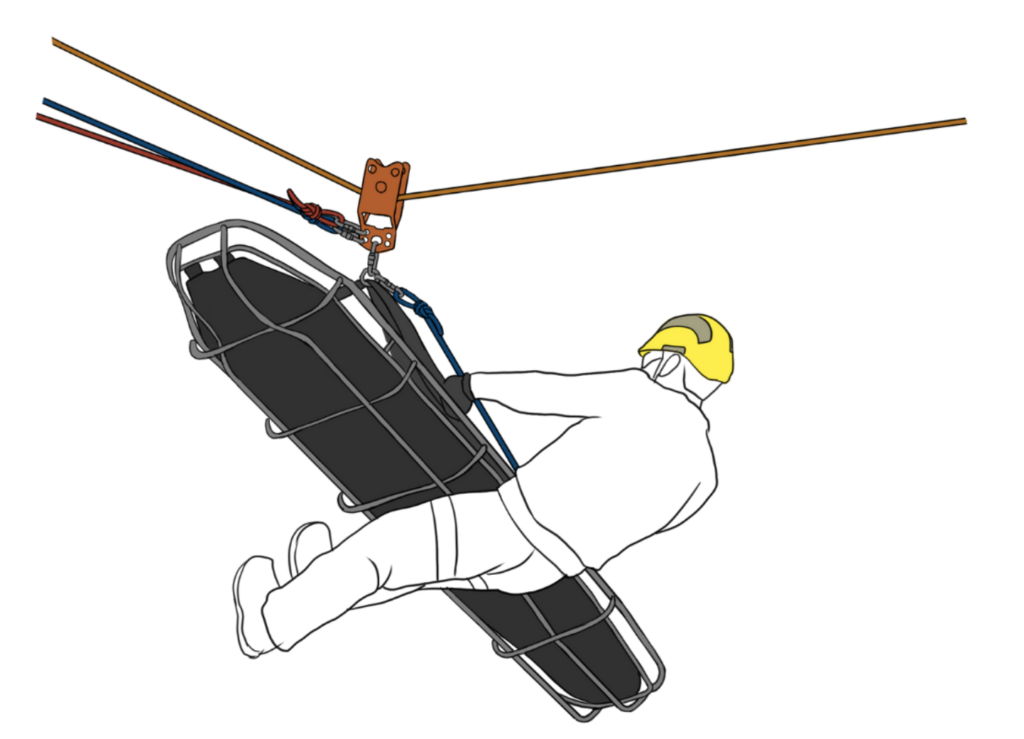
Floating Litter Operations on Tensioned Track Line Systems Moving a patient through steep terrain often creates a conflict between control and efficiency. Ground-based litter movement can expose rescuers to unstable footing, vegetation, loose rock, and changing slope angles. Fully suspended systems eliminate terrain contact but may require more complex rigging and operational coordination. Floating litter […]

Floating Litter Operations on Tensioned Track Line Systems Read More »

Sideways A-Frame Systems for Vertical Positioning and Horizontal Control

Sideways A-Frame Offset System for Vertical Positioning and Horizontal Control

Dynamic Directional Offsets and Active Load Positioning Offset systems are often described as methods for moving a load away from a cliff face or obstacle. While that description is technically correct, it does not fully explain the operational value of a dynamic offset. Unlike fixed transportation systems that move a load along a predetermined path,

Sideways A-Frame Offset System for Vertical Positioning and Horizontal Control Read More »

Directional Frame Raises and Edge Transition Management

Directional Frame Raises and Edge Transition Management

Directional Frame Raises and Edge Transition Management Vertical rescue operations often focus on the raising system itself. Mechanical advantage, hauling efficiency, and load control frequently dominate the discussion. Yet many difficult raises are not defined by what happens below the edge. They are defined by what happens when the load reaches it. The edge transition

Directional Frame Raises and Edge Transition Management Read More »

Monopod Supported Skate Block Track Line Systems

Monopod Supported Skate Block Track Line Systems

Monopod Supported Skate Block Track Line Systems Track line systems are frequently used when rescuers need to move personnel, equipment, or litter loads across terrain that cannot be negotiated safely on foot. While the track line itself provides the movement corridor, the effectiveness of the system often depends on how the rope path is managed

Monopod Supported Skate Block Track Line Systems Read More »

AHD Vortex Gin Pole in TTRS Skate Block

Two Tensioned Rope Systems and Tensioned Track Line Transitions in Canyon Rescue

From Two-Tensioned Rope Systems to Tensioned Track Lines Managing Redundancy, Load Sharing, and System Transitions in Canyon Rescue Technical rescue operations rarely fail because rescuers cannot build a lowering system. They fail because rescuers lose control of force during transitions. This becomes especially apparent in canyon environments where a rescue may begin as a vertical

Two Tensioned Rope Systems and Tensioned Track Line Transitions in Canyon Rescue Read More »

Artificial High Directionals

Artificial High Directionals When They Are Needed and How They Support Rescue Operations

Introduction Artificial High Directionals (AHDs) represent a decisive shift from basic anchor-based rigging into controlled, engineered system behavior. Teams that are competent in raise and lower operations often reach a point where efficiency, safety, and control begin to degrade—not because of poor technique, but because of environmental limitations. Edges, terrain transitions, and structural barriers introduce

Artificial High Directionals When They Are Needed and How They Support Rescue Operations Read More »

Horizontal Rope Rescue Systems and Highline Movement Techniques

Physics of Horizontal Rope Rescue Systems

Physics of Horizontal Rope Rescue Systems Why sideways movement is the real test of a rigger’s mind. Vertical rope work is the entry exam. Gravity defines the path, the system behaves predictably, and most mistakes are recoverable. But move a rescue load sideways—even fifty feet across a gap or diagonally off a tower—and everything changes.

Physics of Horizontal Rope Rescue Systems Read More »

Balancing Online and Hands-On Training -Knots for Force Multiplication in Rope Rescue - Steep Highline Calculations and Rigging Techniques

High Tension Highline Rigging Mastery for Technical Rope Rescue

The ability to span a canyon, river, industrial void, or structural gap is one of the most demanding skills in advanced rope rescue. While offsets, tracklines, and guided systems are essential tools, the true test of technician-level capability is the high-tension highline. Unlike everyday rigging, high-tension systems do not forgive misunderstandings in geometry or guesswork

High Tension Highline Rigging Mastery for Technical Rope Rescue Read More »

Horizontal Movement Systems in Rope Rescue

Counterintuitive Principles of Elite Rope Rescue Systems

1. The Ultimate System Test: What Happens If Everyone Lets Go? The “whistle test” is one of the simplest yet most powerful tools in rope rescue. It strips away the illusion of operator control and evaluates the system on pure mechanical resilience. If a sudden distraction — a falling rock, a hornet swarm, or a

Counterintuitive Principles of Elite Rope Rescue Systems Read More »

Two Tension Offset with Monopod and Side A-Frame

Two Tension Offset with Monopod and Side A-Frame

A two tension offset system allows rescuers to move loads laterally or diagonally—especially when vertical lowering is not an option. In this scenario, we use a monopod high directional on one side and a sideways A-frame on the other to shape and control the rope path. This approach is ideal for traversing terrain where edge

Two Tension Offset with Monopod and Side A-Frame Read More »

Mechanical Advantage Choices for Twin Tension Rope Systems

Mechanical Advantage Choices for Twin Tension Rope Systems

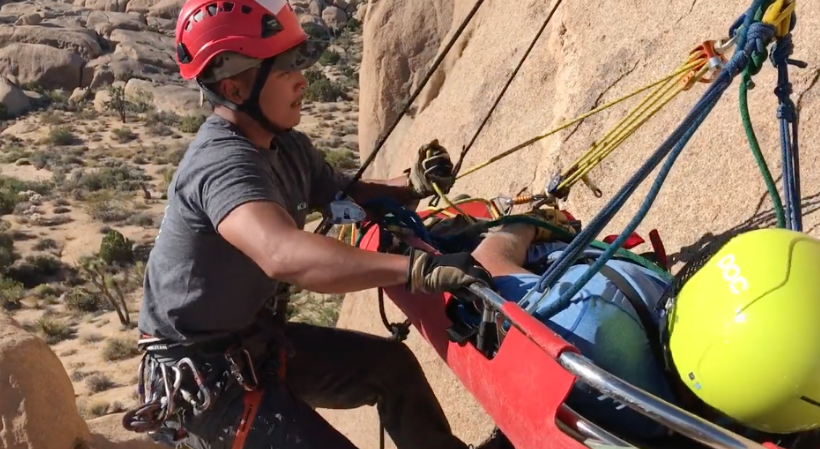
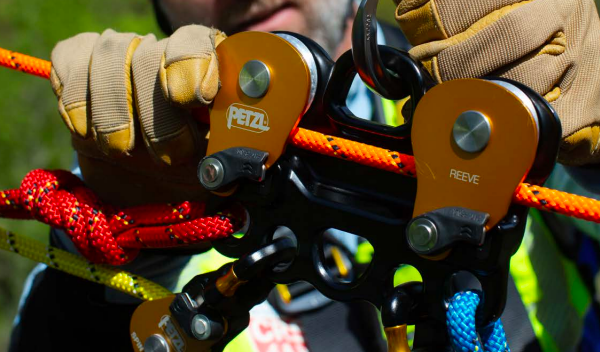
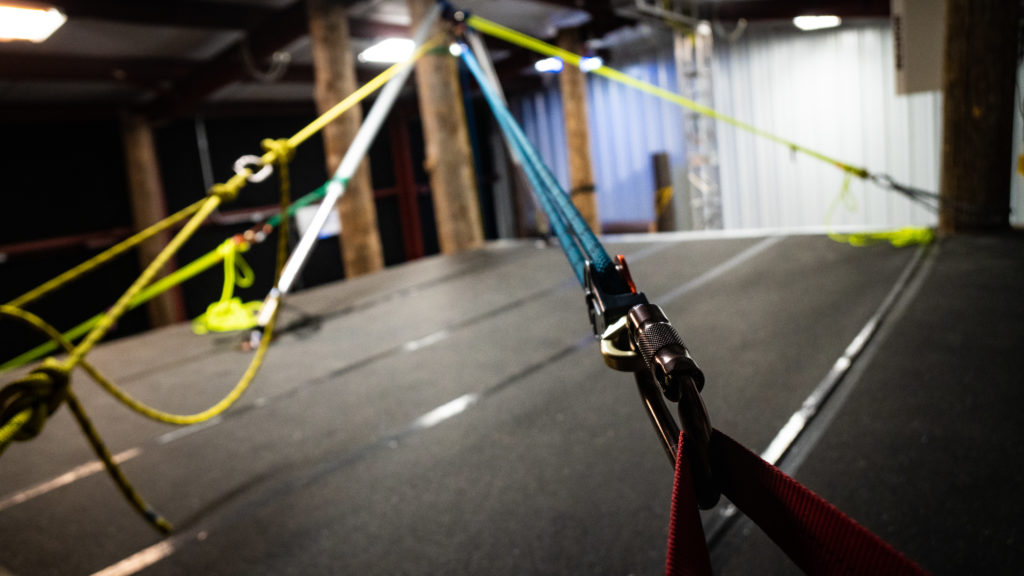
Mechanical Advantage Choices for Twin Tension Rope Systems Twin tension rope systems (TTRS) have changed the way modern rescue teams operate. Instead of one mainline and one belay, both ropes share the load equally, providing redundancy, balance, and smooth control. But while the setup looks clean, the question comes quickly in the field — what

Mechanical Advantage Choices for Twin Tension Rope Systems Read More »

Floating the Litter Uphill with a Dual Tension Tracking Line System

Floating the Litter Uphill with a Dual Tension Tracking Line System

Floating the Litter Uphill with a Dual Tension Tracking Line System In high-angle terrain where a manual carry is dangerous or impossible, rescuers often rely on rope systems that elevate, stabilize, and precisely control patient movement. One such system—a dual-tensioned tracking line anchored to a Vortex frame and gin pole—offers the perfect solution for floating

Floating the Litter Uphill with a Dual Tension Tracking Line System Read More »

climber fall rescue - 5 First Principles of Rescue Rigging

Climber Rescue Team Using Twin Tension Rope Systems

Climber Rescue Team Using Twin Tension Rope Systems A climber begins their ascent. Movements are steady and deliberate. Each step shows control. But even skilled climbers can fall. And when they do, preparation makes the difference and it is here we see a Climber Rescue Team Using Twin Tension Rope Systems. The Fall: Fast Response

Climber Rescue Team Using Twin Tension Rope Systems Read More »

twin tension canyon rescue

Twin Tension Canyon Rescue Controlled Descent in Vertical Terrain

A Canyon That Demands Precision Canyon terrain strips away the luxury of improvisation. Jagged cliff lines, steep drops, and a winding river below create a space where only structured systems can succeed. When the rescue team arrived on scene, they began organizing near their vehicle. One group unpacked rope kits and a backboard, while another

Twin Tension Canyon Rescue Controlled Descent in Vertical Terrain Read More »

ttrs canyon rescue highline

How to Rig a Two-Rope Offset Canyon Rescue with Twin Tension Systems

How to Rig a Two-Rope Offset Canyon Rescue with Twin Tension Systems Not all rope rescues move straight down. In canyon terrain, teams often face the challenge of crossing space laterally—not just vertically. When rescuers need to transport a littered patient across a wide void, a two-rope offset canyon rescue setup becomes the ideal solution.

How to Rig a Two-Rope Offset Canyon Rescue with Twin Tension Systems Read More »

Debunking the myth of parallel mechanical advantage

Why Parallel Haul Systems Don’t Double Mechanical Advantage in Rope Rescue

Debunking the Myth of Multiplying Mechanical Advantage In technical rope rescue, clarity and precision matter—especially when it comes to understanding mechanical advantage. One common belief that continues to circulate in the rescue and rigging world is that two parallel 3:1 systems hauling a single load equals a 6:1 advantage. It sounds intuitive. It looks clean

Why Parallel Haul Systems Don’t Double Mechanical Advantage in Rope Rescue Read More »

arbor rope access

Rope Access Techniques in Arbor Work

What Is Rope Access? Rope access is a method of working at height using ropes, harnesses, and friction devices. In arbor work, it allows arborists to move vertically and position themselves securely within a tree canopy. These systems rely on safe anchors and friction-managed descent tools to control movement. Instead of climbing with ladders or

Rope Access Techniques in Arbor Work Read More »

Two Tension Offset Systems for Complex Rope Rescue

Two Tension Offset Systems for Complex Rope Rescue

Two Tension Offset Systems in Rope Rescue Keyphrase: two tension offsetSlug: two-tension-offset-systemsMeta Description: Learn how two tension offset systems improve rope rescue operations across complex terrain. Discover their function, advantages, and setup. What Is a Two Tension Offset? A two tension offset system is a rescue configuration that allows horizontal or diagonal movement of a

Two Tension Offset Systems for Complex Rope Rescue Read More »

Two Tensioned Rope System Enhances Lowering Safety

Two Tensioned Rope System Enhances Lowering Safety

When lives—or critical equipment—must be lowered from lofty heights, there’s no room for compromise. Traditional single-line lowers place the full burden on one rope, one device, and one chance to get it right. The two tensioned rope system rewrites that script. By running two identical ropes—each through its own Maestro descender and edge protector—you gain

Two Tensioned Rope System Enhances Lowering Safety Read More »

two tensioned system raise sharing more equally

The Two-Tensioned Rope Raising System

The Two-Tensioned Rope Raising System In the high-stakes world of rope rescue and technical rigging, achieving safety and absolute control stands as our highest priority. When we need to move loads or personnel upward, the demands intensify, requiring systems that offer maximum security and efficiency. This brings us to the Two-Tensioned Rope System (TTRS), a

The Two-Tensioned Rope Raising System Read More »