Online Training Education

Gin Pole Failure and Rope Rescue Geometry

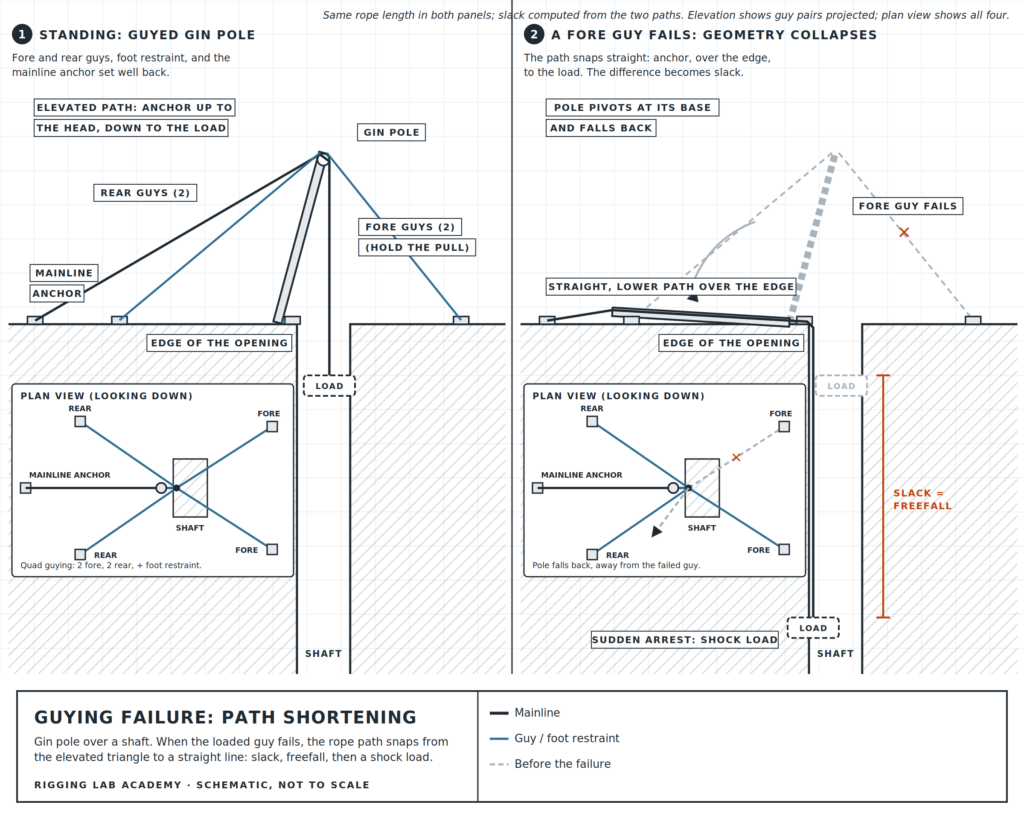
When a Guy Fails: The Hidden Consequences of Changing Rope Geometry Understanding gin pole failure, changing load paths, and why technical knowledge must be continually reinforced. A gin pole provides an elevated directional point that allows a rescue mainline to travel above an edge before descending to a suspended load. When properly supported, the arrangement

Gin Pole Failure and Rope Rescue Geometry Read More »
Rope Rescue Team Coordination Through Integrated Training

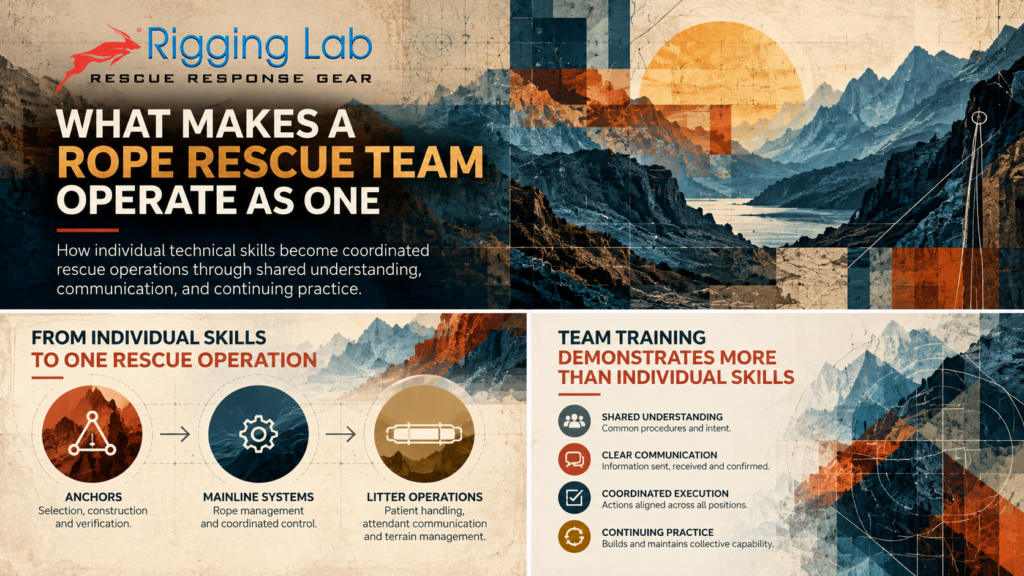
What Makes a Rope Rescue Team Operate as One How individual technical skills become coordinated rescue operations through shared understanding, communication, and continuing practice. From Individual Skills to One Rescue Operation A well-trained rope rescue team is built upon a collection of individual capabilities developed through instruction, repetition, and practical evaluation. Technicians learn to construct

Rope Rescue Team Coordination Through Integrated Training Read More »

When Familiar Training Meets Unfamiliar Conditions

When Familiar Training Meets Unfamiliar Conditions How rope rescue technicians develop the ability to retain, recognize, and apply what they have learned when circumstances change. The Difference Between Training Success and Operational Application A well-designed rope rescue course establishes the conditions under which technicians develop and demonstrate specific skills. Equipment is selected, training objectives are

When Familiar Training Meets Unfamiliar Conditions Read More »

Learning rigging

The Academic Blueprint: A 5‑Step Approach to the Fundamentals of Technical Rope Rescue

Welcome to the world of technical rope rescue. Real confidence is earned on the rope and at the edge—but it starts much earlier, with how you think about systems and why they work. Before a single rope is uncoiled, a rescuer’s most valuable tools are mindset and foundational knowledge. Technical rope rescue is not just

The Academic Blueprint: A 5‑Step Approach to the Fundamentals of Technical Rope Rescue Read More »

Inside Rigging Lab Academy CORE

CORE was built to solve that problem. Instead of treating courses, videos, illustrations, reports, podcasts, and study tools as separate products, CORE organizes them as different ways into the same knowledge base. The subject may be anchors, mechanical advantage, mainline systems, horizontal rigging, high directionals, litter operations, or program leadership. What changes is not the

Inside Rigging Lab Academy CORE Read More »

Rigging Lab Academy CORE Squad Training

Why Growing Rescue Programs Use RLA CORE Squad

Squad Is Where Rescue Training Stops Being Informal Most rescue organizations begin with motivated individuals. A few strong technicians train consistently, absorb outside instruction, attend conferences, build systems together, and gradually become the operational backbone of the team. Over time, these individuals start carrying increasing responsibility inside the organization. One person becomes the training officer.

Why Growing Rescue Programs Use RLA CORE Squad Read More »

RLA CORE Team Subscription

Why Rescue Departments Use RLA CORE Team for Operational Consistency

As Rescue Organizations Grow, Training Drift Multiplies Small crews can often maintain consistency through close operational proximity. Team members train together regularly, communicate frequently, and naturally reinforce each other’s understanding over time. Once organizations begin scaling beyond that size, the challenge changes completely. Different shifts begin developing different habits. Instructors emphasize different priorities. Operational terminology

Why Rescue Departments Use RLA CORE Team for Operational Consistency Read More »

RLA CORE CREW

Why Small Rescue Crews Use RLA CORE for Technical Rescue Consistency

Small Rescue Crews Operate Differently Than Large Departments Most small rescue teams do not have the luxury of large training divisions, dedicated instructional staff, or personnel assigned to a single operational discipline. Crew members often wear multiple hats. The same person handling anchors during one evolution may transition into edge operations, litter management, haul systems,

Why Small Rescue Crews Use RLA CORE for Technical Rescue Consistency Read More »

RLA CORE Essentials

Why Individual Rescuers Choose RLA CORE Essentials for Rope Rescue Training

RLA CORE Essentials Was Built for the Individual Rescuer Not every rescuer trains inside a large department with unlimited resources, dedicated instructors, or highly structured operational development. Many technicians are responsible for building their own competency outside of scheduled drills, annual refreshers, or occasional certification courses. That reality creates a problem. Without a consistent training

Why Individual Rescuers Choose RLA CORE Essentials for Rope Rescue Training Read More »

two tension twin tension lower cmc clutch with safety back tension

Rope Rescue Safety Building Systems Habits and Judgment

Safety in rope rescue is not the presence of a checklist or a perfect system on paper—it is a discipline woven into every decision a team makes. Skill alone does not guarantee safety, nor does good equipment. What guarantees safety is a mindset: the deliberate, consistent evaluation of risk, the disciplined use of redundancy, and

Rope Rescue Safety Building Systems Habits and Judgment Read More »

Essential Rope Rescue Skills On-Demand from knots to advanced techniques, all accessible online.

Learning Rope Rescue the Complete Guide to Building Skill Judgment and Team Capability

Rope rescue is not simply a technical craft—it’s a discipline shaped by standards, repetition, evaluation, and the collective judgment of a team. Most people who step into rope rescue training expect to learn knots, rigging, and mechanical systems. What they don’t expect is that the real growth comes from how they prepare, how they are

Learning Rope Rescue the Complete Guide to Building Skill Judgment and Team Capability Read More »

Why Context Shapes Competence in Rope Rescue Systems

Why Context Shapes Competence in Rope Rescue Systems

Rope Rescue Isn’t One Size Fits All Why Context Shapes Competence in Rope Rescue Systems… Across the broad spectrum of technical rescue, one hard truth stands out: rope systems don’t operate in a vacuum. Every setup, every training, and every load path must reflect the real context—from a wind turbine platform to an alpine ridgeline.

Why Context Shapes Competence in Rope Rescue Systems Read More »

Rapid Extraction Module Support-REMS Overview and Operations - Rescue Training That Tracks with Reality

Rescue Training That Tracks with Reality

The Problem Isn’t a Lack of Training Rescue Training That Tracks with Reality – Most rescue personnel don’t suffer from too little training. They suffer from too much of the wrong kind. Videos, seminars, new gear drops, PDFs, certification cycles—none of it really matters if, when the system fails at the edge, your team hesitates

Rescue Training That Tracks with Reality Read More »

Smarter Rescue Answers with the Rigging Lab Assistant

Smarter Rescue Answers with the Rigging Lab Assistant

Why “getting smarter rescue answer with the Rigging Lab Assistant” is important; Because clarity matters. Whether you’re planning a team deployment, troubleshooting a mechanical system, or assessing your readiness before a high-stakes scenario—every second counts, and so does every decision. That’s exactly why the Rigging Lab Assistant exists—and more importantly, why it’s just gotten better.

Smarter Rescue Answers with the Rigging Lab Assistant Read More »

Rope Rescue Teams and Rigging Systems - no nonsense rope rescue

No-Nonsense Rope Rescue Training

No-Nonsense Rope Rescue Training: Building Rescuers, Not Technicians Let’s cut through the noise and get real about what it takes to train effective rope rescuers. As a technical rope rescue instructor, your role isn’t just to teach knots and systems—it’s to prepare your team to handle real-world chaos. If your training focuses solely on textbook

No-Nonsense Rope Rescue Training Read More »

Mastering Mainline Systems

Mastering Mainline Systems

Mastering Mainline Systems Mastering Mainline Systems is about having the ability to effectively raise and lower a mainline system is essential in rescue operations, where safety, efficiency, and control are paramount. At the heart of this capability lies a deep understanding of system design, pre-planning, and mechanical principles. Mastery of these elements ensures not only

Mastering Mainline Systems Read More »

knot efficiency, safety factors, and high directionals improve rope rescue safety in dynamic operations.

Rope Rescue Essentials Knot Efficiency and Safety Factors

Mastering Rope Rescue: Integrating Knot Efficiency, Safety Factors, and Artificial High Directionals for Optimal Performance In the field of technical rope rescue, ensuring that every system component performs effectively is essential for safety. This guide combines insights into three core areas—knot efficiency, safety factors, and artificial high directionals (AHDs)—to help rescue teams assess and optimize

Rope Rescue Essentials Knot Efficiency and Safety Factors Read More »

Dynamic Directional Offset System-rescue equipment essentials for safe and efficient operations

Essential Rescue Tools for Safe Operations

Rescue Equipment Essentials In rescue operations, every decision matters, and every tool is part of a larger system designed to ensure the safety of both rescuers and those being rescued. At Rescue Response Gear, we recognize that your gear isn’t just equipment—it’s a vital part of the interconnected system that keeps your team safe and

Essential Rescue Tools for Safe Operations Read More »

rope rescue mechanical advantage haul raise and lower

Technical Rope Rescue: Comprehensive Training for Teams

Mastering Technical Rope Rescue: Comprehensive Training for Teams is essential for ensuring the proficiency and safety of your rescue operations. This program equips technicians, instructors, and administrators with the crucial skills and knowledge needed to execute and support effective and safe rope rescue missions, covering everything from equipment handling and knot craft to advanced mechanical

Technical Rope Rescue: Comprehensive Training for Teams Read More »

Rope Rescue Training for Fire Service and SAR

High-Angle Rescues with Dual Rope Systems

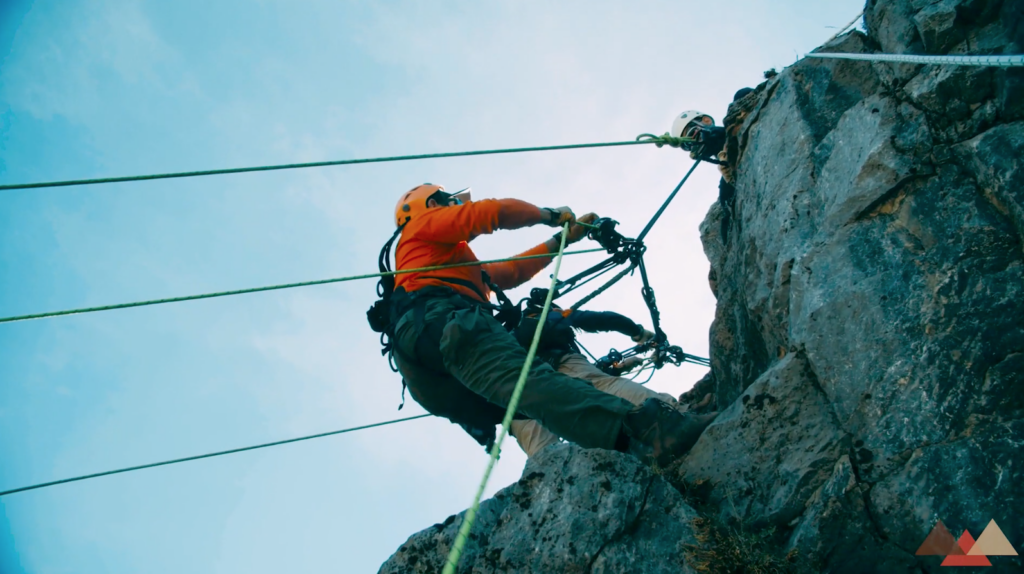
High-Angle Rescues with Dual Rope Systems High-Angle Rescues with Dual Rope Systems; precision and teamwork converge to tackle the multifaceted challenges of high-angle environments. The following recounts a compelling training scenario where adaptability and collaboration were pushed to the forefront, providing invaluable lessons for rescue teams. The Rescue Scenario The mission was clear: respond to

High-Angle Rescues with Dual Rope Systems Read More »