rope rescue

Coaching and Training in Rope Rescue

Basic Rope Rescue Operations Three Day Training Progression

I received several similar requests for ingredients of a “Basic Ropes Class”… Rope rescue demands clarity, discipline, and a layered approach to learning. Skills cannot be rushed, and they cannot be learned out of order. Each step builds the next, and each concept strengthens the rescuer’s ability to operate under tension and uncertainty. This three-day […]

Basic Rope Rescue Operations Three Day Training Progression Read More »

Horizontal Rope Rescue Systems and Highline Movement Techniques

Physics of Horizontal Rope Rescue Systems

Physics of Horizontal Rope Rescue Systems Why sideways movement is the real test of a rigger’s mind. Vertical rope work is the entry exam. Gravity defines the path, the system behaves predictably, and most mistakes are recoverable. But move a rescue load sideways—even fifty feet across a gap or diagonally off a tower—and everything changes.

Physics of Horizontal Rope Rescue Systems Read More »

Balancing Online and Hands-On Training -Knots for Force Multiplication in Rope Rescue - Steep Highline Calculations and Rigging Techniques

High Tension Highline Rigging Mastery for Technical Rope Rescue

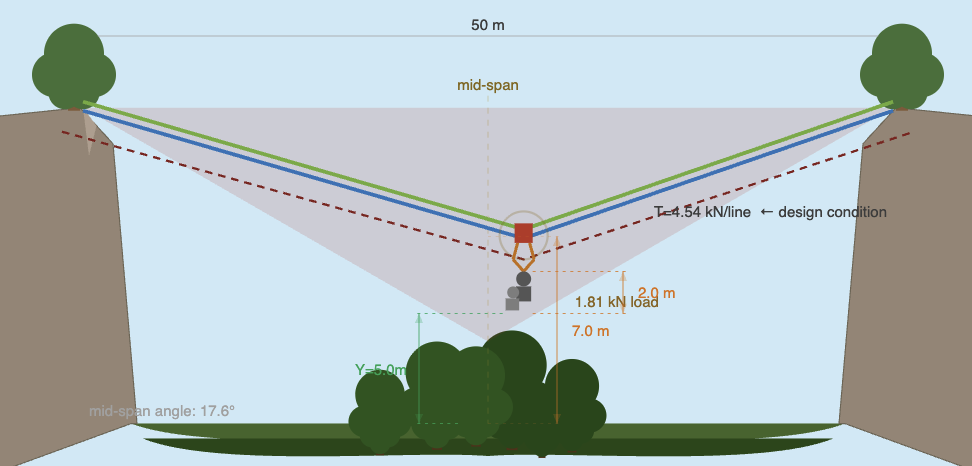
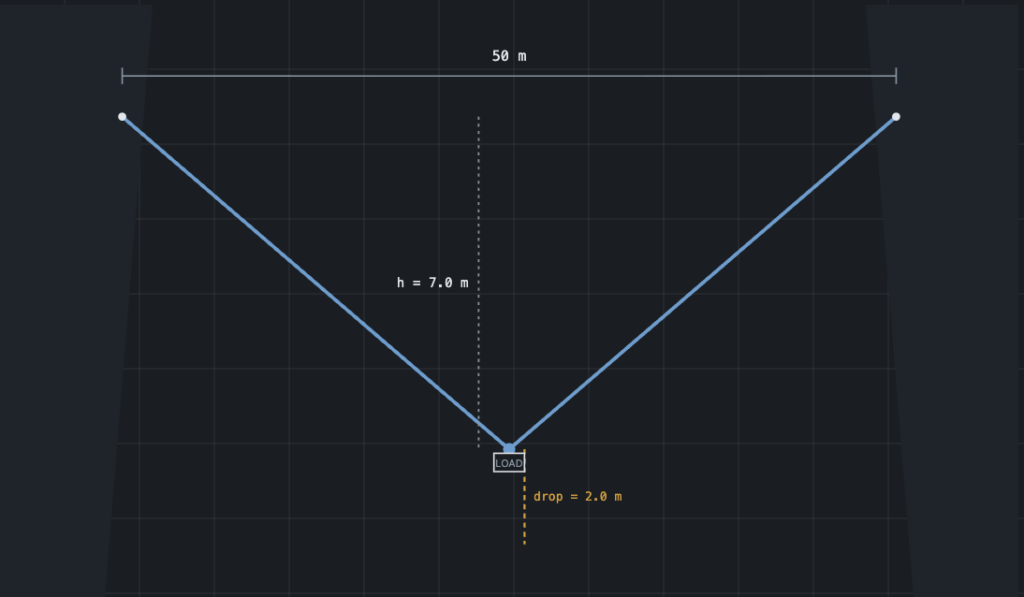
The ability to span a canyon, river, industrial void, or structural gap is one of the most demanding skills in advanced rope rescue. While offsets, tracklines, and guided systems are essential tools, the true test of technician-level capability is the high-tension highline. Unlike everyday rigging, high-tension systems do not forgive misunderstandings in geometry or guesswork

High Tension Highline Rigging Mastery for Technical Rope Rescue Read More »

Rope rescue training for veterans covers leadership, mechanical advantage, and advanced rigging skills and Hidden treasures in team leadership

Advanced Rigging Principles for Technical Rope Rescue

Modern rope rescue has outgrown the era of “strong gear plus strong backs.” At the advanced level, operations are built on system engineering, controlled redundancy, and a clear understanding of how forces, geometry, and human factors interact in real time. The Technical Operational Rigging Study Guide you started with is more than an exam—it is

Advanced Rigging Principles for Technical Rope Rescue Read More »

Horizontal Movement Systems in Rope Rescue

Counterintuitive Principles of Elite Rope Rescue Systems

1. The Ultimate System Test: What Happens If Everyone Lets Go? The “whistle test” is one of the simplest yet most powerful tools in rope rescue. It strips away the illusion of operator control and evaluates the system on pure mechanical resilience. If a sudden distraction — a falling rock, a hornet swarm, or a

Counterintuitive Principles of Elite Rope Rescue Systems Read More »

cross-haul rope access

Cross Haul Techniques for Rescue and Equipment Movement

Cross hauling is a controlled horizontal movement technique used to transport loads—such as a patient litter, heavy gear, or suspended equipment—between two points using independent hauling and lowering systems. The method relies on coordination between two rescuers or teams operating from opposite anchors, each managing their side’s tension to maintain balance and stability. When executed

Cross Haul Techniques for Rescue and Equipment Movement Read More »

Hybrid Patient Connection Setup with Skate Block and Tracking Line

Integrating Artificial High Directionals in Skate Block Systems

Integrating Artificial High Directionals (AHDs) within Skate Block Systems transforms a simple, low-tension rescue technique into a controlled, highly adaptable rigging platform. This integration enables teams to overcome edge trauma, improve resultant alignment, and achieve greater system precision—all without sacrificing the lightweight, small-team functionality that defines the skate block. In essence, an AHD turns a

Integrating Artificial High Directionals in Skate Block Systems Read More »

Anchors in Rescue and Life - backup anchors

Understanding the Purpose and Application of Backed-Up Anchor Systems

Backed-up anchor systems add redundancy and resilience to rope rescue and rigging operations. They serve as a safeguard against the failure of a primary anchor, which could otherwise cause catastrophic system collapse. By incorporating backups, teams create an additional layer of safety that reduces risk and improves overall reliability. The practice reflects a core principle

Understanding the Purpose and Application of Backed-Up Anchor Systems Read More »

climber fall rescue - 5 First Principles of Rescue Rigging

5 First Principles of Rescue Rigging

The Immutable Laws of Rigging: A Guide to First Principles   This document outlines five principles of rescue rigging—foundational truths that are non-negotiable and from which all safe practice is derived. These principles cannot be reduced further; they are the absolute realities that govern every decision made in a life-or-death scenario. 1. The Principle of

5 First Principles of Rescue Rigging Read More »

floating the patient terrain assessment

Building a Rope Rescue Team with Terrain Awareness and Training Manuals

Congratulations on stepping into leadership for your search and rescue ropes team. It’s no small task. Building a rope rescue team requires more than equipment — it demands a keen understanding of terrain, a plan to close knowledge gaps, and a structured training manual that evolves with your team. These three pillars form the backbone

Building a Rope Rescue Team with Terrain Awareness and Training Manuals Read More »

transitioning to two-tensioned rescue systems

TTRS Anchor Systems with Artificial High Directionals for Two Person Loads

Technical rope rescue demands anchor systems that are strong, efficient, and designed for redundancy. Building TTRS anchor systems with Artificial High Directionals (AHDs) is one of the most effective ways to achieve these goals, especially when managing a two-person load such as a patient and attendant in a litter. By combining the principles of sound

TTRS Anchor Systems with Artificial High Directionals for Two Person Loads Read More »

two tension twin tension lower single operator back tension safety

CMC Clutch Twin Tension Two Tension Lower

The CMC Clutch Twin Tension Two Tension Lower has become a defining standard in modern rope rescue systems. By integrating the Clutch into a Twin Tension Rope System (TTRS), rescuers can achieve smoother control, balanced load distribution, and built-in redundancy. Whether lowering or raising, the Clutch ensures safe transitions, adaptability across rescue environments, and confidence

CMC Clutch Twin Tension Two Tension Lower Read More »

sternal ascent method

Understanding the Single Rope Sternal Ascent Method

Understanding the Single Rope Sternal Ascent Method improves efficiency in single rope climbing by auto-advancing the hitch and allowing true hands-free operation. Single rope ascent methods have transformed modern rope climbing, particularly in arboriculture, rope access, and technical rescue. These systems allow climbers to move smoothly and efficiently up a fixed line with minimal energy

Understanding the Single Rope Sternal Ascent Method Read More »

Installing a Smooth Redirect with a Sling

Sling Redirect Techniques for Arborists and Rope Rescue

Sling Redirects Techniques for Arborists and Rope Rescue are one of the most useful tools in rope work. Whether you are climbing, rigging, or performing rescue operations, a redirect changes the rope’s path to improve efficiency, positioning, and comfort. Climbers often rely on natural redirects — running the rope around a branch, beam, or rock

Sling Redirect Techniques for Arborists and Rope Rescue Read More »

HAAS work rope system

Using the HAAS Modified Walking System for Ascending Through Limbs

A step-by-step guide to setting up and using the HAAS system for efficient vertical movement when climbing through obstructed environments.  So lets look into Using the HAAS Modified Walking System for Ascending Through Limbs Introduction Ascending ropes in tree care, rope access, or rescue environments often looks smooth and effortless when the rope hangs freely.

Using the HAAS Modified Walking System for Ascending Through Limbs Read More »

skate block highline

Skate Block Highline with Gin Pole Directional in Rope Rescue

Skate Block Highline with Gin Pole Directional in Rope Rescue – How a highline configured as a skate block with a monopod directional improves efficiency, control, and safety in complex terrain. Highlines are a cornerstone of modern rope rescue, allowing teams to move loads across obstacles such as rivers, canyons, cliffs, or collapsed structures. Traditionally,

Skate Block Highline with Gin Pole Directional in Rope Rescue Read More »