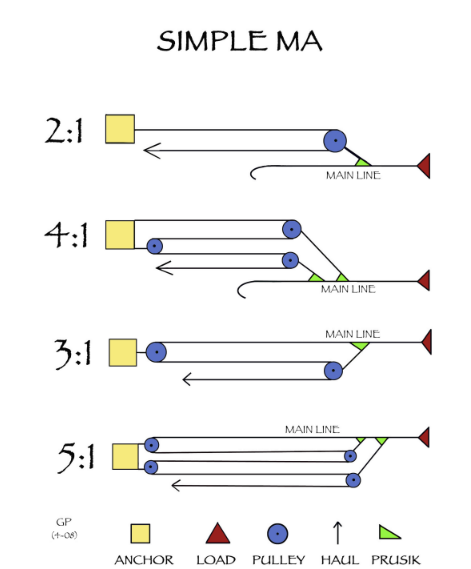
Mechanical Advantage

Rope rescue training for veterans covers leadership, mechanical advantage, and advanced rigging skills and Hidden treasures in team leadership

Advanced Rigging Principles for Technical Rope Rescue

Modern rope rescue has outgrown the era of “strong gear plus strong backs.” At the advanced level, operations are built on system engineering, controlled redundancy, and a clear understanding of how forces, geometry, and human factors interact in real time. The Technical Operational Rigging Study Guide you started with is more than an exam—it is […]

Advanced Rigging Principles for Technical Rope Rescue Read More »

mechanical advantage

Understanding Pulley Systems for Mechanical Advantage

Mechanical advantage lies at the heart of rope rescue, and pulleys are the tools that make it possible. By redirecting force and multiplying effort, pulley systems enable rescuers to move loads that would otherwise be unmanageable. Understanding how these systems work—specifically how rope anchoring, pulley placement, and rope routing affect efficiency—is essential for building safe,

Understanding Pulley Systems for Mechanical Advantage Read More »

Mechanical Advantage Choices for Twin Tension Rope Systems

Mechanical Advantage Choices for Twin Tension Rope Systems

Mechanical Advantage Choices for Twin Tension Rope Systems Twin tension rope systems (TTRS) have changed the way modern rescue teams operate. Instead of one mainline and one belay, both ropes share the load equally, providing redundancy, balance, and smooth control. But while the setup looks clean, the question comes quickly in the field — what

Mechanical Advantage Choices for Twin Tension Rope Systems Read More »

Building the Minimal Mechanical Advantage Kit

Building a Minimal Mechanical Advantage Kit with the 20–80 Rule

The 20–80 Rule in Action: Building the Minimal Mechanical Advantage Kit In rope rescue, complexity can be your enemy. Too many devices, too much gear, and too many choices under stress can slow a team down and increase risk. That’s where the 20–80 Rule comes in: with about 20% of the gear, you can accomplish

Building a Minimal Mechanical Advantage Kit with the 20–80 Rule Read More »

Choosing the Right Block and Tackle System for Vertical Rescue and Access

Block and Tackle System for Vertical Rescue and Access

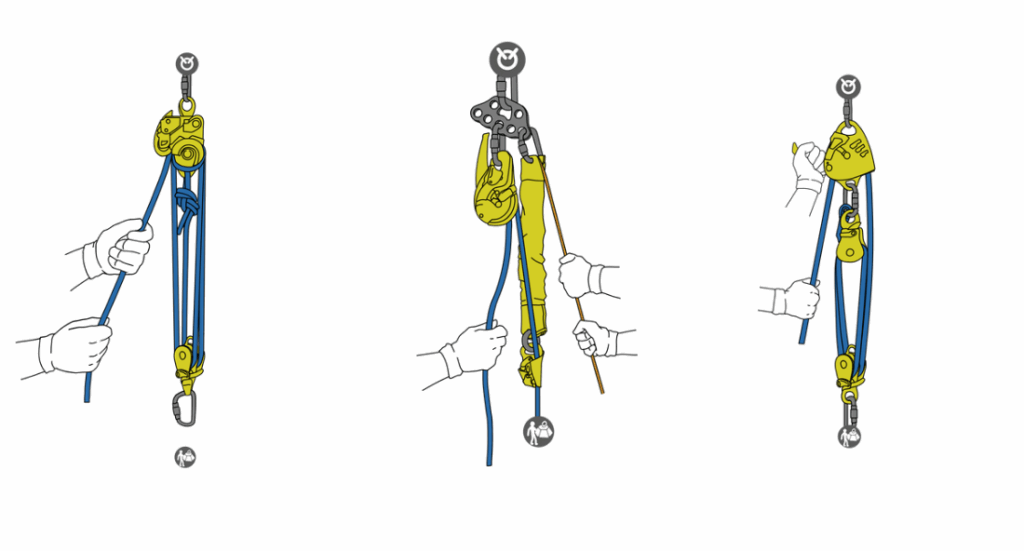
Block and Tackle System for Vertical Rescue and Access In vertical rescue and rope access, fast reversibility, mechanical advantage, and clean rope management can make or break a successful operation. Petzl offers three leading systems that address these needs from different angles: the TWIN RELEASE, the MAESTRO haul/lower system, and the I’D EVAC + JAG

Block and Tackle System for Vertical Rescue and Access Read More »

Debunking the myth of parallel mechanical advantage

Why Parallel Haul Systems Don’t Double Mechanical Advantage in Rope Rescue

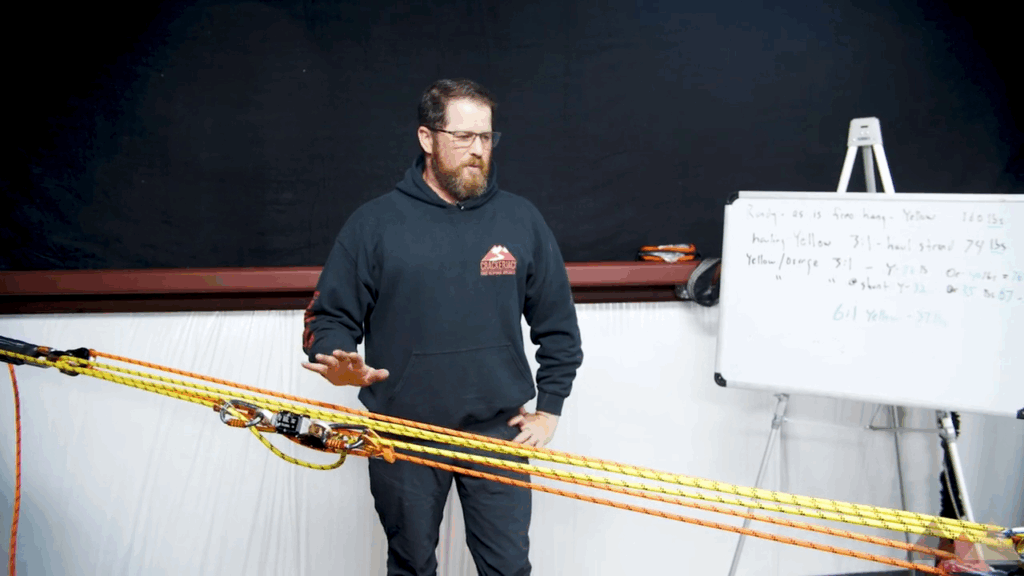
Debunking the Myth of Multiplying Mechanical Advantage In technical rope rescue, clarity and precision matter—especially when it comes to understanding mechanical advantage. One common belief that continues to circulate in the rescue and rigging world is that two parallel 3:1 systems hauling a single load equals a 6:1 advantage. It sounds intuitive. It looks clean

Why Parallel Haul Systems Don’t Double Mechanical Advantage in Rope Rescue Read More »

Building a 4:1 Mechanical Advantage System Using Two Double Pulleys and a Prusik

Building a 4:1 Mechanical Advantage System Using Two Double Pulleys and a Prusik

“Alright, what we’re building here is a 4:1 mechanical advantage system—simple, clean, and efficient. We’re using two double pulleys and a prusik to get the job done. We’ll start with our anchor. This could be a bombproof point—say, a rigging plate attached to an artificial high directional or a tree if we’re in the field.

Building a 4:1 Mechanical Advantage System Using Two Double Pulleys and a Prusik Read More »

Basic mechanical advantage systems enable efficient lifting with simple pulleys. Learn the essentials of the 3:1 Z-rig for safe rescues - How is Weight Redistributed Through a 3:1 Mechanical Advantage System? - Eccentric Progress Capture in Mechanical Advantage Systems

Eccentric Progress Capture in Mechanical Advantage Systems

Eccentric Progress Capture in Mechanical Advantage Systems Eccentric Progress Capture in Mechanical Advantage Systems in rope rescue systems – most mechanical advantage setups are designed to pull or contract—that is, to haul loads upward or horizontally. But not all scenarios are about lifting. Some require controlled lowering under load while maintaining tension and control. This

Eccentric Progress Capture in Mechanical Advantage Systems Read More »

petzl twin release system

Petzl Twin Release Kit

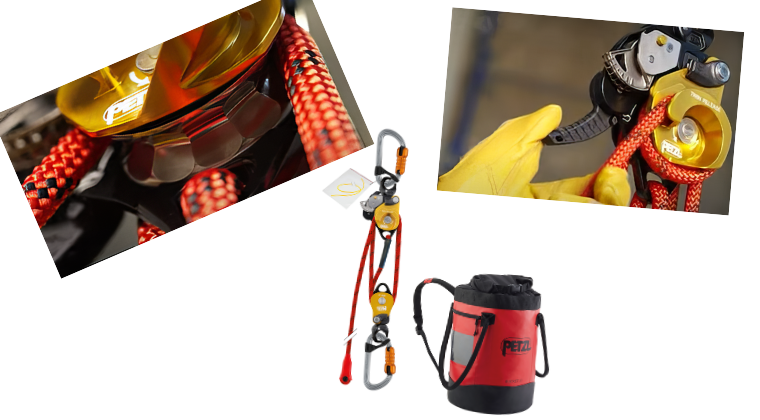
The Petzl TWIN RELEASE KIT is a pre-assembled, ready-to-use 4:1 hauling and lowering system, specifically designed for work access and rescue in industrial environments. This system is ideal for vertical work and allows for easy lowering and hauling of loads, which is particularly useful in confined spaces. It can also assist in tilting and orienting a litter

Petzl Twin Release Kit Read More »

Span Anchors in Rope Rescue - 3 essential skills every rope rescue student must master

3 Essential Skills Every Rope Rescue Student Must Master

3 Essential Skills Every Rope Rescue Student Must Master Rope rescue is a high-risk, high-reward discipline where failure is not an option. Whether you’re performing a rescue or training for one, there are 3 essential skills every rope rescue student must master to ensure safety and success. These core competencies—anchors, mechanical advantage systems, and critical

3 Essential Skills Every Rope Rescue Student Must Master Read More »

Basic mechanical advantage systems enable efficient lifting with simple pulleys. Learn the essentials of the 3:1 Z-rig for safe rescues - How is Weight Redistributed Through a 3:1 Mechanical Advantage System? - Eccentric Progress Capture in Mechanical Advantage Systems

How is Weight Redistributed Mechanical Advantage Systems?

How is Weight Redistributed Through Mechanical Advantage Systems?  A 3:1 mechanical advantage system, also known as a Z-rig, is a fundamental tool in technical rope rescue that enables rescuers to lift heavy loads with significantly less effort. But how exactly is the weight redistributed in this system, and what forces are acting on the pulleys,

How is Weight Redistributed Mechanical Advantage Systems? Read More »

Patient Packaging and Raise/Lower Techniques

Patient Packaging and Raise/Lower Techniques

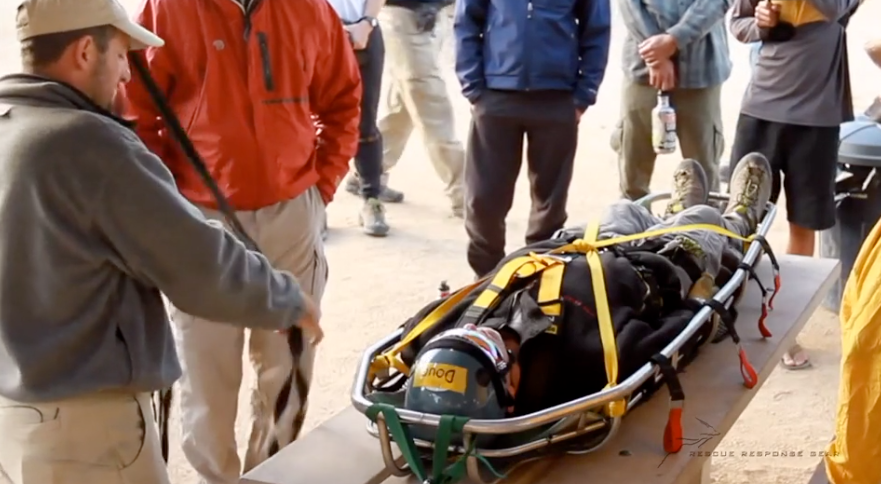
Patient Packaging and Raise/Lower Techniques: Building Essential Skills for Technical Rescue Technical rescue often involves navigating challenging terrains, high-risk environments, and critical medical conditions. One of the most essential skills for any rescue team is mastering patient packaging and raise/lower techniques. These practices ensure the patient is secure, safe, and stable during extrication, while also

Patient Packaging and Raise/Lower Techniques Read More »

Mastering Mainline Systems

Mastering Mainline Systems

Mastering Mainline Systems Mastering Mainline Systems is about having the ability to effectively raise and lower a mainline system is essential in rescue operations, where safety, efficiency, and control are paramount. At the heart of this capability lies a deep understanding of system design, pre-planning, and mechanical principles. Mastery of these elements ensures not only

Mastering Mainline Systems Read More »

Horizontal Systems Gear

Horizontal Systems Gear

Taglines Taglines are used in horizontal rope systems to control, stabilize, or maneuver a load laterally across a gap or down a slope. They are often simple tensioned lines attached to a load, providing directional control. Purpose: Taglines ensure the load moves along a predetermined path, reducing the chance of unwanted swinging or collisions with

Horizontal Systems Gear Read More »

CSR2 Pulley System

CSR2 Pulley System for Confined Space Rescue

Confined Space Rescue (CSR): Navigating Tight Quarters with Precision Confined space rescues are among the most challenging scenarios faced by rope rescue professionals. Limited access, restricted movement, and the need for precise rigging all combine to demand an advanced level of skill and specialized equipment. In such environments, the CSR2 Pulley System emerges as a

CSR2 Pulley System for Confined Space Rescue Read More »

Petzl Tibloc: A Mechanical Prusik

A Mechanical Prusik

Petzl Tibloc: A Mechanical Prusik Revolutionizing Rope Systems The Petzl Tibloc is a compact, lightweight mechanical rope-grabbing device often regarded as a mechanical Prusik. Its efficiency, ease of use, and versatility make it a valuable tool for rescue professionals, climbers, and technical riggers. This article explores how the Tibloc functions, its applications in mechanical advantage

A Mechanical Prusik Read More »

Prusik Hitches in Mechanical Advantage

Prusik Hitches in Mechanical Advantage

Understanding Prusik Hitches in Mechanical Advantage Systems: Friction, Efficiency, and Real-World Use The Prusik hitch is a fundamental tool in technical rope systems, renowned for its simplicity, versatility, and reliability. However, its use in mechanical advantage (MA) systems often sparks debate, particularly around the topic of friction and efficiency. This article delves into the nuances

Prusik Hitches in Mechanical Advantage Read More »

Friction in Mechanical Advantage - Mainline Rescue and Rigging Training

Friction in Mechanical Advantage

Friction in Mechanical Advantage Systems Friction is an unavoidable yet often underestimated factor in mechanical advantage (MA) systems. While MA systems are designed to amplify force, the presence of friction can significantly diminish their theoretical efficiency. Understanding how friction arises, its impacts, and methods to mitigate it is crucial for ensuring the success and safety

Friction in Mechanical Advantage Read More »

The CMC Capto’s ability to streamline complex systems while ensuring safety makes it an invaluable tool for modern rope rescue operations. Rescucender vs Capto vs Prusik

Mechanical Ascenders vs. Prusik Knots

Mechanical Ascenders vs. Prusik Knots When constructing rope rescue systems, particularly those involving 3:1 mechanical advantage setups, rescuers often choose between mechanical devices like the Petzl Rescucender or CMC Capto and the versatile Prusik Knot. Each has distinct advantages and limitations, and the choice depends on the specific demands of the operation. Let’s explore these

Mechanical Ascenders vs. Prusik Knots Read More »

Mastering Knot Passing in Rigging- Pulleys and PCDs ensure safety in MA systems. Discover fixed/movable pulleys and progress capture devices for controlled rescues.

Pulleys and Progress Capture Devices

Mechanical Advantage Systems in Rescue Operations: The Role of Pulleys and Progress Capture Devices In the world of rescue operations, pulleys and progress capture devices (PCDs) play essential roles in ensuring safety, control, and efficiency. Pulleys redirect and multiply forces, making lifting possible with reduced effort, while PCDs ensure that the load remains stable, preventing

Pulleys and Progress Capture Devices Read More »