Monopod Supported Skate Block Track Line Systems
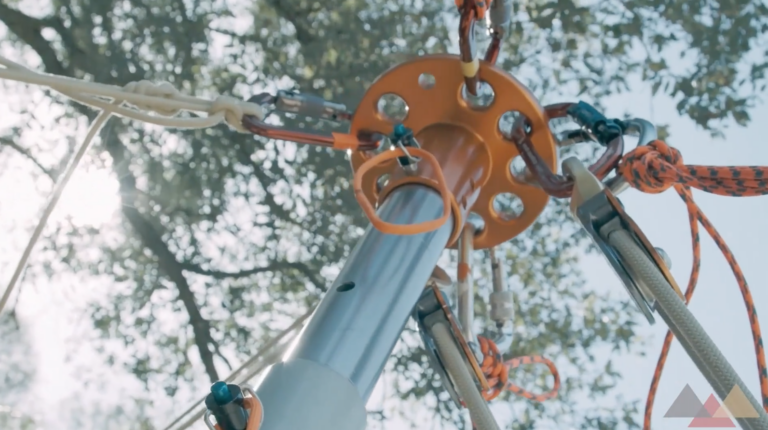
Track line systems are frequently used when rescuers need to move personnel, equipment, or litter loads across terrain that cannot be negotiated safely on foot. While the track line itself provides the movement corridor, the effectiveness of the system often depends on how the rope path is managed at critical transition points. Artificial high directionals are commonly introduced to improve rope alignment, reduce terrain interference, and create more efficient force paths between the load and the control systems. This operation demonstrates the use of a single gin pole configured as a monopod artificial high directional supporting a skate block track line system.
The monopod functions as the primary elevated directional within the operation. Rather than allowing ropes to run directly across terrain features, the structure raises the rope path above obstacles and creates a cleaner transition between the track line and the control systems. The skate block travels along the tensioned track line while the monopod maintains rope alignment and supports efficient movement throughout the evolution. Together, the components create a system designed to improve control, reduce friction, and maintain predictable movement across difficult terrain.
The Monopod as an Artificial High Directional
Artificial high directionals are often associated with vertical rescue operations, but their value extends well beyond raising and lowering systems.
In this configuration, the monopod serves as an elevated directional structure positioned at a critical point within the track line system. Its primary purpose is to improve rope geometry by lifting the working lines above terrain that would otherwise interfere with movement.
This provides several operational advantages:
- Improved rope clearance.
- Reduced terrain contact.
- More predictable rope alignment.
- Improved movement efficiency.
- Better load positioning.
Rather than becoming part of the movement system itself, the monopod improves how the movement system functions.
Supporting the Skate Block
The skate block serves as the traveling connection between the load and the track line.
As movement occurs, the skate block progresses along the tensioned track line while maintaining attachment to the suspended load below. The effectiveness of this movement depends heavily upon maintaining consistent alignment between the skate block, track line, and control systems.
The monopod assists by elevating the operating geometry and reducing directional changes that can introduce unnecessary friction or movement resistance.
The result is smoother travel and improved control throughout the movement cycle.
Creating a Cleaner Force Path
One of the primary benefits of an elevated directional is the creation of a cleaner force path.
Without elevation, rope systems often encounter:
- Terrain interference.
- Abrasion points.
- Sharp directional changes.
- Increased friction.
- Reduced movement efficiency.
By lifting the rope path above the terrain, the monopod helps establish a more direct relationship between the load, the skate block, and the operating systems.
This allows movement forces to remain more predictable while reducing unnecessary resistance within the system.
Managing Movement Through the System
As the load moves along the track line, rescuers maintain control through coordinated rope management systems.
The objective is controlled progression rather than unrestricted movement.
Operators regulate:
- Movement speed.
- Load position.
- System tension.
- Directional alignment.
The skate block remains free to travel along the track line while operators maintain overall control of the movement process.
This coordination becomes increasingly important when terrain features, changes in grade, or operational obstacles influence the path of travel.
Tension Management and System Performance
Track line performance depends heavily on proper tension management.
Insufficient tension can allow excessive sag and reduce movement efficiency. Excessive tension can increase demands on anchors, directional structures, and associated hardware.
The objective is establishing enough tension to support predictable movement while maintaining operational efficiency throughout the system.
Because the monopod elevates the rope path, it contributes to overall system performance by improving alignment between the tensioned track line and the associated control systems.
The structure does not eliminate the need for tension management, but it helps create the geometry necessary for effective system operation.
Using Monopod Directionals in Complex Terrain
The combination of a monopod artificial high directional and a skate block track line offers rescuers a practical solution when terrain prevents direct movement of personnel or equipment. By elevating the rope path and supporting efficient alignment, the monopod allows the track line system to operate with greater consistency and control.
The strength of the configuration lies not in complexity but in geometry. The monopod improves the relationship between the load, the track line, and the operating systems, while the skate block provides a controlled method for moving the load across the span. Together they create an efficient movement solution capable of transporting personnel, equipment, or rescue litters through terrain where traditional movement methods would be difficult or impossible.