Directional Frame Raises and Edge Transition Management
Vertical rescue operations often focus on the raising system itself. Mechanical advantage, hauling efficiency, and load control frequently dominate the discussion. Yet many difficult raises are not defined by what happens below the edge. They are defined by what happens when the load reaches it. The edge transition remains one of the most technically demanding portions of any litter movement operation because it represents the point where terrain, hardware, rope systems, rescuers, and patient packaging converge into a single operational space.
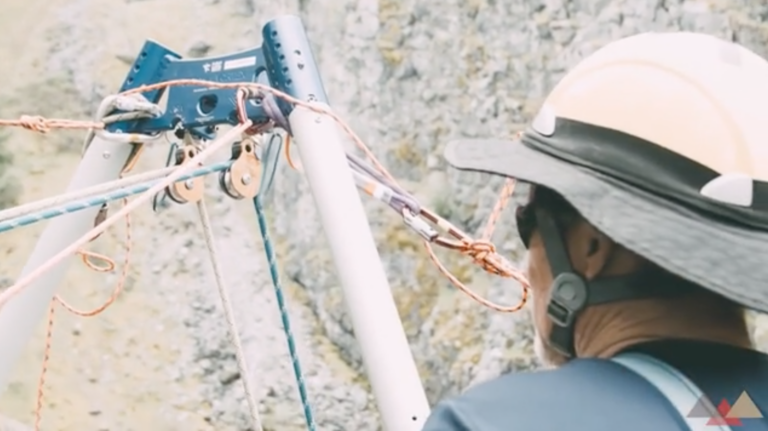
This directional frame raise demonstrates how an elevated directional structure can be used to improve that transition. Positioned at the cliff edge, the Arizona Vortex functions as an artificial high directional that redirects the rope path above the terrain, creating additional clearance between the load and the edge. Rather than forcing the litter to negotiate the cliff lip directly, the frame elevates the working line and establishes a cleaner movement corridor between the face below and the operational area above.
Why the Edge Transition Matters
In many rescue environments, the edge creates more problems than the vertical raise itself.
Without a directional structure, the rope path typically remains in direct contact with the terrain at the lip. As the litter approaches the top of the raise, rescuers must manage:
- Rope abrasion.
- Increased friction.
- Limited working space.
- Litter orientation.
- Attendant positioning.
- Patient clearance over the edge.
Each factor introduces complexity into the operation.
The challenge is not simply lifting the load. The challenge is converting a suspended load below the edge into a controlled load above the edge.
Using a Directional Frame to Elevate the Rope Path
The directional frame changes the geometry of the system.
By raising the rope path above the cliff edge, the frame creates separation between the working line and the terrain. This reduces direct contact at the lip while improving the approach angle between the load and the raising system.
Several benefits emerge from this elevated geometry:
- Improved rope clearance.
- Reduced edge friction.
- Better litter approach angle.
- Improved visibility for rescuers.
- Increased working space at the transition point.
The structure does not eliminate the edge transition. It makes the transition more manageable.
Managing the Litter Through the Transition
As the litter approaches the top of the raise, movement slows and control becomes increasingly important.
The operational objective shifts from gaining elevation to managing orientation and positioning.
Rescuers must coordinate:
- Litter attitude.
- Attendant movement.
- Edge clearance.
- Rope system progression.
- Patient stability.
Because the directional frame has elevated the rope path, the litter can approach the transition with less interference from the terrain. This allows rescuers to focus on positioning and movement rather than overcoming obstacles created by the edge itself.
Limiting Friction and Improving System Efficiency
Every directional change within a rope system introduces friction.
When a rope is forced directly across a cliff edge, friction becomes both a performance issue and a rope-management issue. Elevated directional frames help reduce this effect by redirecting the rope through a controlled path rather than allowing the terrain to dictate the rope’s movement.
The result is a more predictable system where force generated by the hauling team is transferred more efficiently through the rope path and into the load.
For long raises or heavily loaded litter systems, even modest reductions in friction can significantly improve overall system performance.
Operational Access at the Edge
Another advantage of the directional frame is improved access for rescuers operating near the transition zone.
The frame creates space between the rope path and the terrain, allowing personnel to work around the litter without competing directly with loaded rope systems. This becomes particularly important when managing attendants, patient packaging, and final positioning during the completion of the raise.
The structure therefore supports both movement and access simultaneously.
Elevating the Transition Rather Than Fighting It
The value of a directional frame raise is not found in the frame alone. It is found in how the structure changes the relationship between the rope system, the terrain, and the load. By elevating the rope path above the edge, the directional creates a cleaner movement corridor, reduces friction, improves operational access, and simplifies one of the most difficult phases of a vertical rescue operation.
In many situations, the most effective way to manage an edge transition is not to fight the terrain at the lip. It is to move the rope path above it. Directional frames provide rescuers with a practical method for doing exactly that, transforming a difficult transition point into a controlled and predictable movement environment.
Peace on your Days
Lance