
Dynamic Directional Offsets and Active Load Positioning
Offset systems are often described as methods for moving a load away from a cliff face or obstacle. While that description is technically correct, it does not fully explain the operational value of a dynamic offset. Unlike fixed transportation systems that move a load along a predetermined path, a dynamic directional offset allows rescuers to actively control load position throughout the operation. Movement becomes a product of tension management, directional control, and coordinated system adjustment rather than simple hauling or lowering.
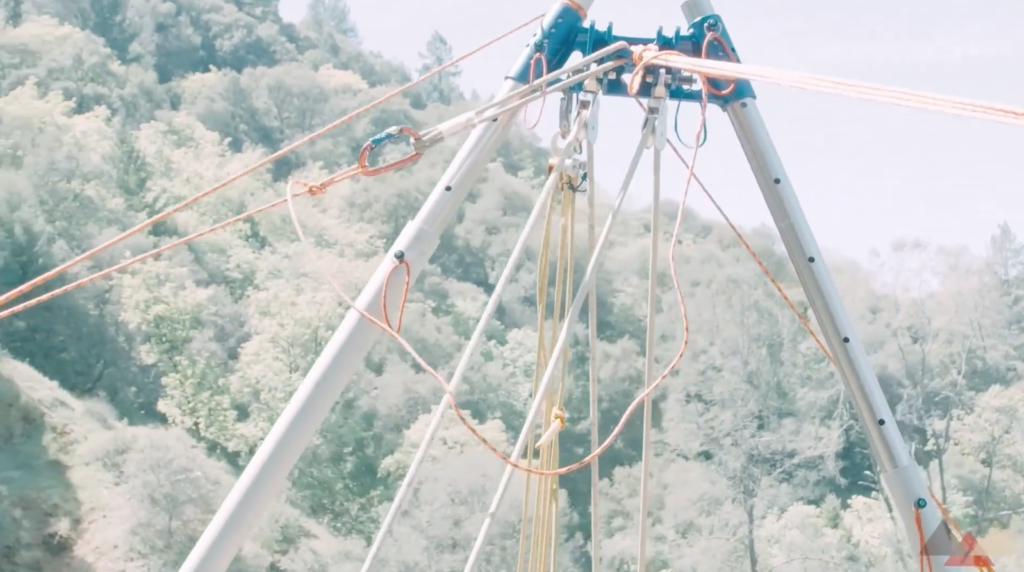
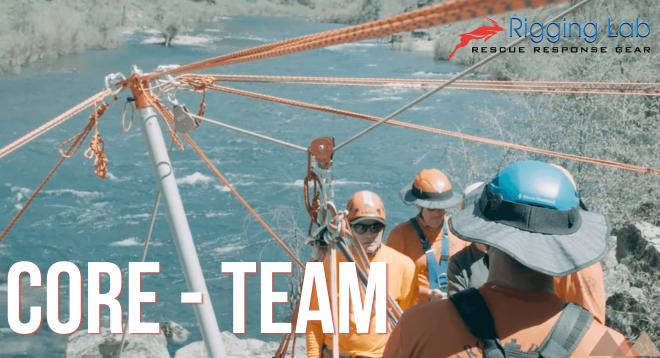
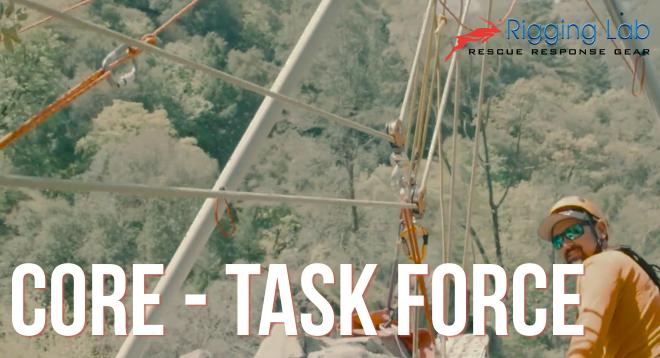
This operation demonstrates a dynamic directional offset built around an Arizona Vortex configured as a sideways A-frame. Positioned at the canyon rim, the directional frame establishes an elevated control point through which the offset system is managed. Multiple tensioned lines span the canyon corridor while operators coordinate adjustments to control both the position and movement of the suspended load. The result is a system capable of maintaining clearance, managing terrain exposure, and repositioning the load as operational requirements change.
Beyond Transportation
Many horizontal rescue systems are designed primarily for transportation.
A dynamic offset serves a different purpose.
Its objective is controlled positioning.
Rather than simply carrying a load across a span, the system allows rescuers to manipulate where that load exists within the operational space.
This capability becomes valuable when rescuers must:
- Maintain wall clearance.
- Avoid terrain features.
- Navigate obstacles.
- Access a specific work location.
- Control patient positioning during movement.
The emphasis shifts from transportation efficiency to movement precision.
The Sideways A-Frame as the Primary Directional
The Arizona Vortex serves as the primary directional structure for the system.
Configured as a sideways A-frame, the structure elevates the rope paths above the canyon edge and creates a centralized control point for the offset operation.
The directional provides:
- Rope path elevation.
- Improved line alignment.
- Enhanced operational access.
- Separation from edge hazards.
- A consistent directional reference for the offset system.
The structure does not create the offset by itself.
Instead, it provides the elevated platform from which the offset can be managed effectively.
Managing Offset Geometry
The defining characteristic of a dynamic offset is that the geometry changes during the operation.
As operators adjust tension within the system, the relationship between the load and the supporting lines changes as well.
This creates a movement environment where:
- Load position can be altered.
- Horizontal location can be adjusted.
- Terrain clearance can be maintained.
- System behavior can be adapted to changing conditions.
The load becomes an active component within a managed force environment rather than a passive object moving along a fixed route.
Coordinated Tension Control
The operation relies on coordinated tension management from multiple operators.
Rather than assigning movement to a single rope team, the system distributes control across multiple lines.
Operators continually adjust:
- Line tension.
- Load position.
- Direction of travel.
- System balance.
- Terrain clearance.
This coordination allows rescuers to respond to changes in terrain and operational requirements without requiring a complete reconfiguration of the system.
The effectiveness of the offset depends on communication and synchronization as much as it depends on hardware.
Maintaining Clearance Through the Movement Corridor
One of the primary advantages of a dynamic offset is the ability to maintain separation between the load and surrounding terrain.
In steep canyon environments, contact with rock features can:
- Complicate patient movement.
- Increase operational hazards.
- Reduce system efficiency.
- Create additional workload for attendants.
By actively managing load position, rescuers can maintain a cleaner movement corridor throughout the operation.
This becomes particularly valuable when terrain conditions change along the route or when obstacles prevent direct movement.
Bringing the Load Into the Directional
As the operation progresses, the load is ultimately positioned beneath the primary directional structure.
This phase requires continued management of system geometry as the offset transitions from broad-span positioning into final control near the directional frame.
Because the system remains dynamic throughout the movement, operators can continue making adjustments until the load reaches its intended location.
The objective is not simply arriving at the directional.
The objective is arriving in the correct position, under control, and ready for the next operational phase.
Dynamic Control in Complex Terrain
The value of a dynamic directional offset lies in its ability to provide active control over load position within a challenging environment. By combining a sideways A-frame directional with coordinated tension management, rescuers gain the ability to move, reposition, and stabilize a load while maintaining clearance throughout the canyon corridor.
Unlike fixed transportation systems, dynamic offsets allow the movement path itself to evolve as conditions change. That flexibility makes them particularly effective in complex terrain where precision often matters more than speed. In these environments, the ability to control position continuously can be just as important as the ability to move the load at all.
Peace on your Days
Lance