Anchoring

Two-Tension Rope Systems- Shock Absorbers in Dual Main Rope Systems

Shock Absorbers in Dual Main Rope Systems

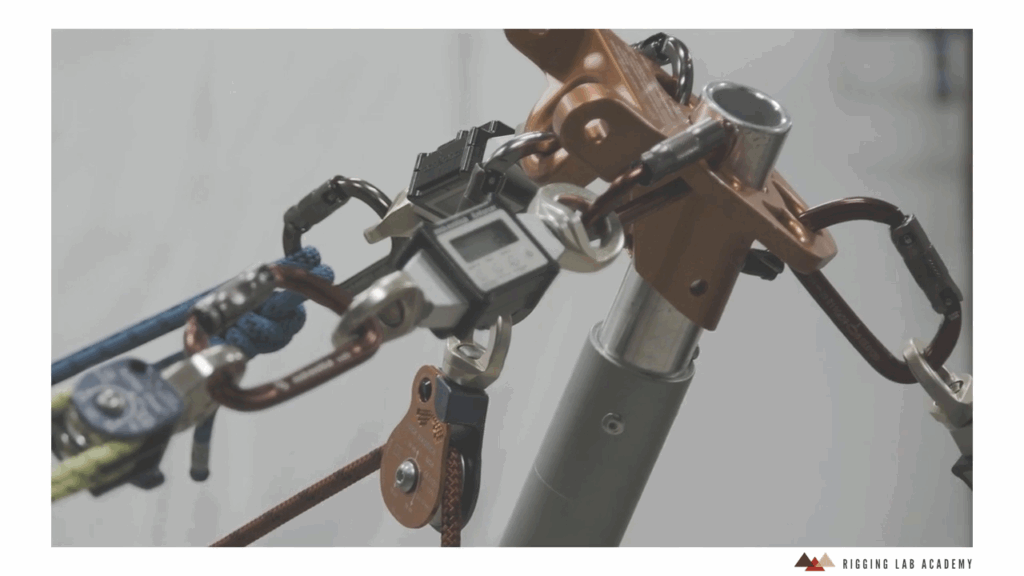
Shock Absorbers in Dual Main Rope Systems In the world of rope access, technical rescue, and industrial work-at-height, the adoption of dual main rope systems has become a gold standard for redundancy and safety. Yet, as systems become more robust, the nuances of energy management — particularly through the use of fall arrestor shock absorbers […]

Shock Absorbers in Dual Main Rope Systems Read More »

Twin Tensioned Highline Anchors with Removable Bolts

Twin Tensioned Highline Anchors with Removable Bolts

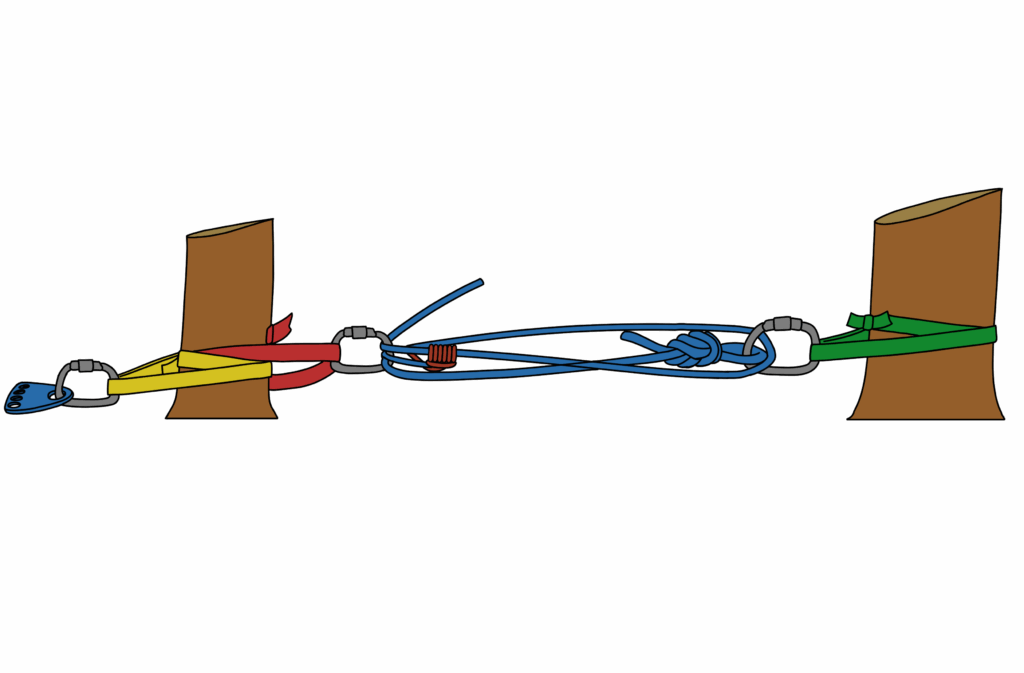
Twin Tensioned Highline Anchors with Removable Bolts In high-angle or canyon-based rescue environments, systems must perform reliably while minimizing their environmental footprint. This twin tensioned highline system was specifically built with that balance in mind. It uses removable bolt anchors (RBs) set into solid stone to create a symmetrical, load-sharing configuration that supports both operational

Twin Tensioned Highline Anchors with Removable Bolts Read More »

load sharing anchor 3x1 with clove hitches

Load Sharing Anchor 3×1 Equalette With Clove Hitches

Load Sharing Anchor 3×1 Equalette With Clove Hitches The Load Sharing Anchor 3×1 Equalette With Clove Hitches is a specialized anchor system used in climbing and rescue scenarios to distribute loads across multiple anchor points while maintaining adjustability and redundancy. Here’s a breakdown of its components, setup, and advantages: Structure and Components Equalette Design: Constructed from

Load Sharing Anchor 3×1 Equalette With Clove Hitches Read More »

Slack Anchor System: Independent Primary, Independent Secondary (P/S)

Slack Anchor System Independent Primary, Independent Secondary

A “Slack Anchor System” with Independent Primary, Independent Secondary (often abbreviated as “Independent P, Independent S”) refers to a rope rescue anchor setup designed for maximum redundancy and safety. In this system: Primary Anchor(s): The main anchor(s) bear the load of the rescue system. Secondary Anchor(s): A completely separate, independent anchor system is set up as a backup,

Slack Anchor System Independent Primary, Independent Secondary Read More »

load sharing anchor

Load Sharing Anchor Adjustable Non Working 3:1

Load Sharing Anchor Adjustable Non Working 3:1 In technical rescue environments, adaptability and control are everything—especially when dealing with multidirectional forces or unpredictable anchor terrain. This tutorial demonstrates how to construct a Load Sharing Anchor (LSA) using an adjustable, non-working 3:1 system, allowing the focal point to dynamically shift with the direction of pull. This

Load Sharing Anchor Adjustable Non Working 3:1 Read More »

Load Sharing Anchor_Two_Clove_Hitches_&_Figure_Eight

Load Sharing Anchor Using Clove Hitches and Figure Eight

Load Sharing Anchor Using Clove Hitches and Figure Eight Overview This Load Sharing Anchor setup combines two clove hitches tied directly to anchor points and a figure eight knot at the master point. The system offers fast adjustability, simple rigging, and centralized load control. It’s an ideal solution when your anchors are spaced unevenly or

Load Sharing Anchor Using Clove Hitches and Figure Eight Read More »

Load Sharing Anchor_Double_Loop_Figure_Eight_&_Butterfly

Load Sharing Anchor Using Double Loop Figure Eight and Alpine Butterfly

Load Sharing Anchor Using Double Loop Figure Eight and Alpine Butterfly Overview This tutorial demonstrates how to construct a Load Sharing Anchor (LSA) by combining a Double Loop Figure Eight and an Alpine Butterfly knot. This hybrid configuration offers flexibility in rigging, efficiently distributes the load, and provides multiple tie-in options. It is particularly effective

Load Sharing Anchor Using Double Loop Figure Eight and Alpine Butterfly Read More »

load sharing anchor figure 8 and butterfly

Load Sharing Anchor Using Alpine Butterfly and Figure Eight Knots

Load Sharing Anchor Using Alpine Butterfly and Figure Eight Knots Overview This hybrid Load Sharing Anchor combines two foundational knots—the Alpine Butterfly and the Figure Eight on a bight—to create a flexible, multi-point system. This configuration offers reliable load distribution and is particularly effective when working with uneven or offset anchor placements. Rather than relying

Load Sharing Anchor Using Alpine Butterfly and Figure Eight Knots Read More »

load sharing anchors

Load Sharing Anchors

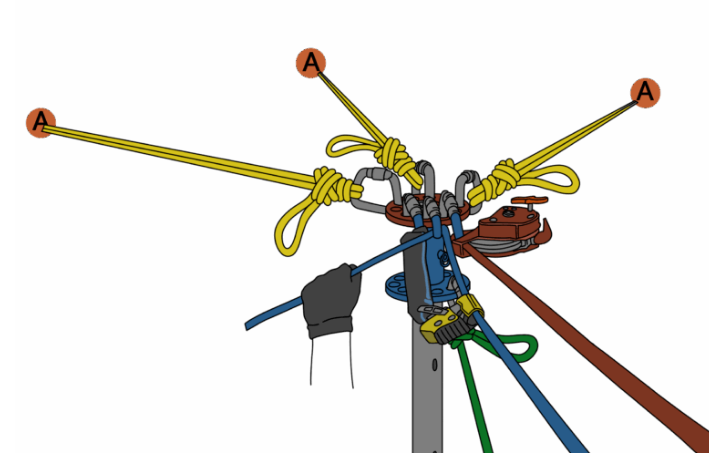
Load Sharing Anchors Load Sharing Anchors, often called LSAs, are a core standard in technical rigging. Outside of strict industrial settings—where you might rely on fixed beams or embedded eye rings—LSAs provide a dynamic, adaptable way to manage anchor loads across multiple points. They are essential in wilderness rescue, rope access, canyon systems, and backcountry

Load Sharing Anchors Read More »

Load Distributing Anchor (LDA)

Load Distributive Anchor Fixed Rope with Double Loop Figure Eight

Load Distributive Anchor Fixed Rope with Double Loop Figure Eight Overview The Load Distributive Anchor, built using a Fixed Rope with a Double Loop Figure Eight, provides a reliable, redundant way to share load across two anchor points. This setup is fast to rig, easy to inspect, and ideal in scenarios where directional force or

Load Distributive Anchor Fixed Rope with Double Loop Figure Eight Read More »

LSA adjustable two prusiks - load sharing anchor

Load Sharing Anchor Adjustable Two Prusiks System

LSA Adjustable Two Prusiks System The LSA (load sharing anchors) Adjustable Two Prusiks system is a simple and effective method for pre-tensioning or stabilizing components in a rope rescue environment. It uses two Prusik hitches on a tension line to manage load placement without requiring complex devices or mechanical pulleys. This approach is lightweight, adaptable,

Load Sharing Anchor Adjustable Two Prusiks System Read More »

slack anchor independent primary

Slack Anchor System: Independent Primary, Shared Secondary

In many rescue environments, a fully redundant system is needed—but the available anchors may be limited. One efficient solution is a Slack Anchor System with independent primary anchors and a shared secondary anchor. This setup preserves redundancy without requiring four completely separate anchor placements. It’s a hybrid model: strong, efficient, and commonly used in rope

Slack Anchor System: Independent Primary, Shared Secondary Read More »

2x1 equalette with limiting knots

2×1 Equalette Load Sharing Anchor with Limiting Knots

2×1 Equalette Load Sharing Anchor with Limiting Knots The 2×1 equalette anchor is a refined variation of traditional cordelette systems. It’s designed to distribute load between two anchor points while incorporating limiting knots to reduce extension and manage system stability in the event of anchor failure. This setup is efficient, adaptable, and ideal for environments

2×1 Equalette Load Sharing Anchor with Limiting Knots Read More »

3x1 anchor

3×1 In-Line Cordelette Load Sharing Anchor

3×1 In-Line Cordelette Load Sharing Anchor The 3×1 In-Line Cordelette LSA is designed to distribute load evenly across three anchor points aligned in a straight line. This configuration is particularly useful when dealing with multiple anchor points that are not equally strong or when the direction of the anticipated load is straightforward. Key Components: Cordelette: A

3×1 In-Line Cordelette Load Sharing Anchor Read More »

better or best anchors

Slack Anchors

Slack Anchors Slack anchor systems are commonly used in rope access, though they appear in other rescue environments as well. Their appeal lies in simplicity—and in many rope access situations, where dynamic loading or sudden failure is rare, slack anchors are entirely appropriate. However, simplicity doesn’t mean simplicity of thought. These anchors require purposeful alignment,

Slack Anchors Read More »

multi point anchors

Multi-Point Anchors

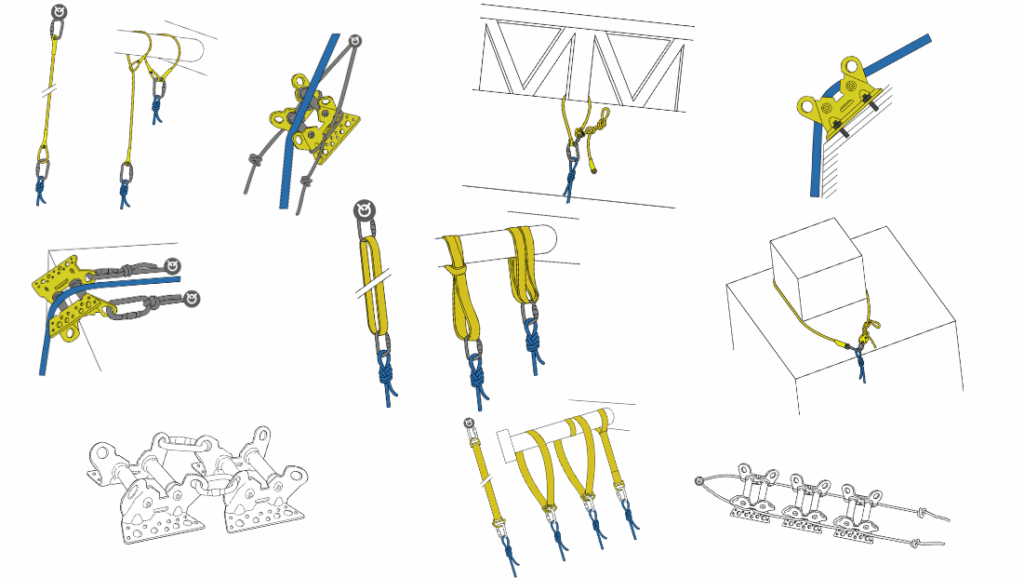
Multi-Point Anchors In rope rescue, single-point anchors aren’t always enough. Sometimes they’re weak. Sometimes they’re in the wrong place. And sometimes, they’re simply not there at all. That’s where multi-point anchor systems come in. These systems combine two or more anchor points into one unified structure. They give you options when you need strength, flexibility,

Multi-Point Anchors Read More »