What is the single most critical component of any rescue or rigging system? The answer is simple: the anchor. It is the silent hero, the unyielding foundation that bears the weight of every operation. Yet, a lack of understanding or a single mistake in its setup can turn a meticulously planned rescue into a catastrophic failure. Anchors and Anchor Systems are The Foundation of Every Safe Rig
At Rigging Lab Academy, we believe that a thorough mastery of anchors and anchor systems isn’t just a best practice—it’s a non-negotiable prerequisite for safety. This blog series is designed to be your definitive guide, taking you from the basic definitions to the advanced principles that every modern rigger must know. We’ll break down the complexities, provide real-world context, and share the key insights we teach in our hands-on labs.
This is more than just a list of terms; it’s a narrative about building trust and confidence in your rigging. We’ll start by defining the language of anchors, then move on to how these concepts are applied in the field to build systems that are not just strong, but genuinely bombproof.
Part 1: The Language of Anchors
Before we can build, we must define. Every rigging scenario begins with an understanding of the available anchor points.
- Fall Line: The natural path of a plumb line as a result of gravity, influenced by the angle and aspect of the slope. This is the path your rope will take, and all anchors must be selected to be compatible with it.
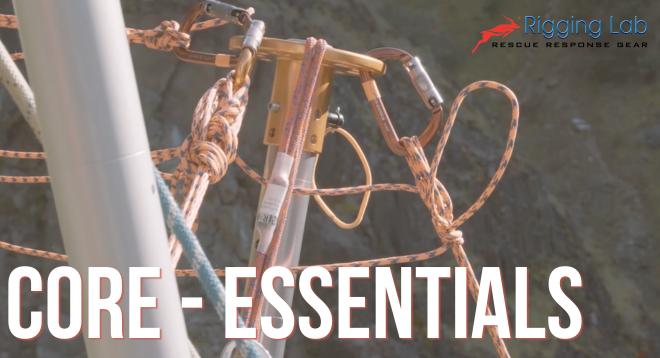
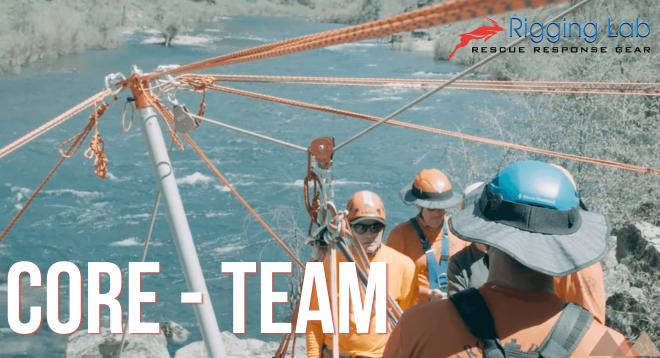
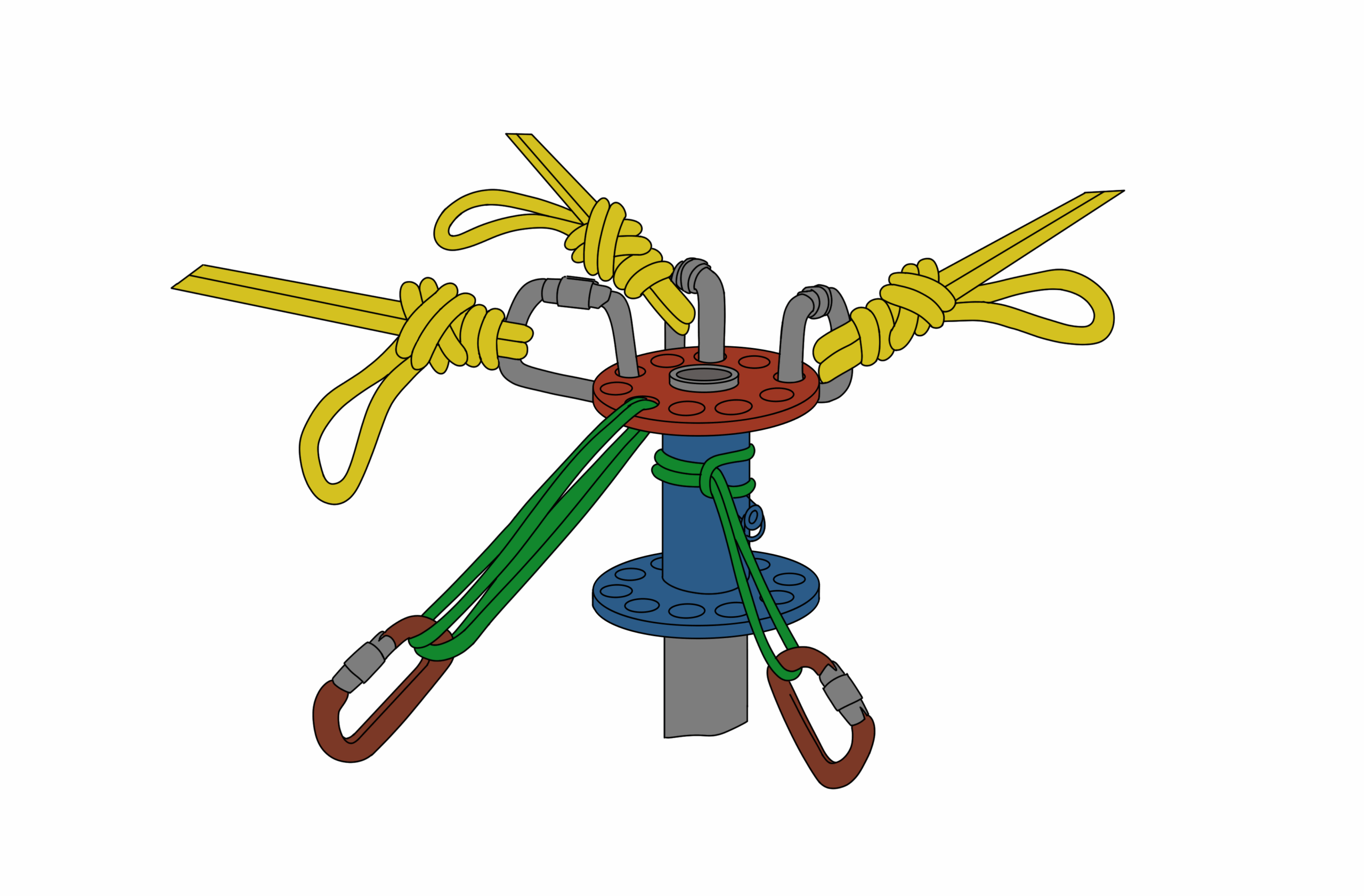
- Artificial Anchor: When a natural anchor isn’t available, rescuers place an artificial anchor. This can be anything from a bolt in a cliff face to an engineered device like a rescue tripod or a specialized elevated anchor system.
- Point Anchor: The simplest form of anchor, representing a single point of origin for your system. In most technical rescue scenarios, the goal is to move beyond a single point and create a multi-point system for redundancy and strength.
Part 2: Building a System You Can Trust
A single anchor is rarely enough. The strength of your system often comes from a collection of points tied together.
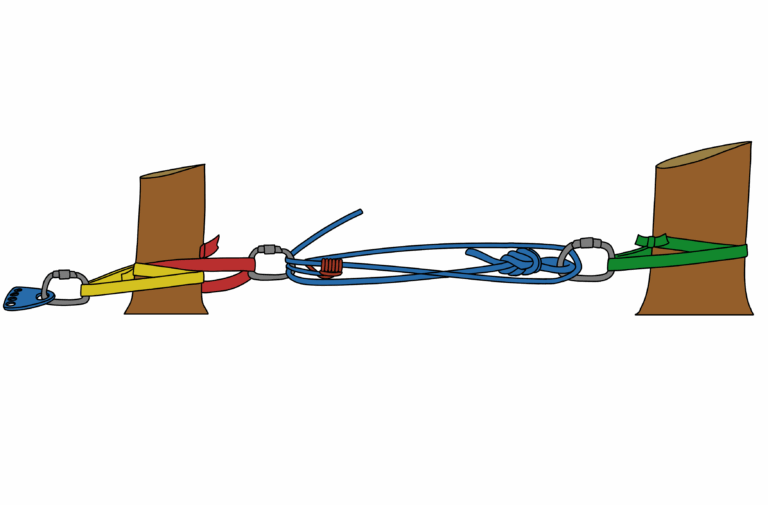
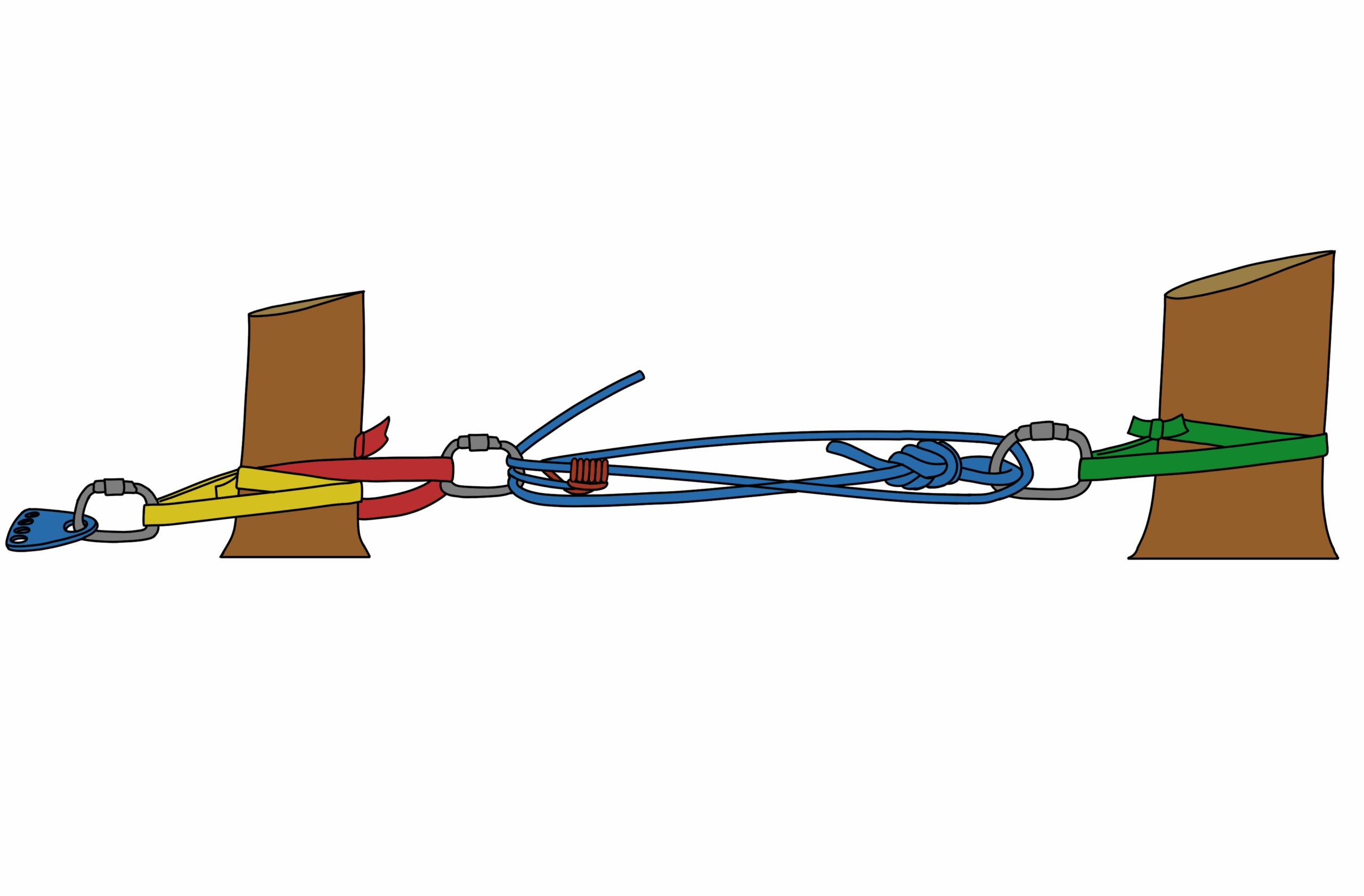
- Multi-point Anchor: A collection of marginal or substantial point anchors designed to create a “bombproof” system. The goal here is load sharing, where each anchor works in concert to handle the intended load. The sum is stronger than the parts.
- Marginal Anchor (): An anchor that you do not believe will hold 10 times the intended load. These are used in multi-point systems where their collective strength meets the safety standards.
- Substantial Anchor (): An anchor that you believe will hold 10 times the intended load but is not suitable for separate main and belay lines. It’s a solid point, but requires a partner to build a truly robust system.
- Bombproof Anchor (): The gold standard. An anchor you confidently believe will hold 10 times the intended load and is suitable for separate and distinct attachment of both main and belay lines. Think of a massive, mature oak tree—a perfect example.
Part 3: Advanced Rigging: Focussed and Back-Tie Systems
Beyond the basics, advanced rigging scenarios call for more specialized anchor systems to manage complex forces and terrain.
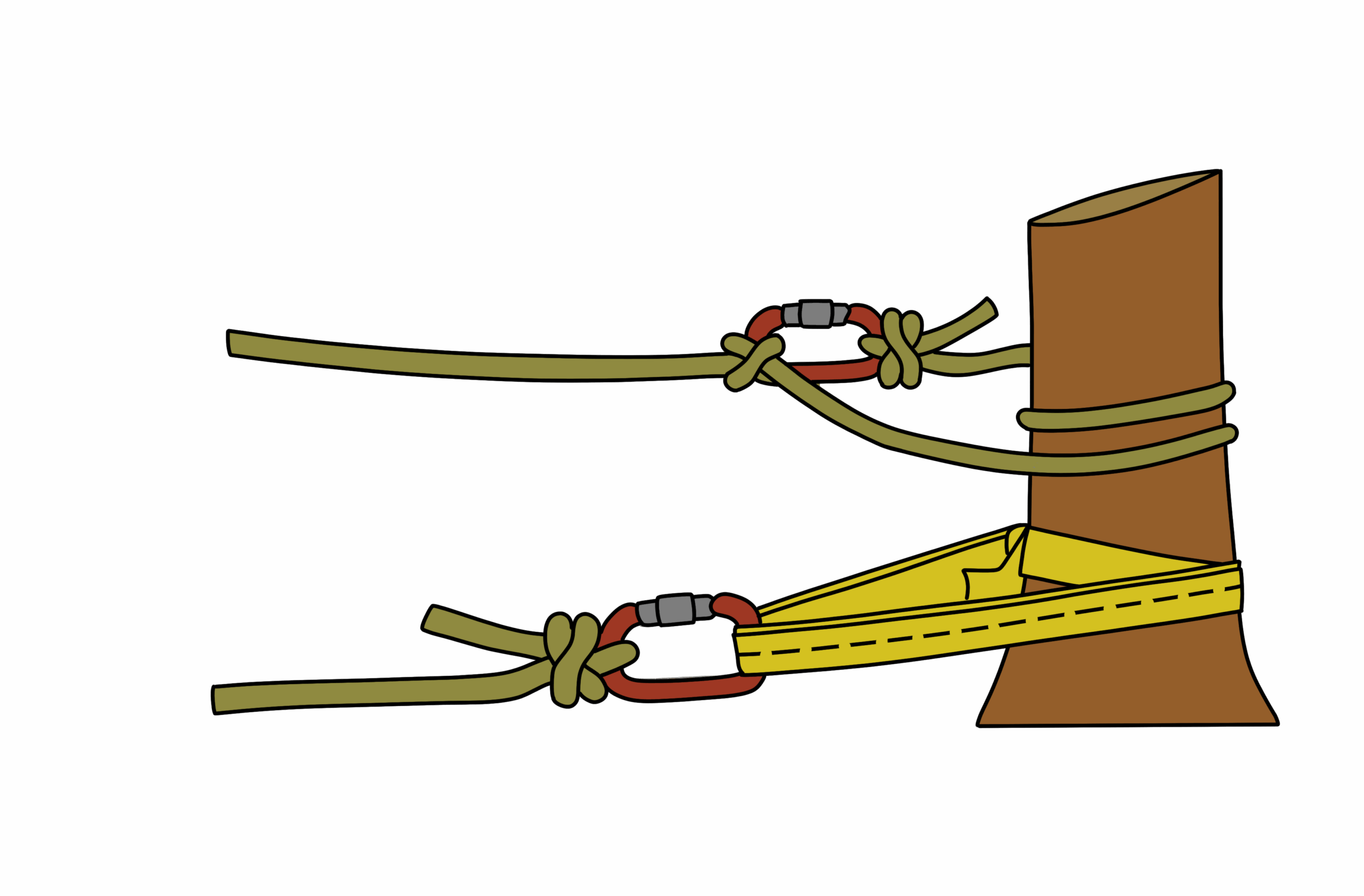
- Focused Anchor (): A system with one or more back-tied substantial anchors. These are often seen in high-directional setups where the forces are concentrated on a specific point. For a system to be considered “bombproof,” it needs at least two (and preferably three) back-tied substantial anchors.
- Back-tie system (): Multiple strands of low-stretch rope under tension that connect a substantial anchor to a focal point. This system is crucial for managing horizontal forces and ensuring the main anchor remains secure.
- Opposition front-tie (): A simple but critical safety element that prevents the anchor from shifting forward. It is a non-life safety element between a focused floating anchor and a forward anchor point, providing opposition to the line of pull.
The Takeaway: Safety is a Habit
The concepts of anchors and anchor systems are not just definitions—they are a language for safety. The key is to:
- Test every anchor: Always test anchors in the direction of use with a force comparable to the working load.
- Embrace redundancy: A multi-point anchor should be tied off as a load-sharing system.
- Establish independence: Always have independent substantial anchors for the main and belay lines.
- Choose strong points: Look for strong points like lines and corners on structural members for anchors.
- Avoid mid-span anchors: Avoid placing anchors in the middle of a structural member where forces are less predictable.
By internalizing these principles and consistently applying them in the field, you can build a rigging system that is not only effective but, most importantly, safe.
Ready to dig deeper? Stay tuned for our next post, where we’ll take a closer look at the differences between natural and artificial anchors and how to choose the right one for your situation. In the meantime, tell us in the comments: What’s the biggest challenge you face when setting up anchors?
Peace on your Days
Lance