Rope Rescue Math and Aerial Ladder Torque Management
In rope rescue, a high-directional such as an aerial ladder can be an invaluable elevated anchor—if it’s rigged correctly. The forces at play are not intuitive, and relying on firefighting ratings or guesswork can lead to dangerously overloaded systems.
This guide explains the math behind high-directional loading, how aerial ladder angles and rigging choices affect torque, and best practices for keeping operations safe.
1. Why High-Directional Forces Matter
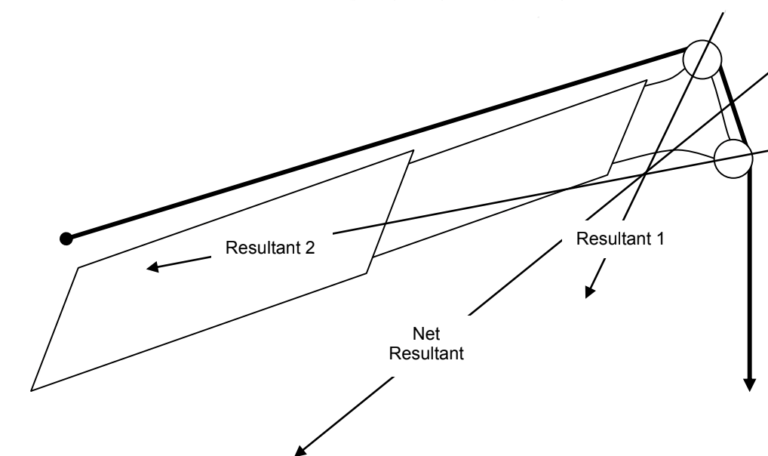
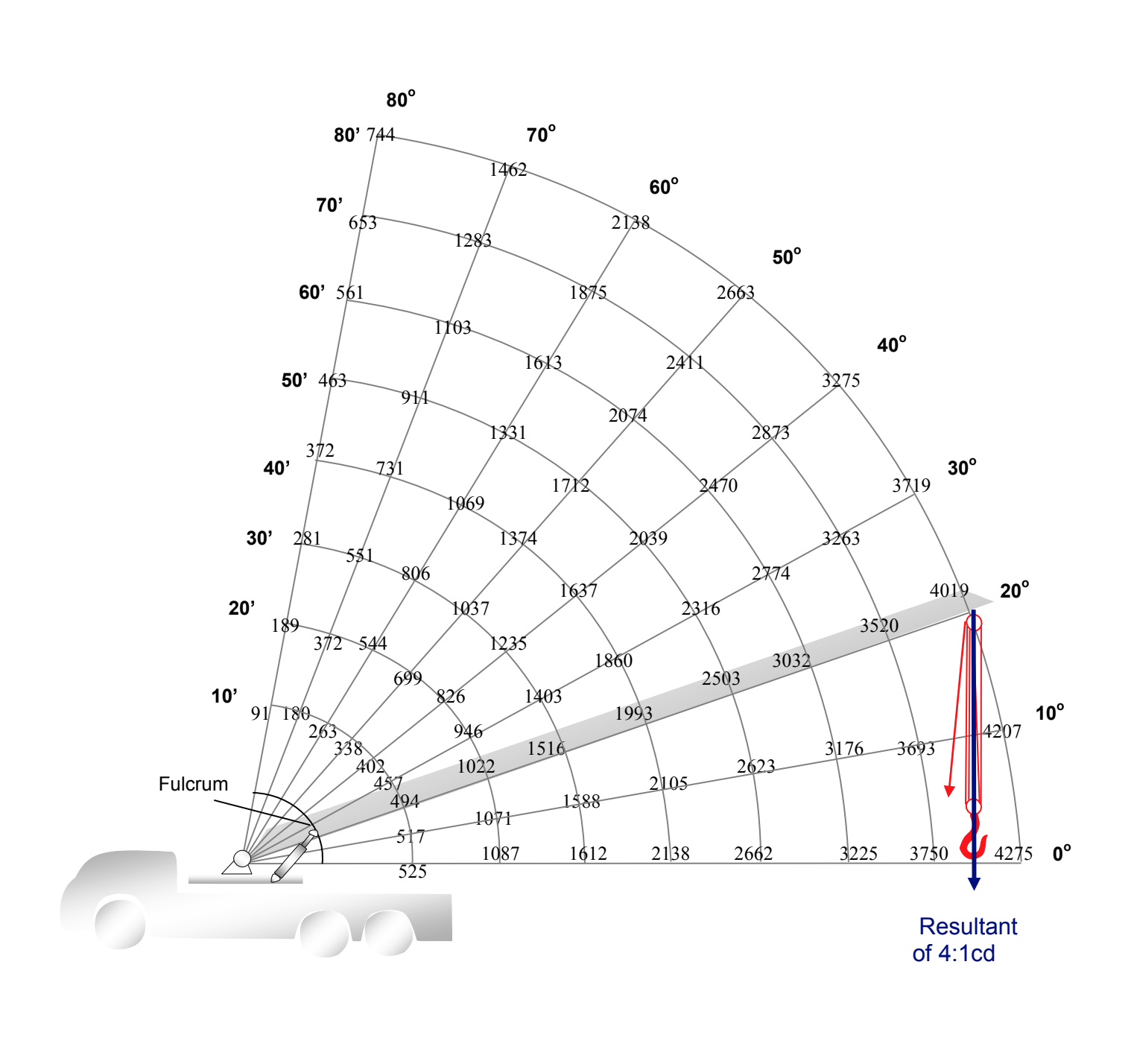
The resultant force at the tip of a high directional is the single most critical loading factor in rope rescue. Unlike distributed loads in firefighting operations, rope systems create singular, concentrated forces that can drive torque toward the ground at the ladder’s pivot point.
Understanding how this resultant forms—and how to control it—directly impacts safety, efficiency, and equipment longevity.

2. The Math of Rigging
The resultant force is the vector sum of the vertical and horizontal forces in the rope system.
Magnitude of Resultant Force:
R=V2+H2R = \sqrt{V^2 + H^2}
Where:
-
R = Resultant force at the high directional tip
-
V = Vertical force (load’s weight)
-
H = Horizontal force (haul line tension)
Direction of Resultant:
θ=arctan(HV)\theta = \arctan{\left( \frac{H}{V} \right)}
This tells us how far the resultant leans from vertical. Larger angles mean more horizontal loading, increasing torque on the base.
Anchor/Back-Tie Force (Law of Sines):
Ftie=R⋅sin(C)sin(T)F_\text{tie} = \frac{R \cdot \sin(C)}{\sin(T)}
Where:
-
Fₜᵢₑ = Force on the tension member (back-tie)
-
C = Angle between resultant and its opposite side in the force triangle
-
T = Angle between the tie line and high directional
Field takeaway:
By changing the high-directional elevation, extension, and haul line alignment, rescuers can control both the magnitude and direction of R—directly influencing how much torque and compression the aerial experiences.
3. The Problem with Firefighting Ratings
Manufacturer ratings for aerial ladders are based on firefighting conditions, not rope rescue.
-
Firefighting ratings assume distributed water weight along the ladder and, in the case of master streams, reverse thrust that actually reduces torque.
-
Rope systems concentrate force at a single point, creating greater torque potential without the offsetting effect of water stream thrust.
This difference makes it unsafe to treat firefighting load ratings as a guarantee for rope rescue operations.
4. Best Practices for Using Aerial Ladders in Rope Rescue
-
Minimize the load – Whenever possible, raise only the victim, not extra gear or rescuers.
-
Maximize aerial elevation – Steeper angles shorten the lever arm and reduce torque.
-
Minimize aerial extension – Less extension means less leverage and lower resultant forces.
-
Reduce vertical torque – Rig the mainline resultant as close as possible to the aerial’s compression path.
-
Reduce horizontal torque – Keep the mainline aligned with the aerial’s centerline.
-
Never rig the belay line at the tip – Use the originating structure or consider single rope technique if no other safe belay option exists. A dynamic belay event at the tip could cause catastrophic loading.
-
Use larger haul teams – More haulers create smoother, controlled movement and reduce the shock loads caused by small teams using jerking pulls.
5. Static vs. Dynamic Loads
Torque calculations in diagrams are static—they show expected forces under steady pull, not the spikes that occur during hauling.
To see real-world forces, a load cell between the aerial tip and the mainline high-directional pulley is required.
Testing confirms:
-
Ground-operated mechanical advantage systems allow larger haul teams, producing smoother pulls and lower shock forces.
-
4:1 change of direction (4:1cd) at the tip often limits space to one or two haulers, leading to jerking pulls and shock loads up to five times higher than smoother ground-based operations.
Final Thoughts
When an aerial ladder is used as a high-directional, its safety margin depends on understanding and managing the resultant force. The math is straightforward, but its implications are critical: elevation, extension, alignment, and haul method can mean the difference between a stable operation and a dangerously overloaded structure.
Peace on your Days
Lance