Blog

cross-haul rope access

Cross Haul Techniques for Rescue and Equipment Movement

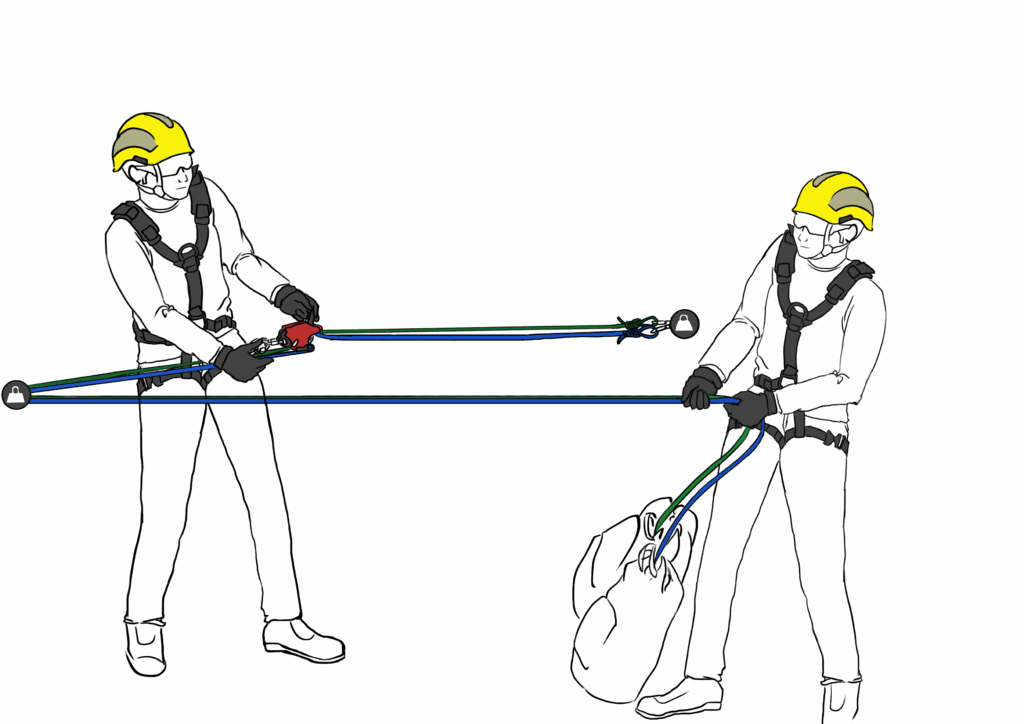
Cross hauling is a controlled horizontal movement technique used to transport loads—such as a patient litter, heavy gear, or suspended equipment—between two points using independent hauling and lowering systems. The method relies on coordination between two rescuers or teams operating from opposite anchors, each managing their side’s tension to maintain balance and stability. When executed

Cross Haul Techniques for Rescue and Equipment Movement Read More »

mechanical advantage

Understanding Pulley Systems for Mechanical Advantage

Mechanical advantage lies at the heart of rope rescue, and pulleys are the tools that make it possible. By redirecting force and multiplying effort, pulley systems enable rescuers to move loads that would otherwise be unmanageable. Understanding how these systems work—specifically how rope anchoring, pulley placement, and rope routing affect efficiency—is essential for building safe,

Understanding Pulley Systems for Mechanical Advantage Read More »

Hybrid Patient Connection Setup with Skate Block and Tracking Line

Integrating Artificial High Directionals in Skate Block Systems

Integrating Artificial High Directionals (AHDs) within Skate Block Systems transforms a simple, low-tension rescue technique into a controlled, highly adaptable rigging platform. This integration enables teams to overcome edge trauma, improve resultant alignment, and achieve greater system precision—all without sacrificing the lightweight, small-team functionality that defines the skate block. In essence, an AHD turns a

Integrating Artificial High Directionals in Skate Block Systems Read More »

climber fall rescue - 5 First Principles of Rescue Rigging

5 First Principles of Rescue Rigging

The Immutable Laws of Rigging: A Guide to First Principles   This document outlines five principles of rescue rigging—foundational truths that are non-negotiable and from which all safe practice is derived. These principles cannot be reduced further; they are the absolute realities that govern every decision made in a life-or-death scenario. 1. The Principle of

5 First Principles of Rescue Rigging Read More »

floating the patient terrain assessment

Building a Rope Rescue Team with Terrain Awareness and Training Manuals

Congratulations on stepping into leadership for your search and rescue ropes team. It’s no small task. Building a rope rescue team requires more than equipment — it demands a keen understanding of terrain, a plan to close knowledge gaps, and a structured training manual that evolves with your team. These three pillars form the backbone

Building a Rope Rescue Team with Terrain Awareness and Training Manuals Read More »

transitioning to two-tensioned rescue systems

TTRS Anchor Systems with Artificial High Directionals for Two Person Loads

Technical rope rescue demands anchor systems that are strong, efficient, and designed for redundancy. Building TTRS anchor systems with Artificial High Directionals (AHDs) is one of the most effective ways to achieve these goals, especially when managing a two-person load such as a patient and attendant in a litter. By combining the principles of sound

TTRS Anchor Systems with Artificial High Directionals for Two Person Loads Read More »

Rope Rescue Safety Factors and equipment

Rope Rescue Equipment

Understanding Rope Rescue Equipment is paramount in the high-stakes world of technical rope rescue. Equipment isn’t just a collection of tools; it’s the very lifeline connecting rescuers to those in need. From the quiet strength of a well-placed anchor to the mechanical magic of a pulley system, every piece of gear plays a critical, interconnected

Rope Rescue Equipment Read More »

Two Tension Offset with Monopod and Side A-Frame

Two Tension Offset with Monopod and Side A-Frame

A two tension offset system allows rescuers to move loads laterally or diagonally—especially when vertical lowering is not an option. In this scenario, we use a monopod high directional on one side and a sideways A-frame on the other to shape and control the rope path. This approach is ideal for traversing terrain where edge

Two Tension Offset with Monopod and Side A-Frame Read More »

two tension twin tension lower single operator back tension safety

CMC Clutch Twin Tension Two Tension Lower

The CMC Clutch Twin Tension Two Tension Lower has become a defining standard in modern rope rescue systems. By integrating the Clutch into a Twin Tension Rope System (TTRS), rescuers can achieve smoother control, balanced load distribution, and built-in redundancy. Whether lowering or raising, the Clutch ensures safe transitions, adaptability across rescue environments, and confidence

CMC Clutch Twin Tension Two Tension Lower Read More »

The Modern Arborist Overcoming Friction and Anchor Uncertainty

The Modern Arborist Overcoming Friction and Anchor Uncertainty

Arborist climbing is unique among all height disciplines. Unlike a rope access technician who works on known, rated anchors, a tree climber operates on living, dynamic structures with unknown anchor strengths. This fundamental reality is at the heart of the profession and has driven constant innovation to improve safety. It is the defining element of

The Modern Arborist Overcoming Friction and Anchor Uncertainty Read More »

double rope system arborists

The Arborist’s Ascent The Challenge of the Double Rope System

An arborist’s work environment is unique, a three-hundred-and-sixty-degree canopy that demands a specialized approach to climbing. This is the essence of The Arborist’s Ascent: The Challenge of the Double Rope System. To access all parts of the tree, an arborist ideally ties into the strongest, most central point they can find. This high central anchor

The Arborist’s Ascent The Challenge of the Double Rope System Read More »