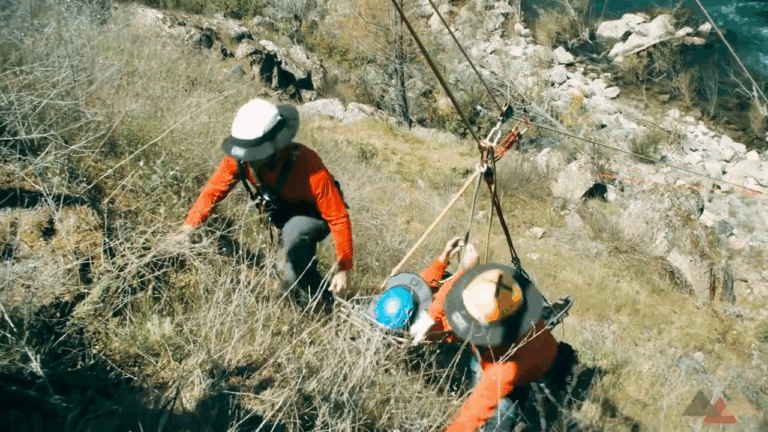
Congratulations on stepping into leadership for your search and rescue ropes team. It’s no small task. Building a rope rescue team requires more than equipment — it demands a keen understanding of terrain, a plan to close knowledge gaps, and a structured training manual that evolves with your team. These three pillars form the backbone of any effective rope rescue program.
Navigating Terrain Challenges
Terrain shapes every decision in rope rescue. The ground beneath you dictates anchors, system design, and risk exposure. It’s not enough to label an environment as “high angle” or “low angle.” Leaders must read the slope, the surface, and the hazards with nuance.
Key factors to evaluate include:
-
Slope and Transitions: Identify steepness, transition zones, and special conditions, such as ice or mud.
-
Surface Type: Loose scree, exposed rock, snow, or mixed terrain all change system demands.
-
Hazards Include Falling rock, stumps, and unstable ground, adding complexity.
-
Resources: Patient weight, team size, and available gear influence system selection.
-
Pre-planning: Plan conservatively. Preparing for the harder option ensures smoother execution.
Bridging Technical Knowledge Gaps
Modern rescue gear is powerful, but it can create dangerous gaps if teams don’t train beyond the basics. Twin Tension Rope Systems (TTRS), multi-purpose descent devices, and Artificial High Directionals (AHDs) expand possibilities, but they require discipline and understanding.
Ways to build competence and close gaps:
-
Master Existing Gear: Understand working load limits, strengths, and wear points.
-
Prioritize Fundamentals: Knots, anchors, rappelling, belaying, and mechanical advantage systems must be second nature.
-
Advance with Intent: Introduce TTRS and AHD setups only when fundamentals are secure.
-
Think Critically: Teach not just how but why systems work, encouraging problem-solving under pressure.
-
Train for Chaos: Run scenario-based drills with failures, missing gear, or time constraints to build adaptability.
Building a Training Manual that Works
A training manual is more than documentation. It’s the team’s roadmap — a living document that guides consistency, captures lessons learned, and evolves with new practices. It creates clarity in goals, procedures, and expectations.
Core elements to include are:
-
Framework: Define goals, break them into projects, and outline systems to achieve them.
-
Foundational Knowledge: Cover force vectors, redundancy, knots, and safety protocols.
-
Skill Advancement: Document advanced systems like AHD setups, mirrored tension management in TTRS, and horizontal systems.
-
Operational Procedures: Establish ICS roles, standard communication methods, and pre-plans for anchors and access routes.
-
Continuous Improvement: Add After-Action Reviews, certification pathways, and feedback loops to keep growth ongoing.
A strong manual should never remain static. Update it as new gear is introduced, as skills advance, and as industry best practices evolve.
Final Thoughts
Leading a rope rescue team is about balance. By combining terrain awareness, technical competence, and a strong training manual, you create the structure that transforms a group of individuals into a capable, confident unit. Building a rope rescue team is a long-term commitment — but with the right focus, you establish a culture of safety, adaptability, and readiness for whatever terrain and challenges lie ahead.
For more resources on strategy, system design, and advanced training, visit the Rigging Lab Academy blog.
Peace on your days,
Lance