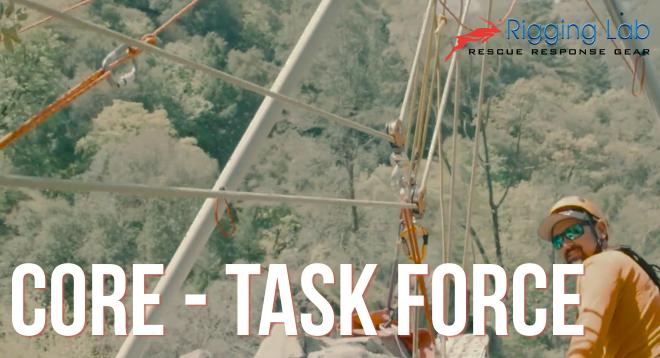
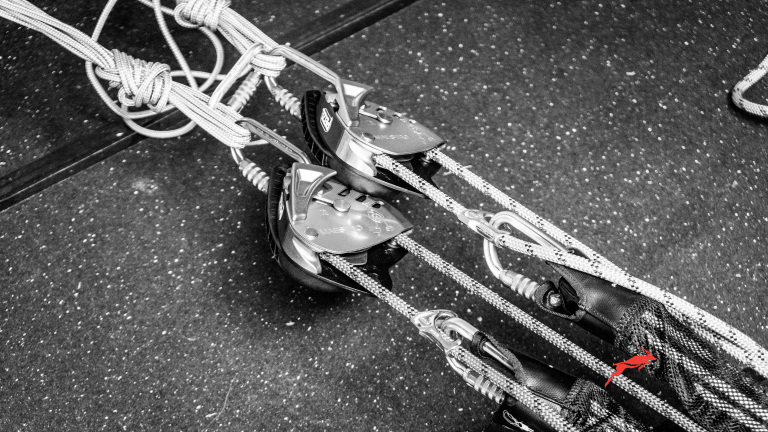
Technical rope rescue demands anchor systems that are strong, efficient, and designed for redundancy. Building TTRS anchor systems with Artificial High Directionals (AHDs) is one of the most effective ways to achieve these goals, especially when managing a two-person load such as a patient and attendant in a litter. By combining the principles of sound anchor construction with the advantages of a Two-Tension Rope System (TTRS), rescue teams can ensure safe and controlled operations across challenging edges.
Core Principles of Anchor Construction
Anchor building always starts with ERNEST — a proven framework to ensure safety and reliability:
-
Equalized: Distribute forces evenly across all anchor points.
-
Redundant: Build in multiple, independent anchor points.
-
Non-Extending: Keep slack minimal to avoid sudden shifts.
-
Solid: Select only reliable natural or artificial anchor points.
-
Timely: Rig anchors efficiently to meet the urgency of rescue scenarios.
These principles create the backbone of every successful rope system.
Foundations of the Two-Tension Rope System
A TTRS differs from traditional main-and-belay setups by actively tensioning both lines. Each rope is a primary system, sharing the load equally.
Benefits include:
-
Enhanced safety through active redundancy.
-
Balanced control of patient and litter.
-
Smoother edge transitions under load.
Devices like the CMC MPD, Petzl Maestro, Petzl I’D, and CMC CLUTCH by Harken Industrial are commonly used to tension and control the ropes.
Artificial High Directionals for Edge Mitigation
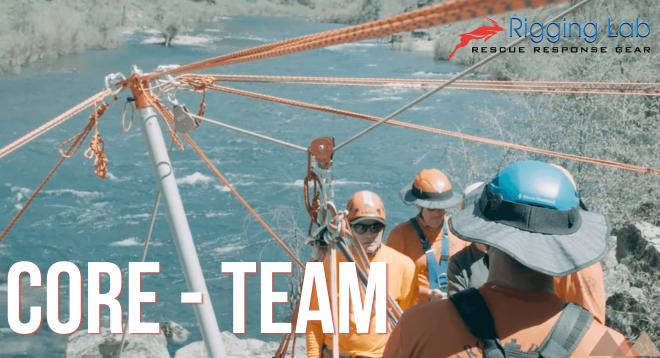
One of the greatest hazards in rescue is edge friction. Artificial High Directionals solve this problem by lifting the rope system above sharp terrain features.
Key points for AHD use:
-
Purpose: Reduce abrasion and create smoother transitions.
-
Configuration: Can be rigged as a tripod, bipod, monopod, or A-frame.
-
Guying: Requires stable guy lines, often using a Delta (3) setup for tripods and gin poles.
-
Back-ties: Critical for counteracting forward resultant forces.
-
Angle: Adjust for efficiency and reduced system stress.
Popular options include the Arizona Vortex and TerrAdaptor, both of which allow flexible setups for varying terrain.
Anchor Points for TTRS with AHD
When supporting a two-person load, anchor strength and redundancy are non-negotiable.
-
Independent Anchors: Rig two bombproof anchors for the TTRS mainlines.
-
Load Capacity: Each anchor must support the entire load plus a safety margin. A two-person load is roughly 2 kN (≈440 lbs). Rescue standards aim for a 7:1 to 10:1 System Strength Ratio (SSR).
-
Load Distribution: Rigging plates like the CMC SQUID Rig Plate streamline multiple connections, align devices, and promote balanced tensioning.
-
AHD Integration: The AHD itself becomes a central anchor component and must be securely guyed and backed up.
Patient and Litter Packaging for Two Person Loads
Managing a patient and attendant requires precise equipment choices and rigging:
-
Litter Selection: Rigid or semi-rigid litters such as the Cascade Rescue Advance Series Model 200, Cascade Professional Series Stainless Steel, or a Sked stretcher provide the structure needed for vertical or horizontal movement.
-
Patient Harness: Class III harnesses like the Yates Spec Pak keep the patient secure and properly supported.
-
Litter Attendant: Rescuers use specialized harnesses (e.g., CMC ProSeries Litter Harness) to stay connected without absorbing the full load manually.
-
Litter Bridle: A floating bridle tied with a Long Tail Bowline stabilizes the litter.
-
Pre-Rigging: Secure the empty litter before patient loading to prevent uncontrolled motion.
-
Patient Positioning: For vertical lifts, position the patient high in the litter to reduce shifting during transitions.
Best Practices and Key Reminders
-
Keep it Simple: Over-rigging slows operations and increases risk of errors.
-
Test the System: Confirm anchor integrity and rope tension before committing a load.
-
Monitor Loads: Use load cells when available to track force distribution.
-
Communicate Clearly: Maintain verbal discipline and clear commands throughout.
-
Train Frequently: Scenario-based practice builds confidence and ensures smooth performance under pressure.
Final Thoughts
Building TTRS anchor systems with Artificial High Directionals for two-person loads blends technical skill with disciplined teamwork. By following the principles of ERNEST, integrating AHDs effectively, and rehearsing regularly, rope rescue teams can operate with confidence and precision. For deeper training resources and system demonstrations, explore Rigging Lab Academy, where these methods are broken down into step-by-step instructions.
Peace on your Days
Lance