Understanding Rope Rescue Equipment is paramount in the high-stakes world of technical rope rescue. Equipment isn’t just a collection of tools; it’s the very lifeline connecting rescuers to those in need. From the quiet strength of a well-placed anchor to the mechanical magic of a pulley system, every piece of gear plays a critical, interconnected role in ensuring safety, efficiency, and adaptability.
Technical rope rescue involves using specialized equipment, meticulously selected and assembled, to safely lower or raise individuals from dangerous scenarios. This could be a high-angle cliff face, a cramped confined space, or even a treacherous water environment. The success of these operations hinges on gear that is not only appropriate for the task but also maintained with unwavering attention to detail.
Categories of Rescue Gear
The equipment used in rope rescue is vast, but it can be categorized into essential components that form the foundation of any system.
Ropes & Cords
The most fundamental piece of equipment, ropes are the lifelines of any system. Static ropes are the standard for technical rescue. With minimal stretch, they’re perfect for main and belay lines, where stability and the ability to hold heavy loads are paramount. Dynamic ropes are designed to stretch and absorb energy, making them ideal for fall arrest applications. Water rescue ropes are specially designed to be buoyant and highly visible in aquatic environments.
Modern rescue ropes are often made with kernmantle construction, which features a strong core (kern) protected by a woven outer sheath (mantle) for durability and abrasion resistance.
Anchors & Anchor Hardware
An anchor is the unmoving linchpin of a system. Without a solid anchor, the entire operation is compromised. They can be natural (like trees or rocks), artificial (bolts, pickets, or vehicles), or structural (buildings, bridges). Picket anchors, made of metal stakes, are used in situations where no other anchor is available. Rigging plates are devices used to organize multiple attachment points and evenly distribute weight.
Carabiners & Pulleys
These are the indispensable connectors and force multipliers of a rescue system. Carabiners link everything together, from a rescuer’s harness to the anchor. Locking carabiners are the go-to for rescue, providing added security against accidental disengagement. Pulleys are key for changing the direction of a rope and, most importantly, for creating mechanical advantage systems. These systems amplify force, allowing a small team to lift or lower a heavy load with minimal effort.
Mechanical Advantage (MA) Devices & Systems
This is where the physics of rescue shines. Mechanical advantage devices make the impossible possible. Jigger systems use pre-built pulley systems to create ready-to-go hauling setups. Winches provide massive mechanical advantage, capable of lifting and lowering significant loads with precision. The Multi-Purpose Device (MPD) is a versatile tool that functions as a pulley with an integrated progress capture mechanism for both raising and lowering.
Descenders & Ascenders
These devices manage movement along a rope. Descenders like the Petzl Maestro or Rig, allow for controlled, smooth descents, even with heavy loads. Ascenders securely grip the rope, enabling a rescuer to climb efficiently and with confidence.
Artificial High Directionals (AHDs)
AHDs are critical for elevating anchor points, creating smoother rope paths, and guiding ropes away from hazards. Think of them as portable cranes for rescue. Tripods are a great example, essential for creating stable anchor points, particularly in confined space rescues where you need to lift or lower a person straight down.
Patient Transport & Personal Protective Equipment (PPE)
The final, crucial elements are those designed to protect both the victim and the rescuer. Litters (rigid or flexible) and patient bags ensure a victim can be safely and securely transported. PPE like helmets, harnesses, and gloves are non-negotiable for rescuer safety, protecting from falls, impacts, and abrasions.
Lanyards & Energy Absorbers: The Fall Protection Duo
In the context of fall protection, lanyards and energy absorbers are a critical pairing. A lanyard serves as a connector between a rescuer and an anchor point, but in a fall, it’s the energy absorber that truly saves the day.
An energy absorber is a device, typically a strip of tear-away webbing inside a protective pouch, that dissipates kinetic energy during a fall. As the rescuer falls, the webbing tears, progressively slowing the fall and reducing the impact force on the rescuer’s body and the rest of the system. This ensures the force does not exceed the safe limit for the human body, which is approximately 6 kN.
Static lanyards are used for work positioning where a fall is not expected. Dynamic lanyards are made from dynamic rope and are designed to limit impact force in a short fall. This is why proper clearance is crucial—you need to ensure there is enough space below the rescuer for the energy absorber to deploy fully.
The Art of the Rescue Operation
Rescue operations are not just about the gear; they are a complex, dynamic activity that requires a holistic approach.
The Guiding Principles
The top priority is always safety first. Every operation begins with a thorough risk assessment, a process called “scene size-up.” Rescuers must identify every possible hazard—from kinetic and electrical to atmospheric—before a single rope is rigged. This leads to the critical “go/no-go” decision based on the risk-to-benefit ratio.
Mental preparedness is arguably the most important tool. Rescuers must be able to think quickly and adapt under pressure. This is why pre-planning is so vital. By clarifying objectives, assessing resources, and developing contingency plans in advance, a team can significantly minimize risks.
Types of Rescue Operations
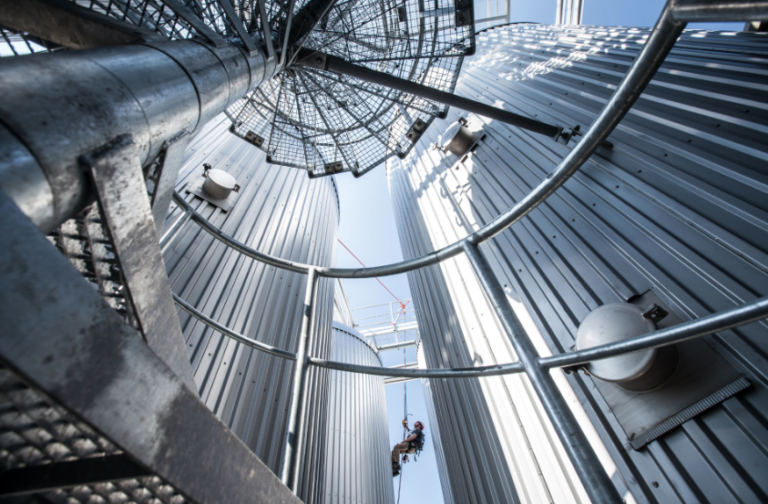
Rescue operations are as diverse as the environments they take place in. High-angle rescue involves steep slopes or cliffs and requires advanced rigging and patient packaging. Confined space rescue occurs in small, enclosed areas, such as manholes or tanks, requiring specialized tools and innovative rigging solutions. Pickoff rescues are a form of rescue where a rescuer descends to a victim suspended on a rope.
Advanced Systems & Techniques
Modern rope rescue has evolved to include sophisticated systems that enhance safety and efficiency. Twin Tension Rope Systems (TTRS) are a significant evolution, using two actively tensioned ropes to share the load. This redundancy provides an incredible layer of safety, minimizing shock loading and making the system more stable. Highlines are used to span gaps, allowing a suspended load to be moved horizontally or diagonally.
A Symphony of Gear, Training, & Teamwork
Ultimately, an effective rescue operation is a seamless symphony of gear, training, and teamwork. Every carabiner, every knot, and every decision is part of a larger, integrated system. It’s a field that demands continuous learning and an adaptive mindset.
The most successful rescue teams are those that move beyond just understanding individual components to mastering the holistic system—emphasizing safety, efficiency, and the adaptability to solve any tactical problem a rescue scenario throws their way.
Peace on your Days
Lance