The CMC Clutch Twin Tension Two Tension Lower has become a defining standard in modern rope rescue systems. By integrating the Clutch into a Twin Tension Rope System (TTRS), rescuers can achieve smoother control, balanced load distribution, and built-in redundancy. Whether lowering or raising, the Clutch ensures safe transitions, adaptability across rescue environments, and confidence for teams managing critical operations.
In this article, we’ll break down how the system works, explore single-operator and team applications, and highlight why the CMC Clutch is so versatile in technical rescue.
The Foundation of Twin Tension Systems
Twin Tension Rope Systems (TTRS) are designed to share the load evenly between two main lines. Unlike traditional setups where one rope is the “main” and the other is a “belay,” in a TTRS both ropes actively support the load.
Advantages of TTRS include:
-
Redundancy: Each rope can independently carry the full load if one fails.
-
Control: Smoother lowers with less rope stretch or shock-loading.
-
Efficiency: Dual operators (or a single operator with proper rigging) can manage heavy or complex rescues with reduced effort.
The Clutch integrates seamlessly into this system by combining descent control, progress capture, and mechanical advantage handling in a single device.
Why the Clutch?
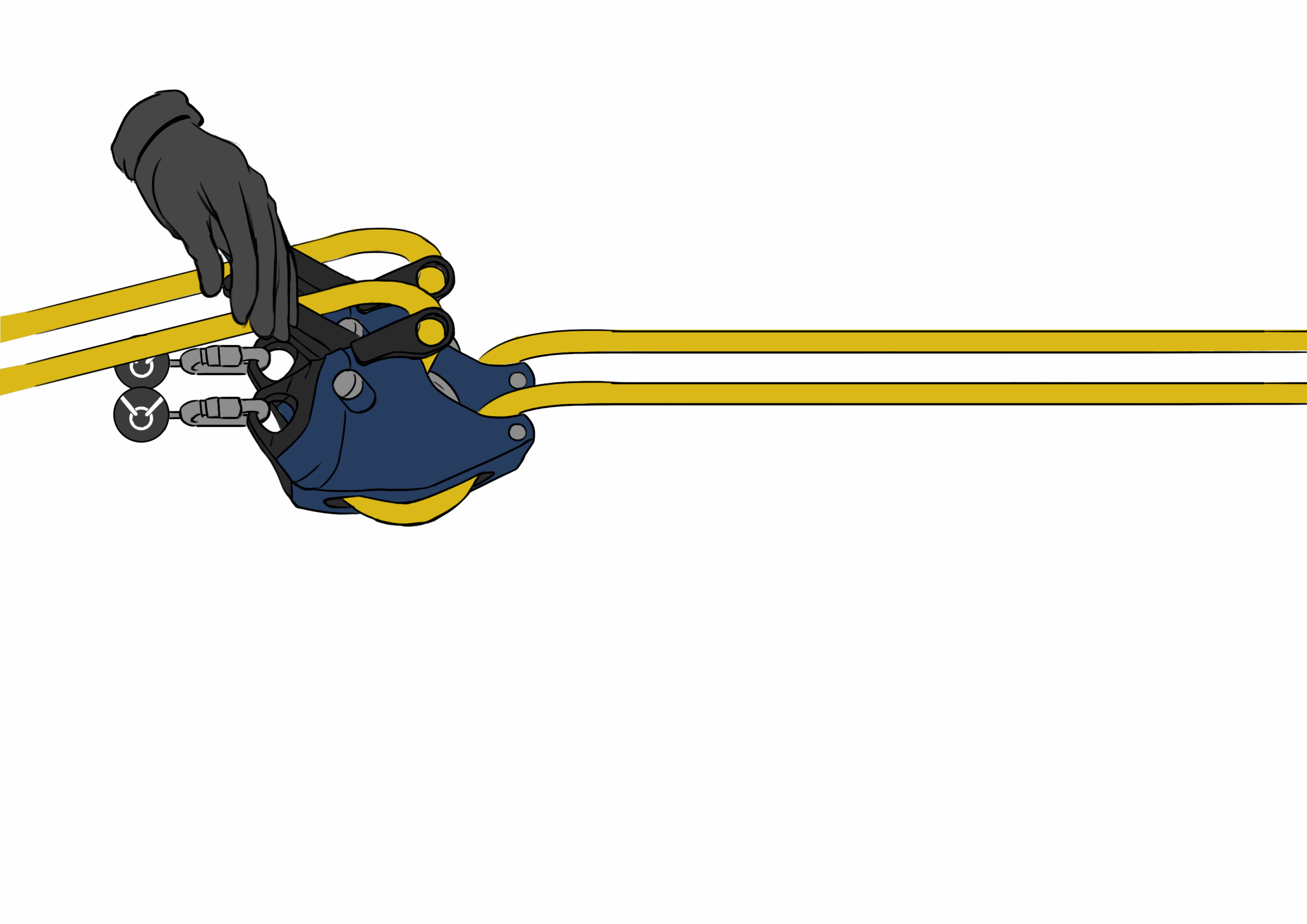
The CMC Clutch by Harken Industrial was engineered to combine multiple functions into one piece of hardware. It is certified for rescue, rope access, and work-at-height, and available in both 11 mm and 13 mm models.
Key features include:
-
Smooth rope handling with minimal sheath wear.
-
Integrated descent control for lowering.
-
Automatic progress capture during hauling.
-
Durable construction for high-cycle operations.
-
Two-person load rating for rescue environments.
When paired in a twin tension setup, two Clutches provide not just redundancy, but mirrored control.
Two Tension Lowering with the Clutch
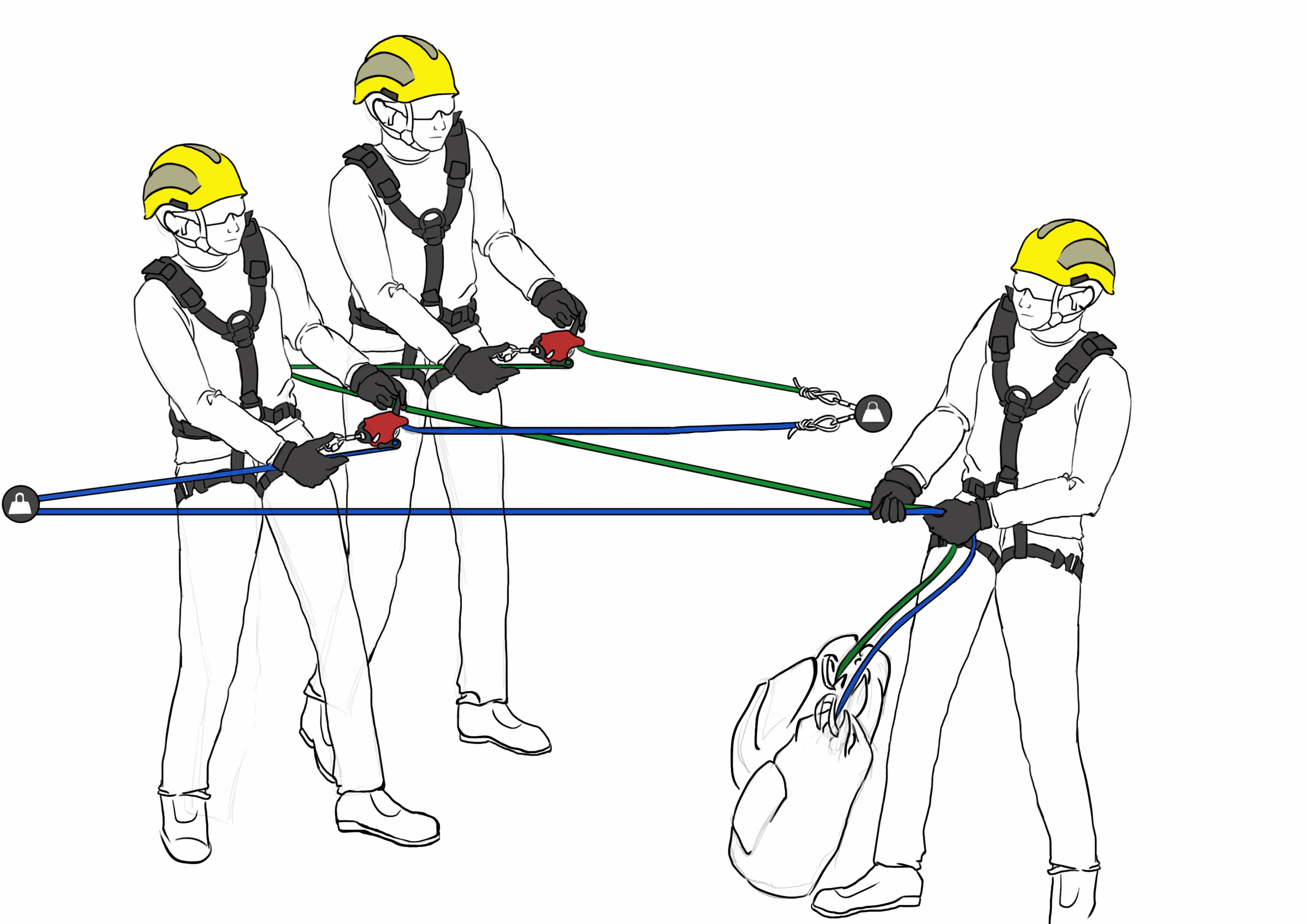
The two tension lower (also called “twin tension lower”) is where the Clutch truly shines. Instead of relying on a primary and backup belay, both Clutches act as lowering devices, each carrying half the load.
How It Works:
-
Two ropes are anchored and connected to the load.
-
Each rope runs through a Clutch at the operator’s station.
-
Operators simultaneously release rope, keeping tension equal on both lines.
-
The load descends smoothly, with redundancy always in place.
The benefit is simple: if one rope is cut or fails, the other instantly assumes the full load without shock.
Single Operator Back-Tensioning
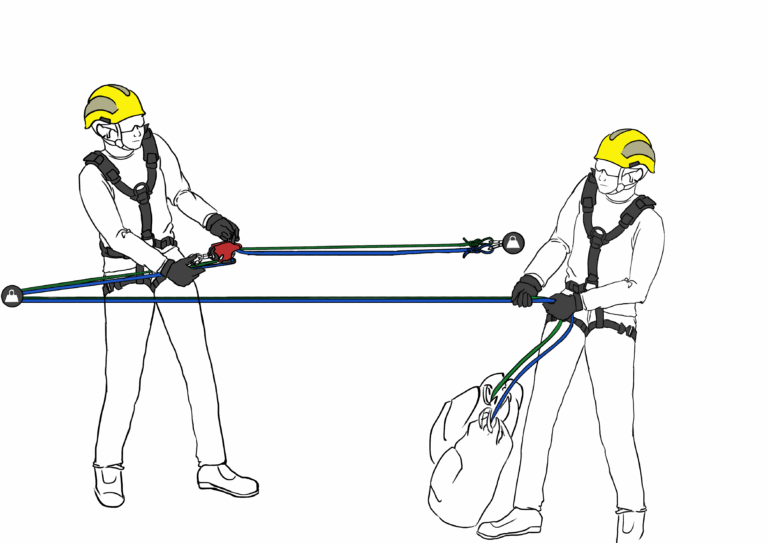
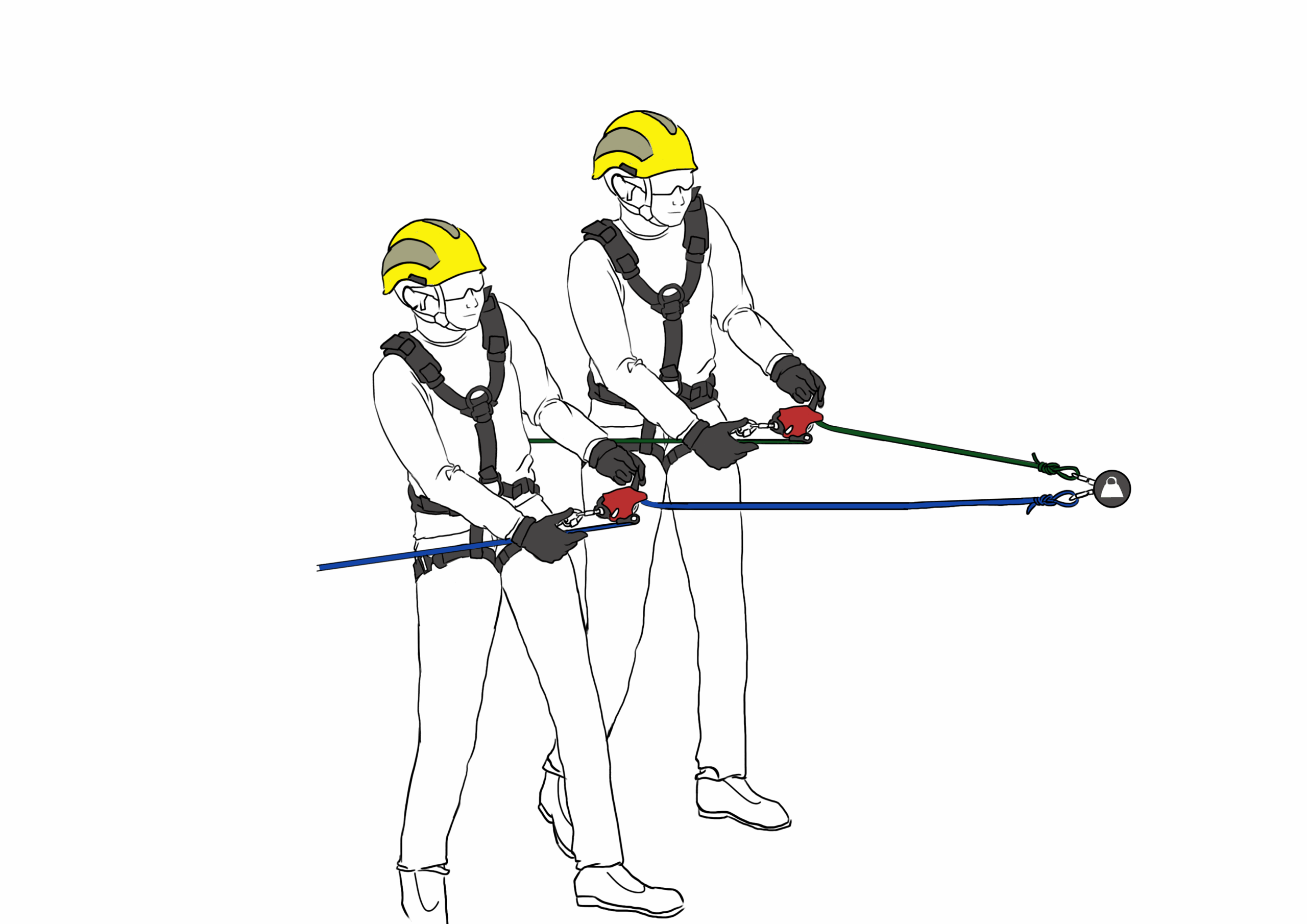
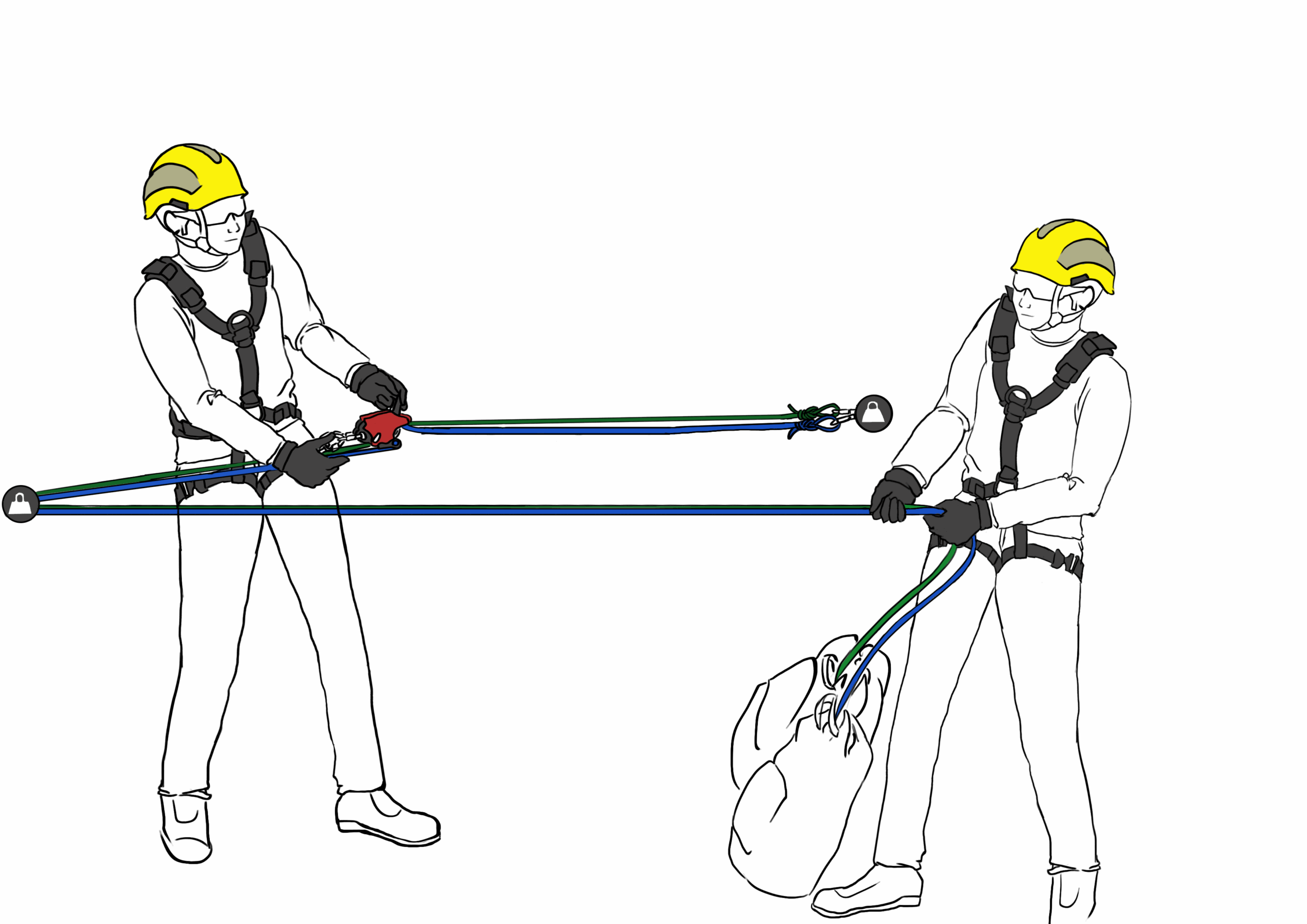
One of the standout advantages of the Clutch system is that a single operator can manage both lines. This is accomplished through back-tensioning.
Steps:
-
The primary hand operates one Clutch directly.
-
The second rope is back-tensioned, ensuring equal sharing of the load.
-
The operator maintains control by keeping both devices balanced.
This allows smaller teams, or situations with limited personnel, to still deploy a fully redundant twin tension lower.
Safety in Redundancy
Images [attached above] demonstrate how operators can rig back-tension lines to ensure system safety. This prevents rope slack and ensures that both devices remain actively engaged throughout the lowering.
Safety benefits include:
-
No delay in load transfer.
-
Even descent speed across both lines.
-
Consistent rope tension that prevents dynamic shock if one rope is lost.
This redundancy is what separates a two-tension lower from outdated main/belay systems.
Two Clutches in Team Operations
For larger teams, the Clutch allows each operator to focus on a single device. Two rescuers positioned side by side can synchronize their movements, ensuring balanced rope payout. This division of labor reduces fatigue and maintains precision even during long or complex lowers.
Applications include:
-
High-angle cliff rescues where precision descent is critical.
-
Tower or structure operations where the load must remain level.
-
Confined space evacuations where sudden rope shifts can create hazards.
Beyond Lowering: Raising with the Clutch
While this article focuses on lowering, it’s important to note that the Clutch also excels in raising systems. Its integrated progress capture allows teams to switch from lowering to hauling without re-rigging complex setups. This versatility means one device can handle multiple rescue phases.
Comparing the 11 mm and 13 mm Clutch
Choosing the right Clutch depends on your environment.
-
11 mm Clutch:
-
Lighter weight, ideal for rope access and lighter rescues.
-
Optimized for efficiency and compact rigging.
-
-
13 mm Clutch:
-
Greater load capacity, designed for two-person rescues.
-
Rugged construction for industrial and municipal rescue teams.
-
Both models fit seamlessly into twin tension lowers, but the 13 mm is often preferred in fire, rescue, and industrial contexts where loads are heavier and team redundancy is critical.
Real-World Benefits of the Twin Tension Clutch System
Adopting the CMC Clutch Twin Tension Two Tension Lower has several operational benefits:
-
Control: Smooth, precise descent management.
-
Redundancy: Both ropes actively share the load.
-
Versatility: Easily transitions from lower to raise.
-
Efficiency: Single or dual operators can run the system.
-
Durability: Designed for high-use professional rescue environments.
Training Considerations
While the Clutch simplifies many rigging tasks, training is essential. Teams must practice synchronized lowering, back-tension management, and system conversions. Drills should include:
-
Single-operator lowers with back-tension safety.
-
Dual-operator synchronized lowers.
-
Emergency transfer drills simulating rope failure.
-
Switching between lowering and raising.
Consistent training ensures rescuers instinctively manage the devices under stress.
Conclusion
The CMC Clutch Twin Tension Two Tension Lower represents a new standard for rescue teams. By integrating redundancy, control, and adaptability, the Clutch makes two-tension lowering practical for teams of any size.
Whether deployed by a single operator managing back-tension or a full rescue team lowering in sync, the Clutch ensures that every descent is smooth, balanced, and safe. Its design reflects the modern evolution of rescue systems—where efficiency and safety must go hand in hand.
For teams committed to advancing their rescue capabilities, the Clutch is more than a device; it is a complete system solution.
Peace on your Days
Lance