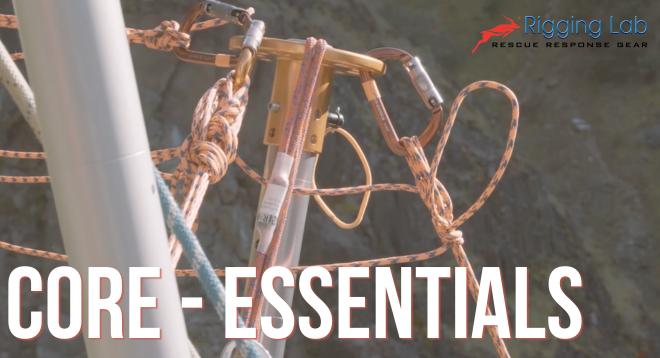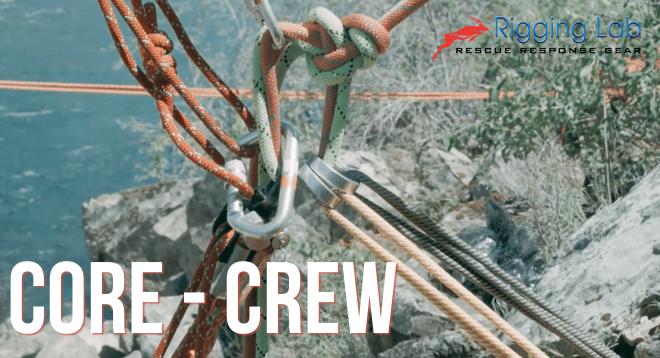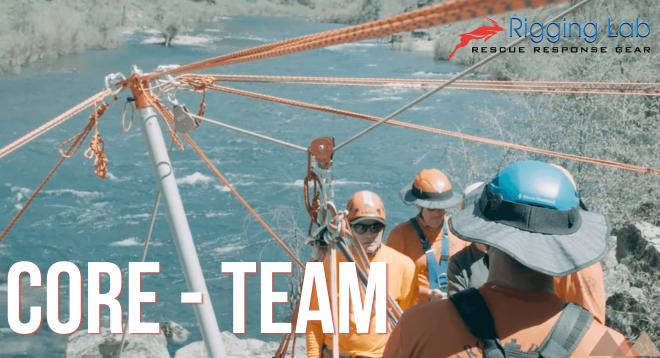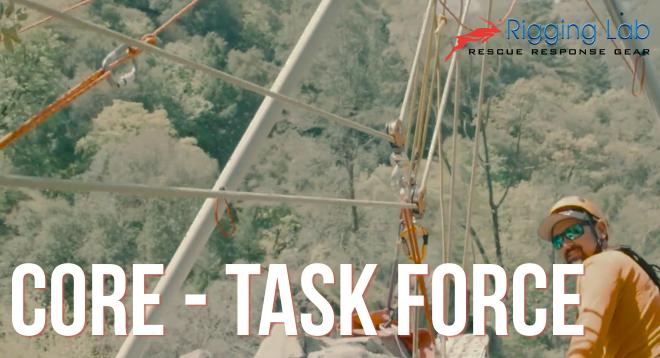
A two tension offset system allows rescuers to move loads laterally or diagonally—especially when vertical lowering is not an option. In this scenario, we use a monopod high directional on one side and a sideways A-frame on the other to shape and control the rope path.
This approach is ideal for traversing terrain where edge obstructions, elevation changes, or vertical drops make a straight-down descent risky or impossible. By using directionals on each side, the team can thread the rope path precisely, ensuring the litter remains centered and controlled.
Why Use a Monopod and Side A-Frame?
Both high directionals serve a purpose in reshaping the rope trajectory:
-
Monopod: Lightweight and quick to deploy, a monopod provides a vertical redirect that clears an edge or obstacle without the need for a full frame. It’s commonly placed where the drop starts—on a cliff edge, retaining wall, or steep slope.
-
Side A-Frame: Positioned at the lower or opposite anchor point, a sideways A-frame (also called a Side A or Bastard A-frame) offers lateral clearance and maintains rope angle integrity. It prevents rope-on-ground friction and provides clean rope access to the load.
Together, they create a controlled V-haul configuration—each rope independently tensioned, sharing load, and guided by geometry rather than gravity alone.
System Setup: What It Takes
Anchoring and Directionals
-
Place the monopod at the upper edge, securely lashed or guyed if needed. This keeps the rope path clean as it exits the anchor.
-
Deploy the side A-frame across from the monopod to support the exit rope angle on the far side.
-
Ensure both directionals are properly back-tied and edge-protected.
Twin Tension Rope Systems
-
Two lowering systems are rigged, one from each anchor.
-
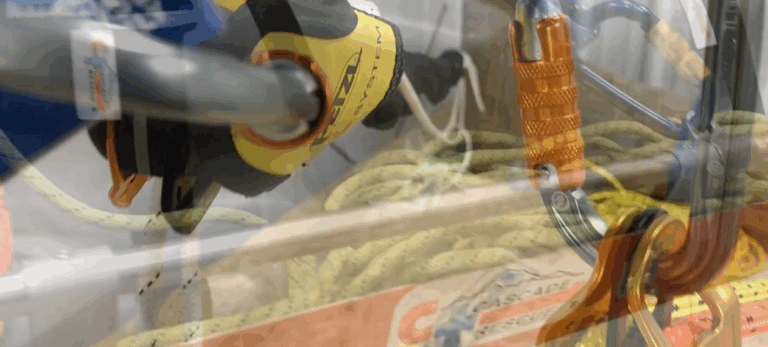
Use descent control devices like the CLUTCH, MPD, or Petzl ID for mirrored tensioning.
-
Keep both ropes tensioned evenly throughout the operation to minimize pendulum or lateral load drift.
Load Attachment and Edge Transition
-
Rig the litter to a floating bridle or a two-point connection.
-
Manage the transition over the edge with guiding hands or a tensioned tagline to prevent shock load.
-
Edge pro and litter wheel options depend on surface and span length.
Benefits of This Setup
Using a monopod and side A-frame in a two tension offset provides:
-
Lateral and Vertical Control: Maintains control across variable terrain, not just top-to-bottom movement.
-
Edge Clearance: High directionals prevent rope drag, damage, and edge snagging.
-
Precision Movement: The team can steer the litter across a diagonal line, ideal for terrain that slopes or shifts in elevation.
-
Built-In Redundancy: Each tensioned line supports the load dynamically—reducing risk from anchor failure or device slippage.
Real-World Applications
This setup shines in operations like:
-
Cliffside evacuations with an angled drop and landing zone
-
Urban or industrial rescues where vertical descent would swing the litter into hazards
-
Tower rescue where the structure’s base is offset or obstructed
-
Wilderness scenarios requiring diagonal movement across a canyon face or unstable scree
Tips for Safe Operation
-
Communicate Clearly: Synchronize both rope teams and maintain verbal or radio contact.
-
Balance Tension: Even tension is critical to maintain trajectory and load stability.
-
Watch the Angles: Side loading on directionals must be managed carefully—particularly with side A-frames.
-
Plan the Descent Path: Sketch out angles, terrain, and landing zone access before deploying gear.
Final Thoughts
The two tension offset with a monopod and side A-frame offers a flexible and efficient solution to otherwise unworkable terrain. It’s a hybrid system that combines minimal gear on one end with strategic directional force control on the other.
As with all advanced systems, training and familiarity are essential. But once mastered, this configuration adds serious versatility to your technical rope toolkit.
Peace on your Days
Lance