technical rescue

Mechanical Advantage Piggyback Method in Raising Operations

Mechanical Advantage Piggyback Method in Raising Operations

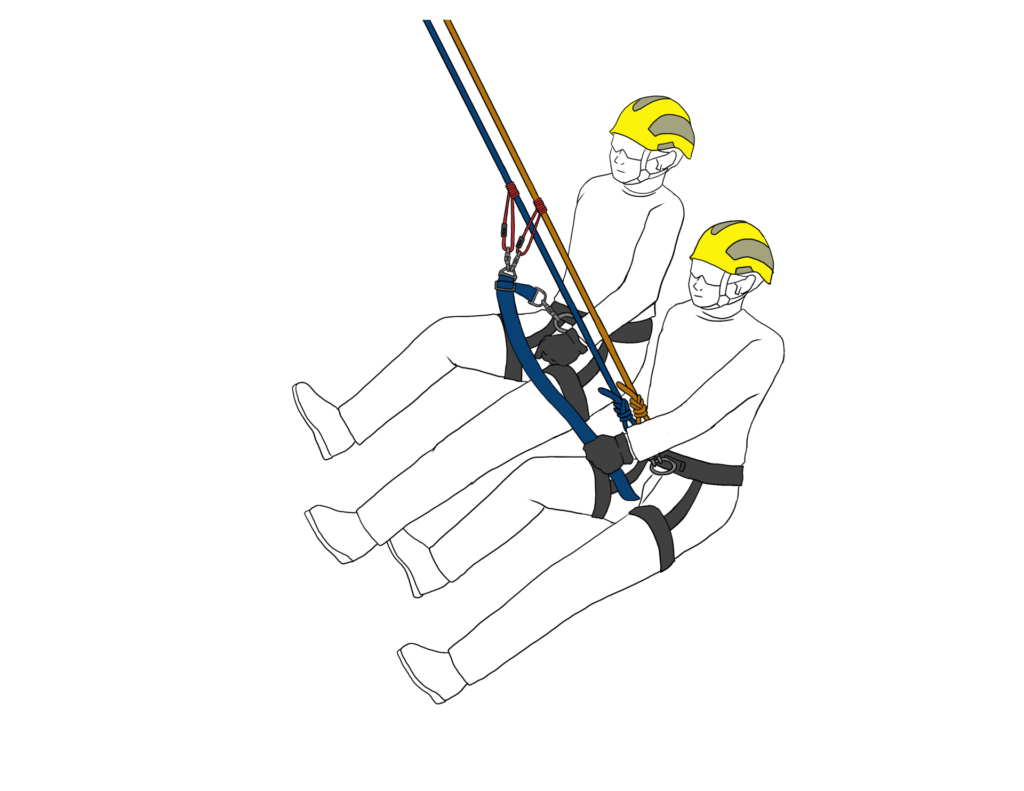
The Mechanical Advantage Piggyback Method is a powerful and advanced rope rescue technique that provides precision, safety, and flexibility during raising operations—especially when encountering knots in the rope system. This method leverages an auxiliary mechanical advantage (MA) system, such as an AZTEK kit, to temporarily assume load-bearing responsibility, enabling rescuers to reposition and manage the […]

Mechanical Advantage Piggyback Method in Raising Operations Read More »
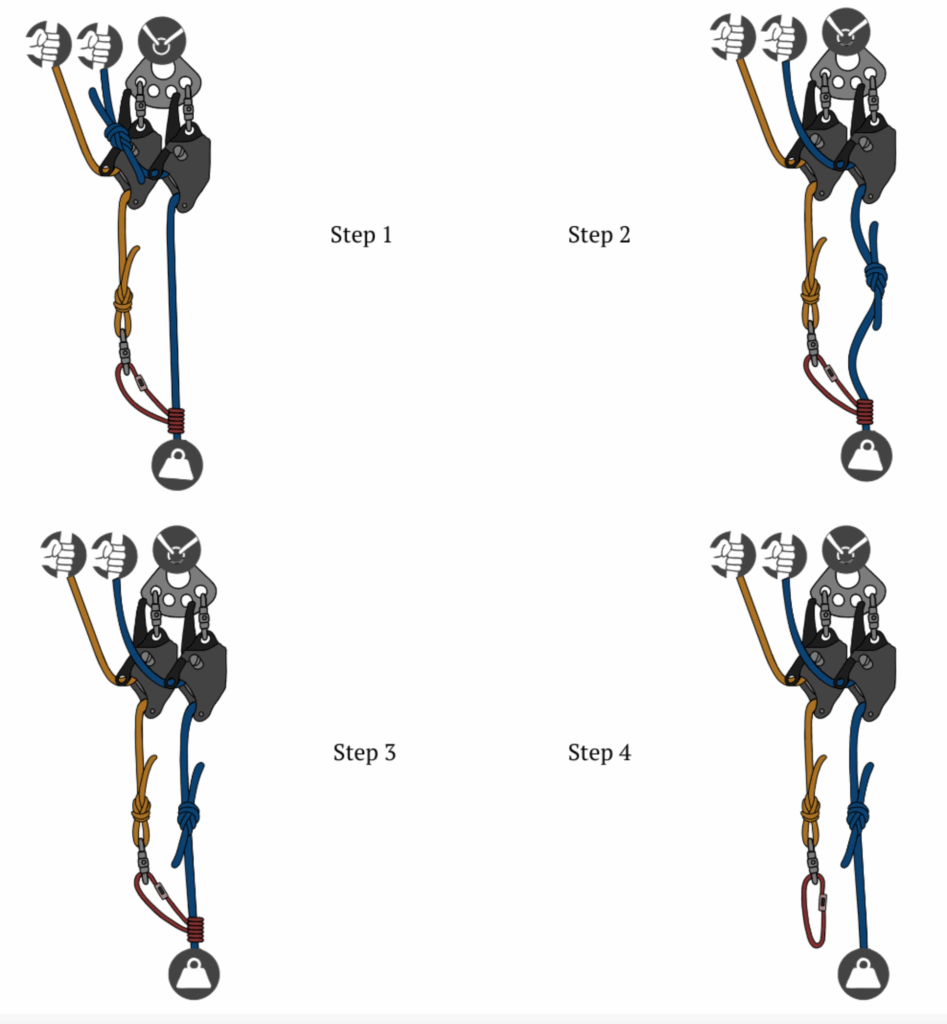
Lowering Piggyback Method for Knot Management in Rope Rescue

Lowering Piggyback Method for Knot Management in Rope Rescue

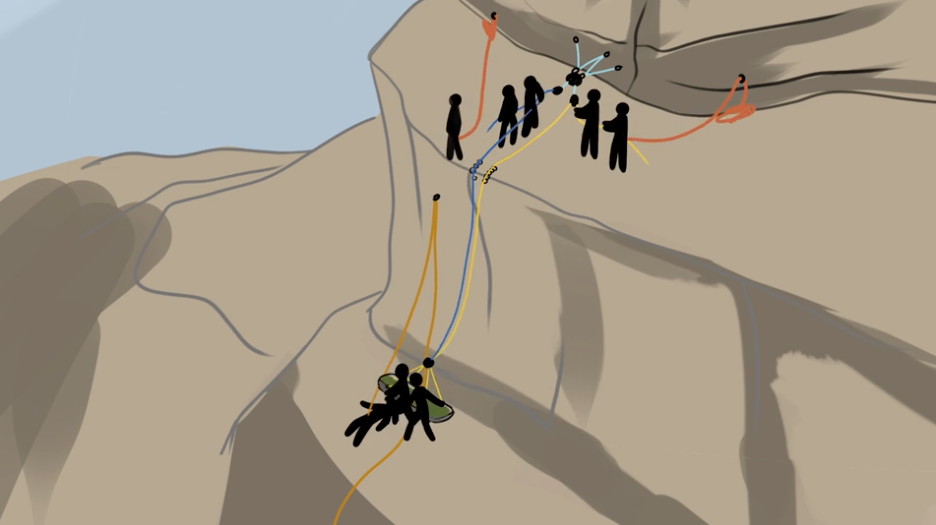
The Lowering Piggyback Method is a rope rescue technique used to maintain continuous descent control while safely bypassing a knot in the main line. This method incorporates a secondary descent control system—known as the piggyback—and provides a controlled process for transferring loads when a knot prevents further lowering. Ideal for systems using the Clutch, MPD,

Lowering Piggyback Method for Knot Management in Rope Rescue Read More »

Basic mechanical advantage systems enable efficient lifting with simple pulleys. Learn the essentials of the 3:1 Z-rig for safe rescues - How is Weight Redistributed Through a 3:1 Mechanical Advantage System? - Eccentric Progress Capture in Mechanical Advantage Systems

Eccentric Progress Capture in Mechanical Advantage Systems

Eccentric Progress Capture in Mechanical Advantage Systems Eccentric Progress Capture in Mechanical Advantage Systems in rope rescue systems – most mechanical advantage setups are designed to pull or contract—that is, to haul loads upward or horizontally. But not all scenarios are about lifting. Some require controlled lowering under load while maintaining tension and control. This

Eccentric Progress Capture in Mechanical Advantage Systems Read More »

Balancing Online and Hands-On Training -Knots for Force Multiplication in Rope Rescue - Steep Highline Calculations and Rigging Techniques

Steep Highline Calculations and Rigging Techniques

Steep Highline Calculations and Rigging Techniques Mastering steep highline systems takes more than just strong anchors and high-quality rope—it demands precision, forethought, and the ability to calculate force vectors in real-time terrain. In other words, steep highline calculations and rigging techniques are critical. Whether you’re new to horizontal rigging or refining your advanced systems, steep-angle

Steep Highline Calculations and Rigging Techniques Read More »

Twin Tension Rope Systems and Gin Pole Setup

TTRS and Gin Pole Setup for Technical Rope Work

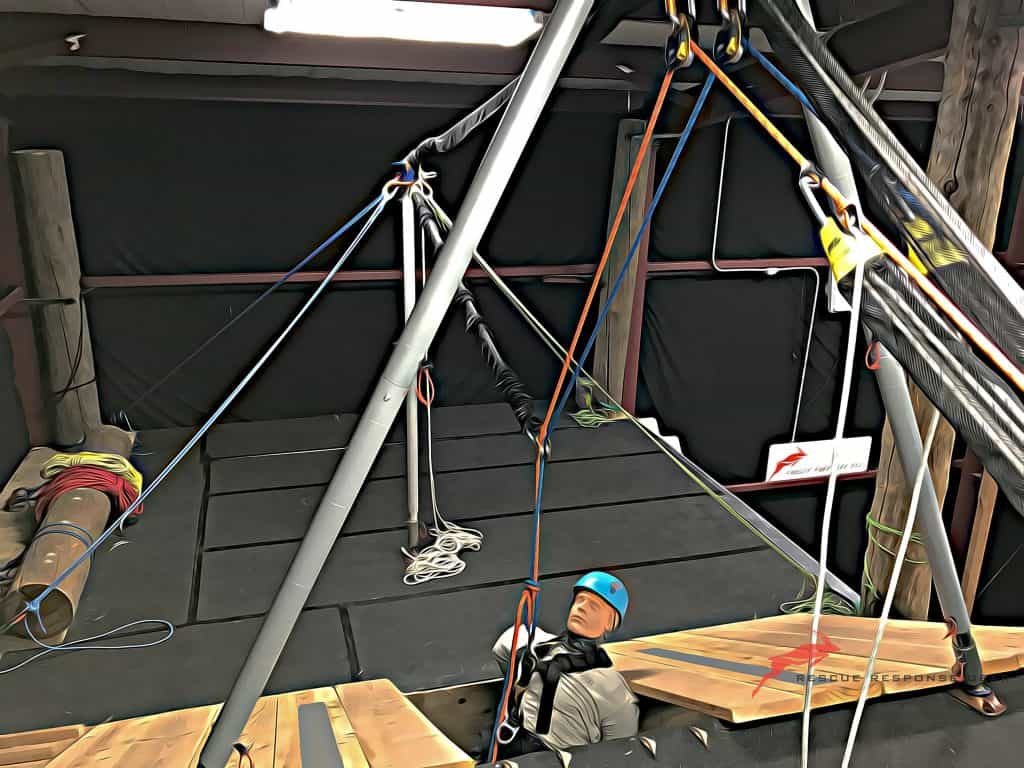
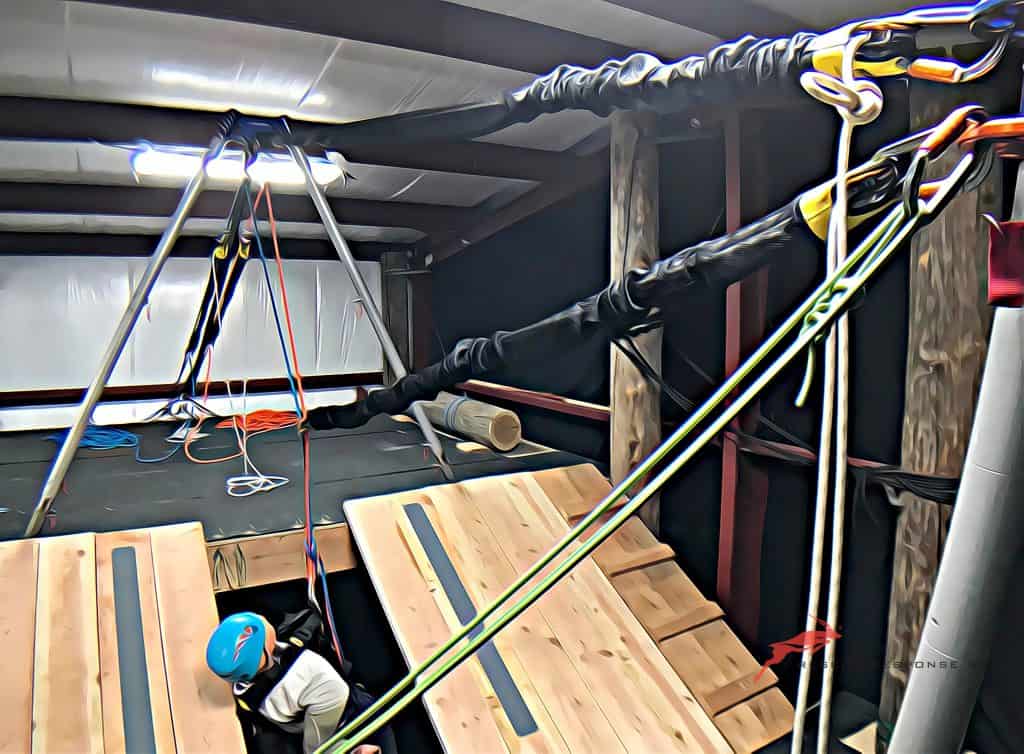
Technical rope professionals often need fast clarity on specific systems. Whether you are refining a Twin Tension Rope System (TTRS) or setting up a gin pole, efficiency, safety, and precision come from understanding how the system works—not just owning the gear. Twin Tension Rope Systems (TTRS) TTRS distributes the load between two tensioned lines, with

TTRS and Gin Pole Setup for Technical Rope Work Read More »

Mastering Horizontal Lifts and Pickoff Rescues in Rope Rigging

Horizontal Lifts and Pickoffs in Rope Rescue

Mastering Horizontal Lifts and Pickoffs in Rope Rescue Rescue professionals are constantly refining their techniques to handle challenging scenarios efficiently. Two fundamental operations in technical rescue—horizontal lifts and pickoffs—demand precision, coordination, and a deep understanding of rigging principles. Whether you’re an instructor preparing a course or a team leader refining skills, mastering these methods ensures

Horizontal Lifts and Pickoffs in Rope Rescue Read More »

Essential Gear for Rope Rescue - Applying the Pareto Principle in Rope Rescue - Prototype Mountain Rescue Technician - Rigging Lab Accelerator

Rigging Lab Accelerator The Future of Rope Rescue Training

Rigging Lab Accelerator The Future of Rope Rescue Training In technical rope rescue, every second counts. Every decision must be precise. The Rigging Lab Accelerator is an AI-powered training tool that delivers real-time solutions, expert guidance, and adaptive learning to rescuers and rigging professionals. Whether responding to an emergency, refining techniques, or training teams, this

Rigging Lab Accelerator The Future of Rope Rescue Training Read More »

Litter Operations and Patient Evacuation

Litter Operations and Patient Evacuation

Litter operations are the backbone of modern rope rescue teams, embodying the precision and care required to transport injured patients across challenging terrains. Whether navigating steep cliffs, confined spaces, or uneven wilderness, the ability to package and safely maneuver a patient in a litter is a defining skill for any team dedicated to rescue excellence.

Litter Operations and Patient Evacuation Read More »

Smarter Rope Rescue Training

Smarter Rope Rescue Training

Why Traditional Rope Rescue Training Falls Short For years, technical rope rescue has followed a structured, step-by-step model. Rescuers learn isolated techniques, practice them in controlled settings, and pass certification exams that assess their ability to follow predefined procedures. This approach builds foundational skills, but it does not always prepare rescuers for real-world challenges. Actual

Smarter Rope Rescue Training Read More »

key articles on artificial high directionals (AHDs) - Artificial High Directionals Purpose Built Systems and Improvised Solutions

Purpose Built Artificial High Directionals

Artificial High Directionals: Purpose-Built Systems and Improvised Solutions Artificial High Directionals (AHDs) play a crucial role in technical rescue operations by creating elevated anchor points for hauling, lowering, and managing edge transitions. While purpose-built products like the Arizona Vortex and SMC Terradaptor are industry standards, rescue teams often encounter scenarios where they must improvise using

Purpose Built Artificial High Directionals Read More »

Balancing Costs in Rope Rescue Rigging - Dynamic Directionals in Rope Rescue

Dynamic Directionals in Rope Rescue

High Directional Systems in Rope Rescue A high directional is a crucial component in rope rescue operations, used to elevate the rope system above the rescue scene. By raising anchor points, high directionals enable safer, more efficient rescue operations across various challenging environments. Definition and Purpose A high directional is a rigged system designed to:

Dynamic Directionals in Rope Rescue Read More »

Span Anchors vs Traditional Anchors

Span Anchors vs. Traditional Anchors

Span Anchors vs. Traditional Anchors In technical rope rescue, choosing the right anchor system is critical. Span anchors and traditional anchors serve different purposes, each with its advantages and limitations. Understanding these differences will help rescue teams determine the best solution for their specific challenges. Key Differences Between Span Anchors and Traditional Anchors Setup Complexity

Span Anchors vs. Traditional Anchors Read More »

Patient Packaging and Raise/Lower Techniques

Patient Packaging and Raise/Lower Techniques

Patient Packaging and Raise/Lower Techniques: Building Essential Skills for Technical Rescue Technical rescue often involves navigating challenging terrains, high-risk environments, and critical medical conditions. One of the most essential skills for any rescue team is mastering patient packaging and raise/lower techniques. These practices ensure the patient is secure, safe, and stable during extrication, while also

Patient Packaging and Raise/Lower Techniques Read More »

Gin Pole Rigging Stability

Gin Pole Rigging Stability: Unequal Tension in Guys Guying a gin pole is not about applying equal tension to all guy lines. Understanding the direction and magnitude of compression and tension forces is critical. These forces dictate how the monopod responds under load and help you predict how the system will stabilize during operation. Practical

Gin Pole Rigging Stability Read More »

Voodoo Hitch Rigging Technique

Voodoo Hitch Rigging Technique

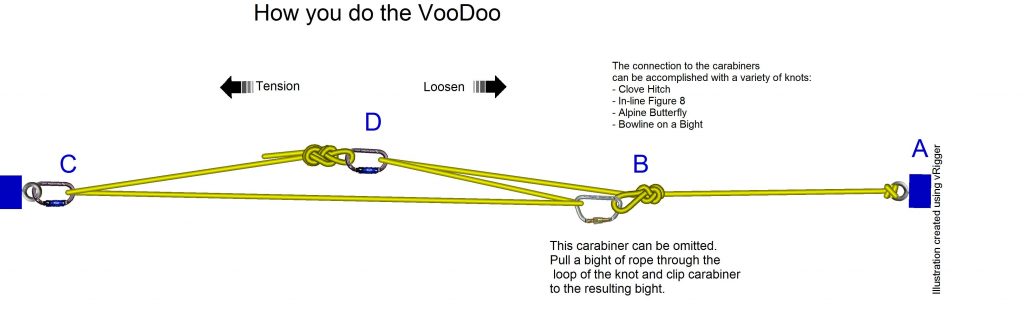
The Voodoo Hitch: A Game-Changer in Technical Rigging Every so often, a technique or tool comes along that completely changes how we approach problem-solving in rigging and technical rescue. One such method is the Voodoo Hitch—a simple yet revolutionary tensioning system that has proven invaluable across various applications. Here’s an in-depth look at what makes

Voodoo Hitch Rigging Technique Read More »

Major Taglines in Rigging T-Method mechanical advantage

Major Taglines in Horizontal Rigging

Expanding the Concept of Major Taglines in Horizontal Rigging Major taglines are an essential tool in horizontal rigging, valued for their ability to maintain safety, efficiency, and simplicity in operations over wide gaps and challenging terrain. They form a critical part of the rigging toolbox, particularly when compared to other horizontal systems like highlines or

Major Taglines in Horizontal Rigging Read More »

Patient Packaging and Litter Handling Floating the litter

Patient Packaging and Litter Handling

In the high-stakes world of technical rescue, precision and preparation are everything. Whether you’re navigating rugged slopes or suspended hundreds of feet above the ground, effective litter handling and patient packaging are critical to ensuring safety and success. From low-angle scenarios to advanced Class 5 operations, each technique builds on the last, creating a cohesive

Patient Packaging and Litter Handling Read More »

Patient and Litter Packaging

Patient and Litter Packaging

Patient and Litter Packaging Patient and litter packaging is a cornerstone of technical rescue operations, ensuring the victim is secured safely, comfortably, and effectively for transport. Whether the rescue is conducted in a low-angle slope scenario or a high-angle vertical environment, the principles of patient care, system integrity, and operational efficiency must converge seamlessly. In

Patient and Litter Packaging Read More »