nfpa 1006

nfpa 2500 overview for rope rescue

Rope Rescue Standards and Regulations for Professional Teams

Standards and regulations form the backbone of professional rope rescue. While skills, equipment familiarity, and terrain experience all matter, none of them exist in a vacuum. Technical rope rescue is a legally defined and operationally bound discipline, shaped by documents, committees, and long cycles of testing, revision, and consensus. A rescuer who does not understand […]

Rope Rescue Standards and Regulations for Professional Teams Read More »

confined space rescue

Precision and Protocol in Leadership for Confined Space Rescue Operations

In the discipline of technical rescue, the anchor system remains the defining constant—the mechanical and moral foundation of every operation. As Steve Crandall asserts, “Without a solid anchor, properly rigged, the system is bound for failure.”In Confined Space Rescue (CSR), this principle takes on a leadership dimension. Decision-makers are forced to manage high-risk, low-frequency events

Precision and Protocol in Leadership for Confined Space Rescue Operations Read More »

cross-haul rope access

Cross Haul Techniques for Rescue and Equipment Movement

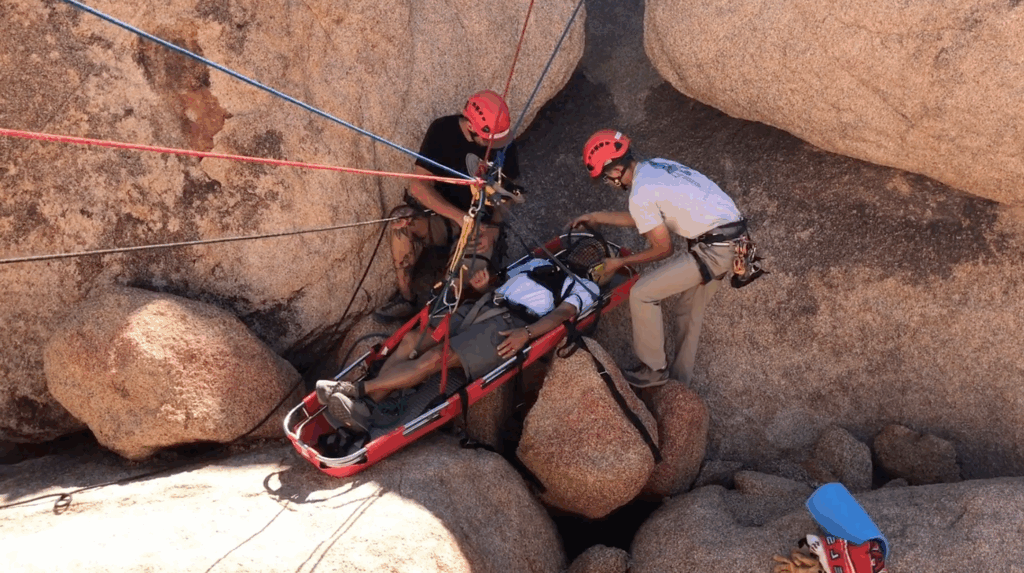
Cross hauling is a controlled horizontal movement technique used to transport loads—such as a patient litter, heavy gear, or suspended equipment—between two points using independent hauling and lowering systems. The method relies on coordination between two rescuers or teams operating from opposite anchors, each managing their side’s tension to maintain balance and stability. When executed

Cross Haul Techniques for Rescue and Equipment Movement Read More »

No Room for Error in Wilderness Rope Rescue and Search

Why Competence Matters in Wilderness Rope Rescue and Search

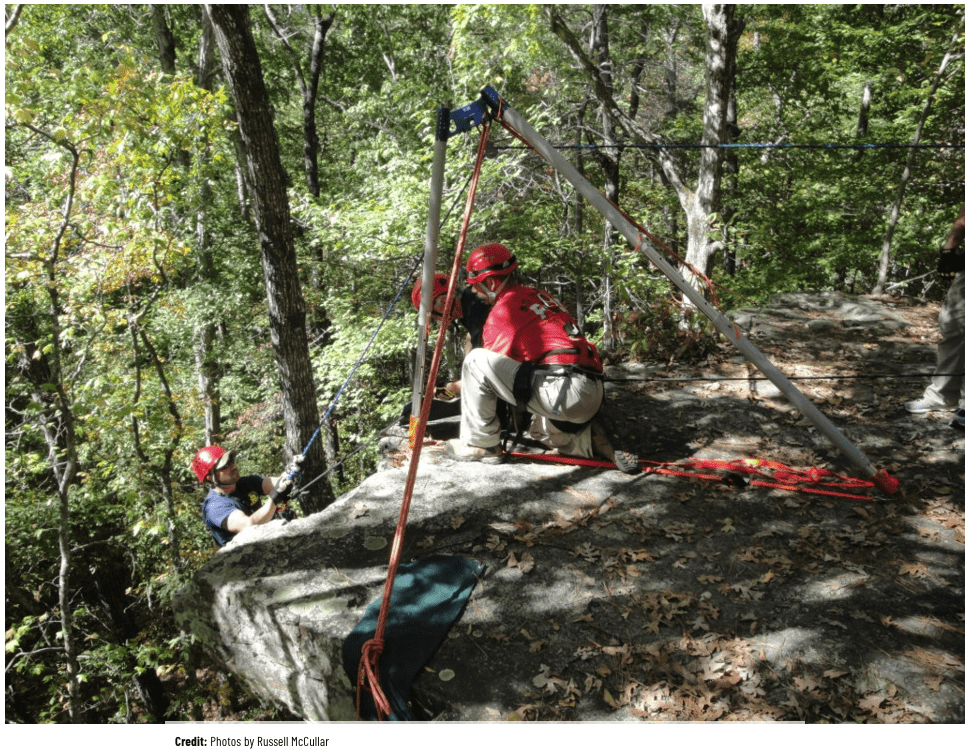
Why Competence Matters in Wilderness Rope Rescue and Search Wilderness Search and Rescue (WSAR) is not just an extension of technical rope rescue—it is an entirely different animal. Rugged terrain, unpredictable conditions, long-duration deployments, and limited resources combine to create some of the most unforgiving operational environments. And in these settings, there’s no room for

Why Competence Matters in Wilderness Rope Rescue and Search Read More »

Organization and Planning in Technical Rope Rescue

Organization and Planning in Technical Rope Rescue

Organization and Planning in Technical Rope Rescue Clear organization and smart planning are what separate chaotic rescues from controlled, professional operations. In technical rope rescue, lives are often hanging in the balance — sometimes literally — and that’s why every technician needs to understand how their team fits into a well-structured plan. The Role of

Organization and Planning in Technical Rope Rescue Read More »

Horizontal Rope Rescue Systems and Highline Movement Techniques

Horizontal rope rescue systems

Understanding Horizontal Movement in Rope Rescue Systems Horizontal rope rescue systems are essential tools in a rescuer’s toolbox—designed not just to span gaps, but to safely and efficiently move a suspended load from one location to another. While many think of rope rescue as a vertical problem, horizontal operations come with their own unique challenges,

Horizontal rope rescue systems Read More »

Tandem Prusik Belay for Knot Passing in Rope Rescue

Tandem Prusik Belay for Knot Passing in Rope Rescue

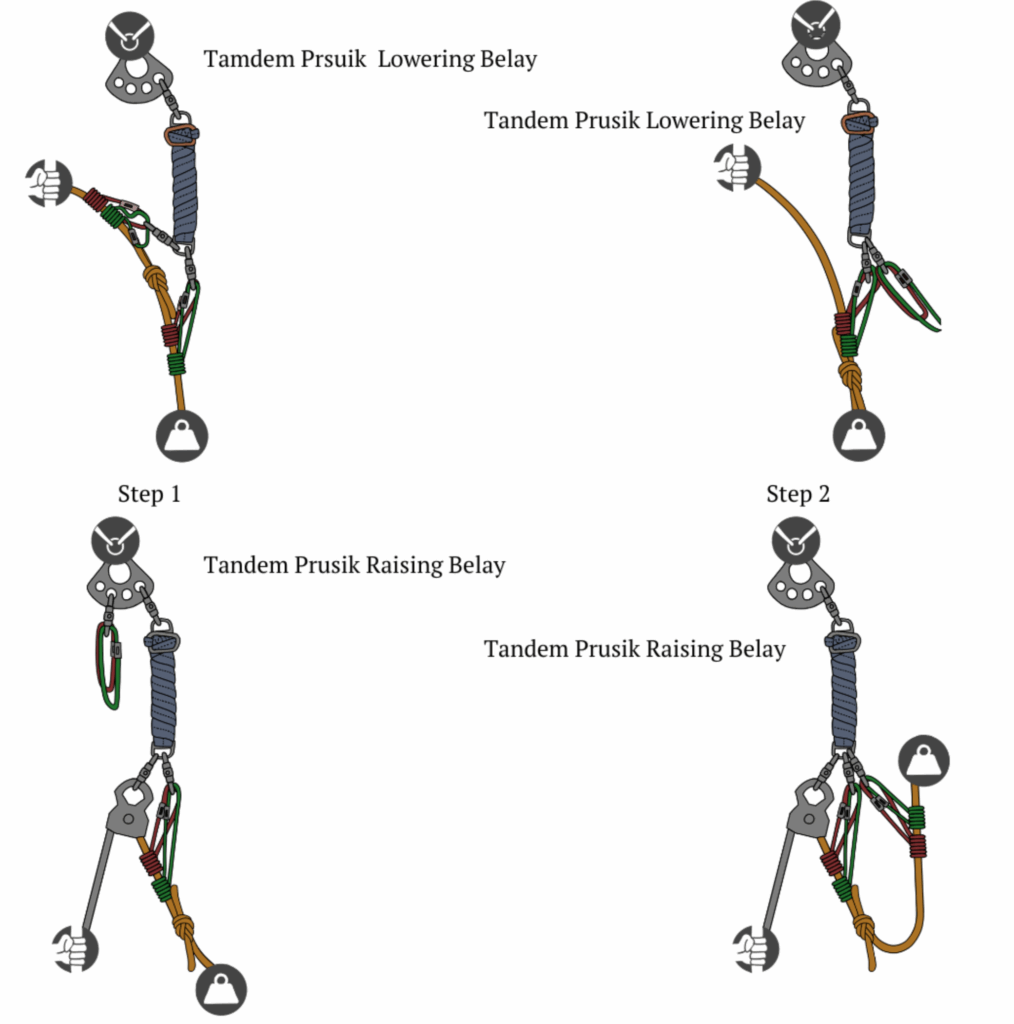
The Tandem Prusik Belay for Knot Passing in Rope Rescue (system) is one of the most trusted belay methods in rope rescue—praised for its simplicity, redundancy, and ability to maintain load control throughout critical transitions. When used in knot-passing scenarios, the Tandem Prusik Belay method shines as it ensures uninterrupted belay protection during both raising

Tandem Prusik Belay for Knot Passing in Rope Rescue Read More »

Raising System Knot Pass Using a Prusik Hitch

Raising System Knot Pass Using a Prusik Hitch

In rope rescue scenarios, particularly those involving raising systems, managing a mid-line knot can be a critical challenge. Whether the knot results from extending rope length or bypassing damaged sections, failure to address it safely can bring operations to a halt. Fortunately, integrating a Prusik hitch into the system offers an efficient and controlled method

Raising System Knot Pass Using a Prusik Hitch Read More »

Twin Tension System Knot Pass for Raising Operations

Twin Tension System Knot Pass for Raising Operations

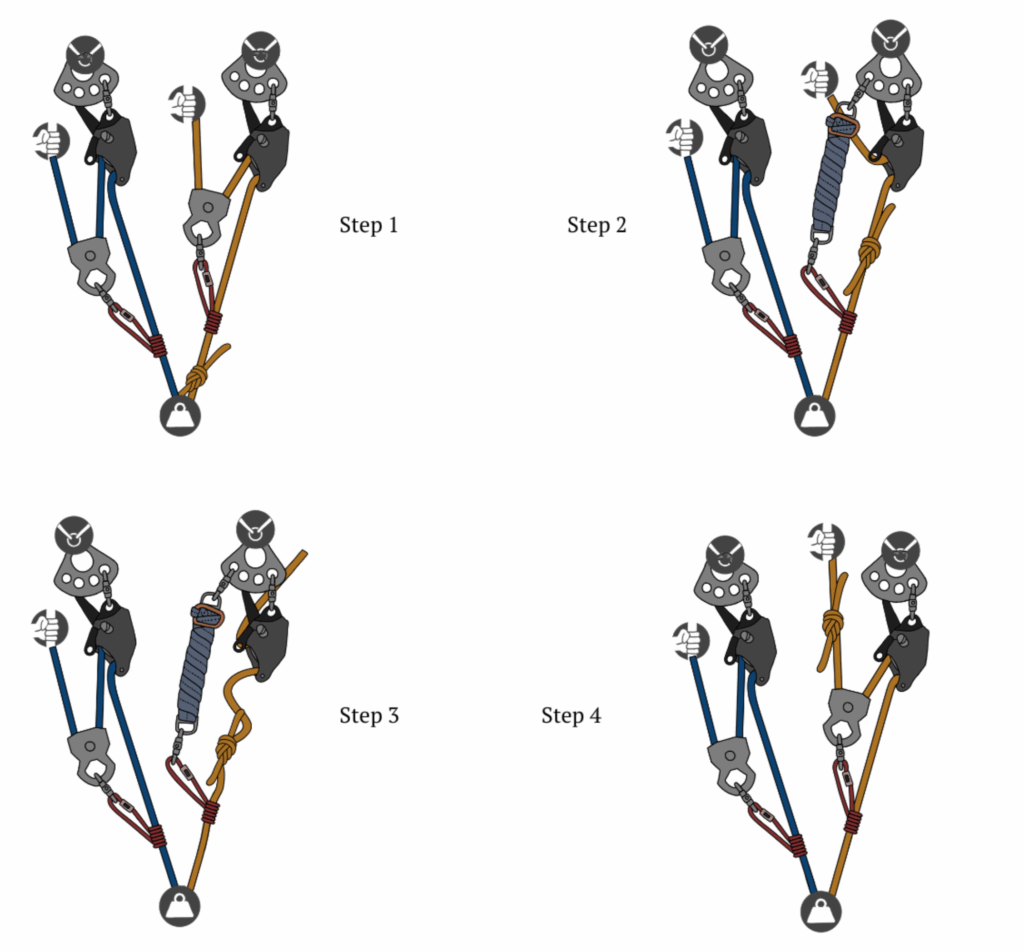
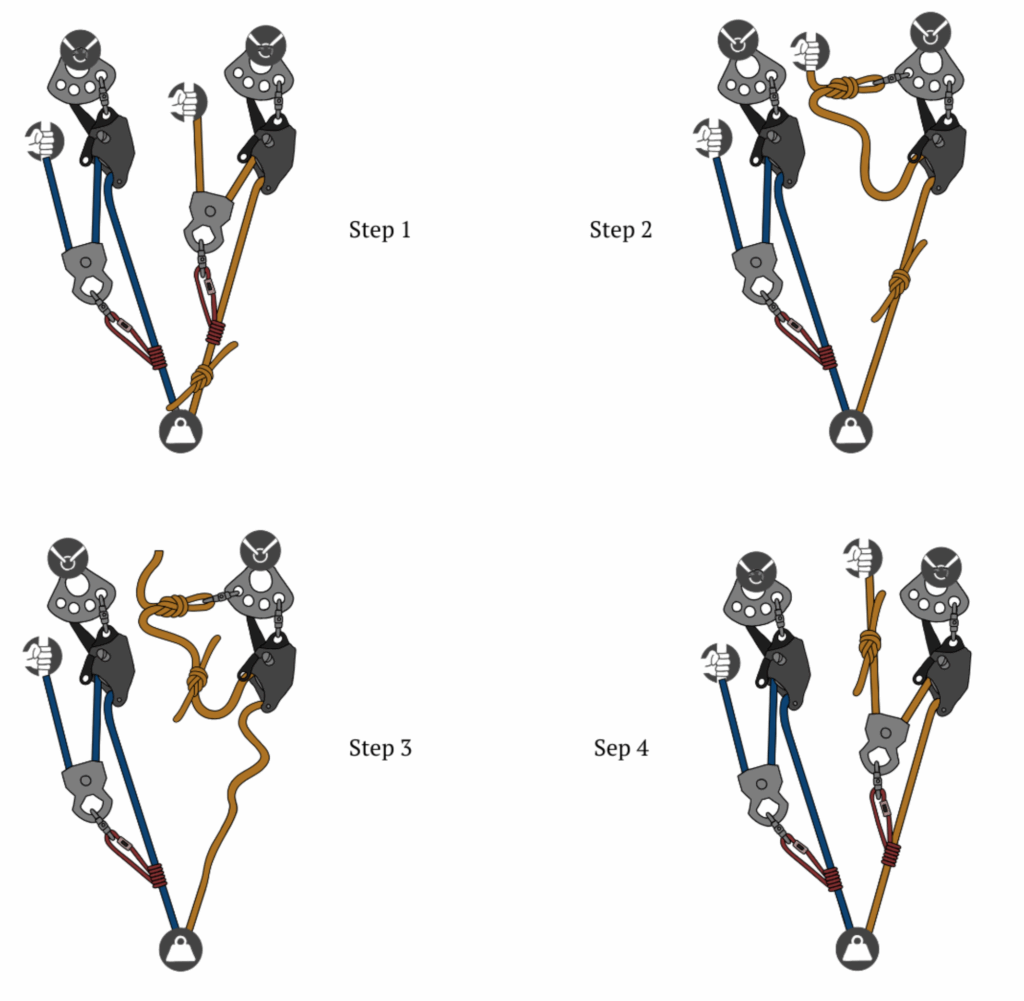
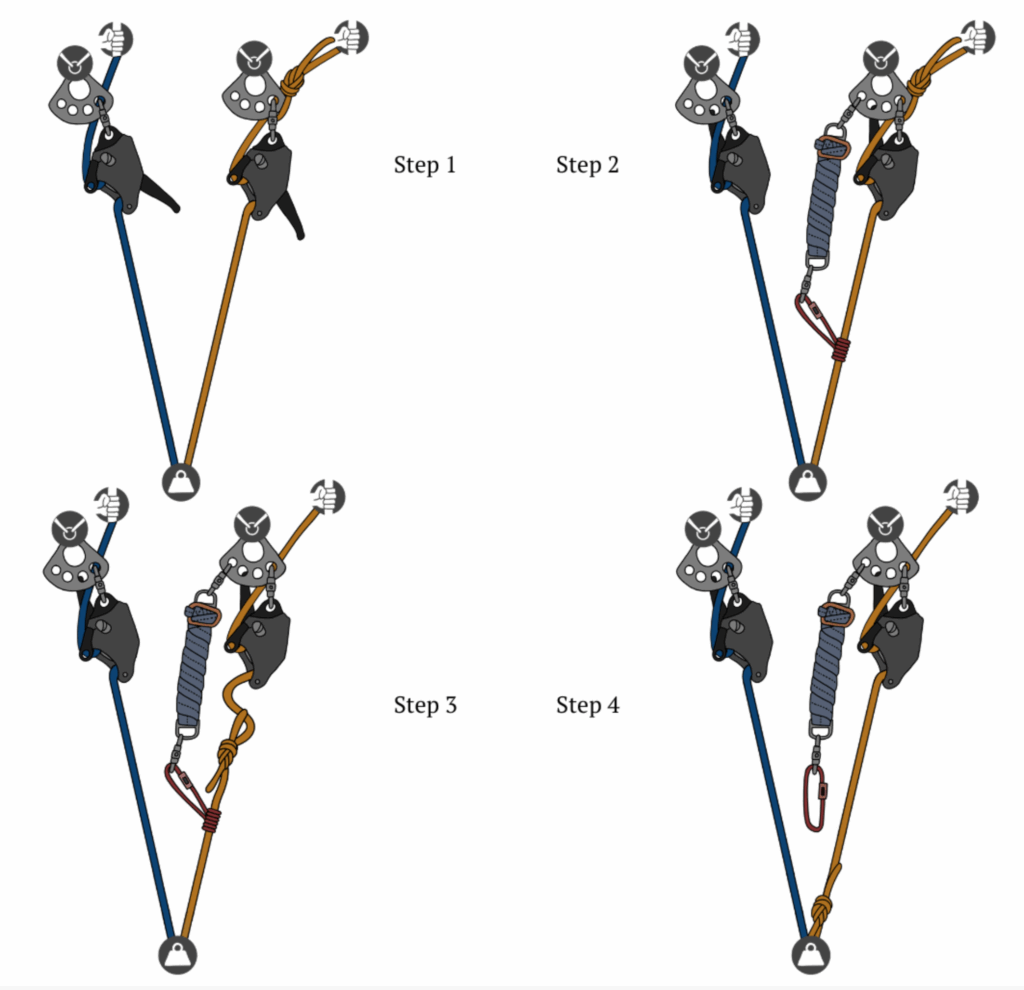
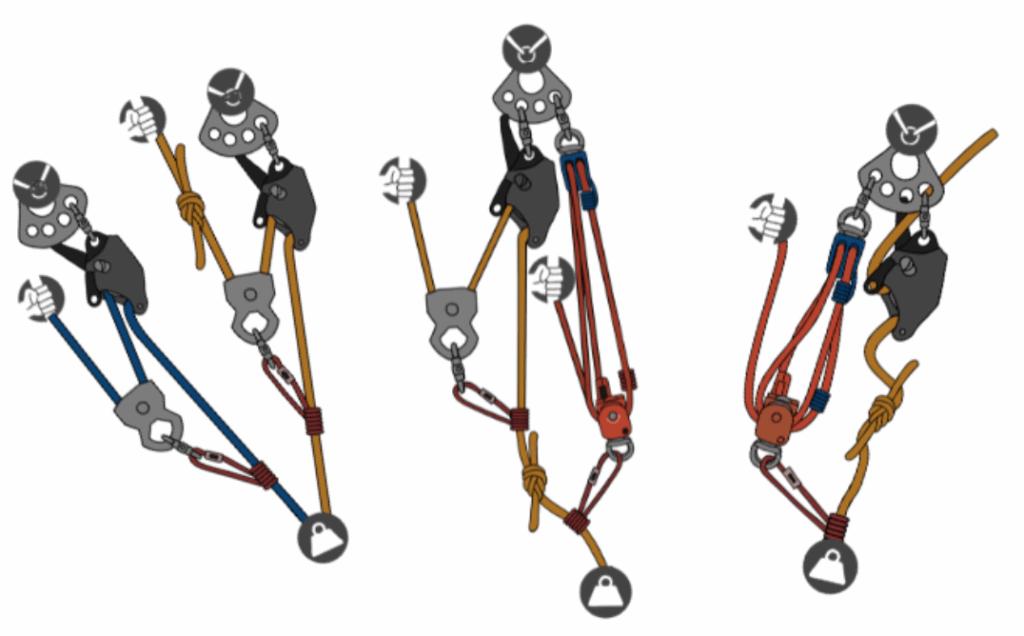
Twin Tension System Knot Pass for Raising Operations – The Twin Tension System (TTS) offers a significant advantage in rope rescue operations, particularly when navigating knot passing during raising evolutions. This method uses dual mainlines and staggered knot positions to allow continuous control of the load, enabling one side of the system to manage tension

Twin Tension System Knot Pass for Raising Operations Read More »