
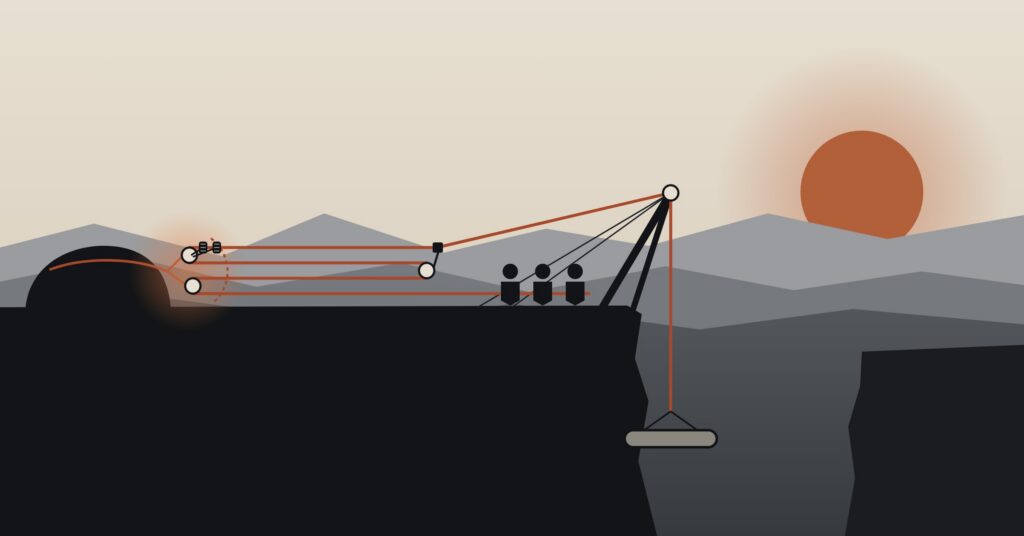
3:1 HAUL SYSTEM

What Does the Anchor Actually See? Anchor Forces in Rope Rescue Haul Systems

Every anchor gets rigged for a number. Usually that number is the load: the weight of the patient, the litter, and the attendant hanging on the mainline. Build the anchor strong enough to hold that load with a healthy safety factor, and the job feels done. The problem is that the anchor doesn’t only hold

What Does the Anchor Actually See? Anchor Forces in Rope Rescue Haul Systems Read More »
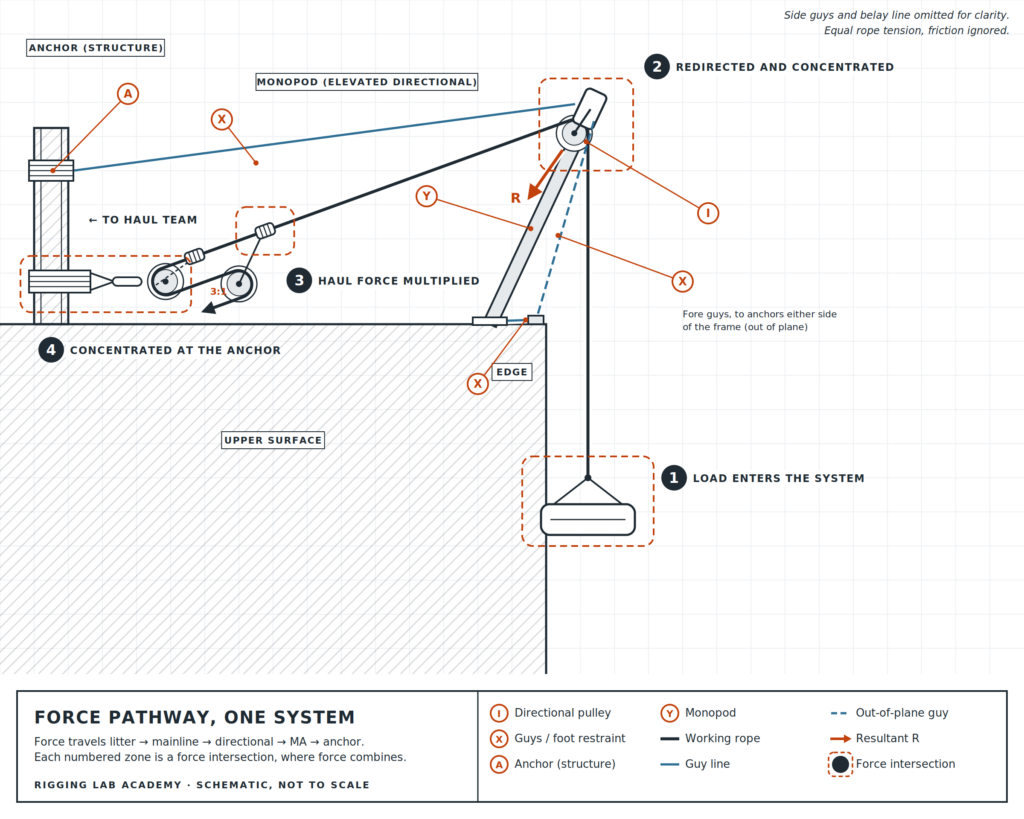
Rescue Systems Don’t Fail at Components. They Fail at Intersections.

Rescue systems rarely fail because a single component gives out. They fail at force intersections, the points where loads meet, combine and change direction, and where a system that looked solid on paper starts behaving in ways nobody planned for. Picture a team that has rigged every piece correctly. The anchor is bombproof, the 3:1

Rescue Systems Don’t Fail at Components. They Fail at Intersections. Read More »

Pulley system efficiency

Pulley System Efficiency Tests MAESTRO and PRO TRAXION

Pulley System Efficiency Tests with the MAESTRO, ID S, PRO TRAXION, and ROLLCLIP The efficiency of pulley systems is a critical consideration in rope rescue, rope access, and confined space operations. While theoretical efficiency provides a baseline, actual efficiency can vary significantly due to real-world variables. This article explores findings from Petzl’s lab, which tested

Pulley System Efficiency Tests MAESTRO and PRO TRAXION Read More »

Calculating Mechanical Advantage

Calculating Mechanical Advantage

How to Calculate Mechanical Advantage with Petzl Gear In technical rope systems, mechanical advantage (MA) is the key to minimizing effort while maximizing efficiency. Petzl, a trusted name in rigging and rescue equipment, offers innovative tools to streamline these calculations and improve system performance. Understanding how to calculate MA using Petzl gear is essential for

Calculating Mechanical Advantage Read More »