
horizontal systems

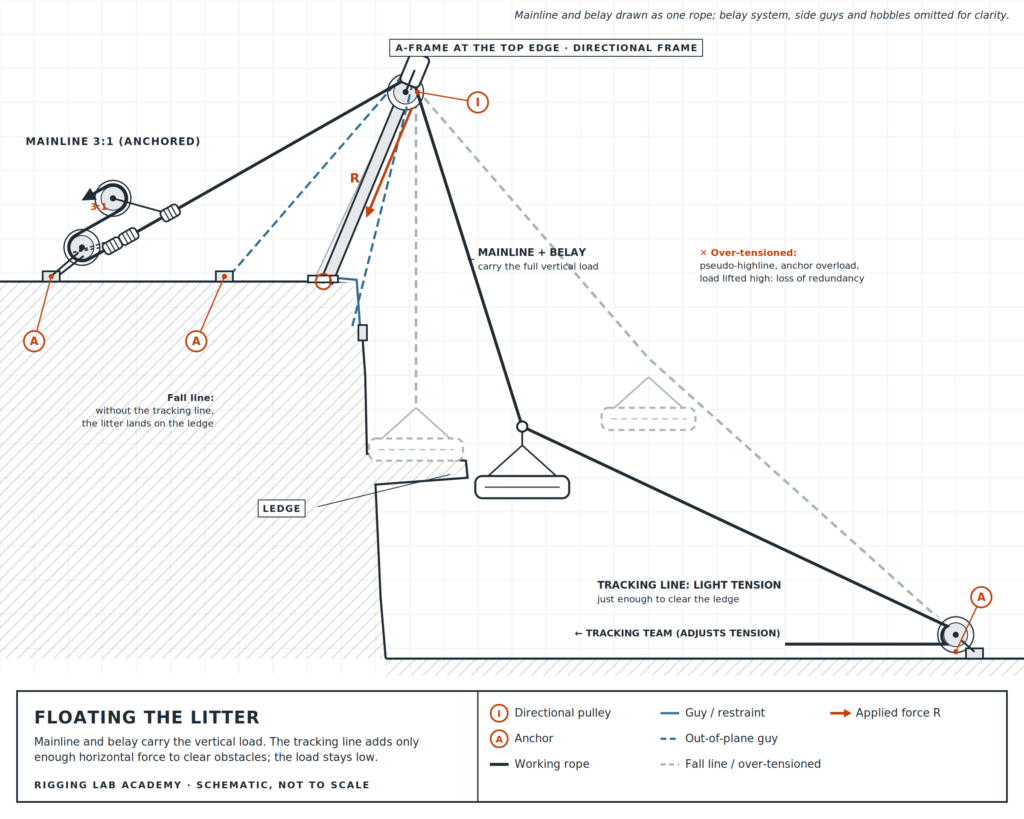
Floating a Litter in Rope Rescue: Tracking Line Tension and Load Control

Floating the Litter: Why More Tension Is Not Better in Rope Rescue Tracking lines, load positioning, and the critical difference between moving a rescue package and suspending it. In rope rescue, moving a litter across uneven terrain or around an obstruction often requires more than a conventional mainline and belay system. Rock outcroppings, ledges, broken

Floating a Litter in Rope Rescue: Tracking Line Tension and Load Control Read More »

Horizontal Rope Rescue Systems and Highline Movement Techniques

Physics of Horizontal Rope Rescue Systems

Physics of Horizontal Rope Rescue Systems Why sideways movement is the real test of a rigger’s mind. Vertical rope work is the entry exam. Gravity defines the path, the system behaves predictably, and most mistakes are recoverable. But move a rescue load sideways—even fifty feet across a gap or diagonally off a tower—and everything changes.

Physics of Horizontal Rope Rescue Systems Read More »

Horizontal Rope Rescue Systems and Highline Movement Techniques

Horizontal rope rescue systems

Understanding Horizontal Movement in Rope Rescue Systems Horizontal rope rescue systems are essential tools in a rescuer’s toolbox—designed not just to span gaps, but to safely and efficiently move a suspended load from one location to another. While many think of rope rescue as a vertical problem, horizontal operations come with their own unique challenges,

Horizontal rope rescue systems Read More »

Force Vectors and Horizontal Systems

Force Vectors and Horizontal Systems

Force Vectors and Horizontal Systems in Rope Rigging Understanding the dynamics of force vectors is crucial for designing safe and effective rope rigging systems. When working with multiple anchor points, technicians must carefully manage the angles formed between these points. Larger angles result in greater stress on the anchors, potentially compromising the system’s integrity. Minimizing

Force Vectors and Horizontal Systems Read More »