
A Canyon That Demands Precision
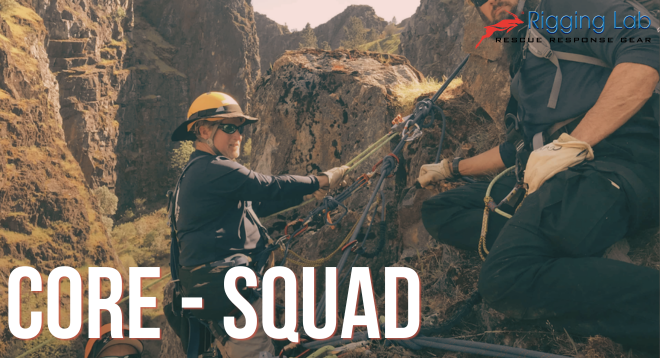
Canyon terrain strips away the luxury of improvisation. Jagged cliff lines, steep drops, and a winding river below create a space where only structured systems can succeed. When the rescue team arrived on scene, they began organizing near their vehicle. One group unpacked rope kits and a backboard, while another visually confirmed edge access and anchor points.
They worked quickly but methodically. This wasn’t just about setup—it was about intention. The vertical environment meant everything would depend on clean anchor geometry and mirrored movement.
Rappel Entry and Patient Access
A rescuer descended the cliff to reach the patient positioned mid-wall. The rope hung clean and vertical, revealing a high directional setup and properly placed anchor. As the rescuer rappelled, their movements remained stable and deliberate. They made patient contact within minutes, began assessment, and prepped for litter packaging.
Above them, the edge team transitioned smoothly into the lowering phase. They understood that once the patient was loaded, tension would have to be perfectly balanced—there would be no chance to reset mid-span.
Edge Coordination: Deploying the Twin Tension Lower
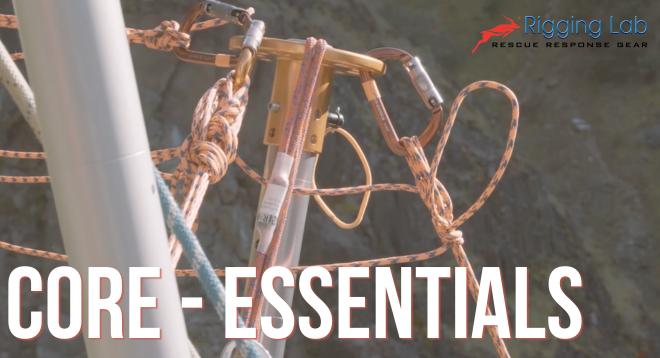
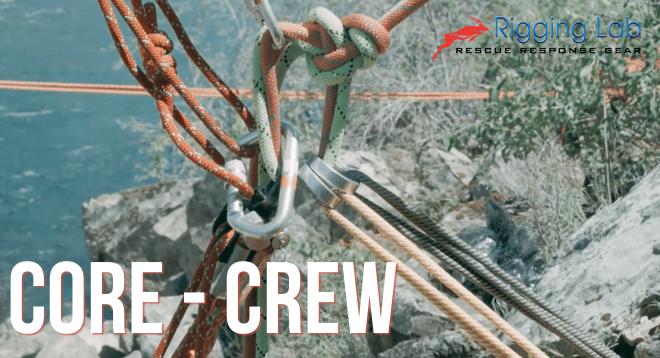
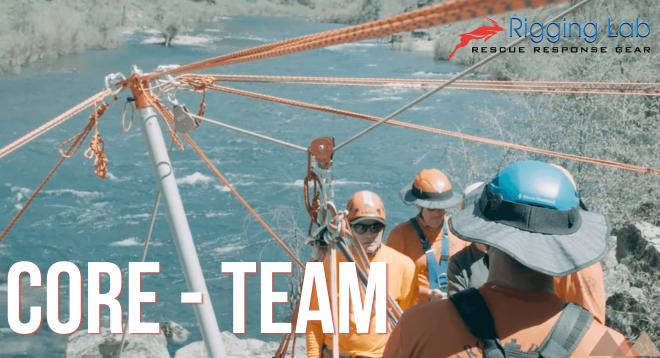
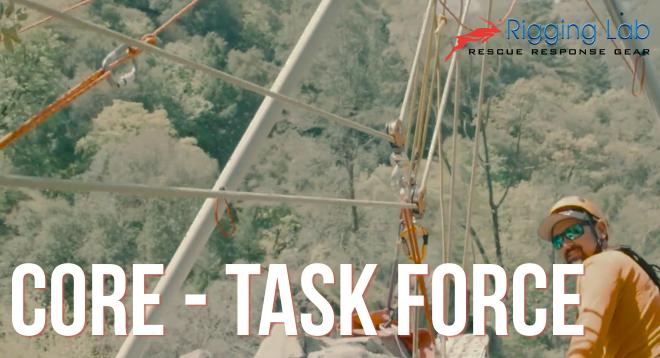
Two operators managed separate rope systems, each controlling one half of the load. Their friction devices mirrored each other—likely MPDs or Petzl IDs. The team routed both lines over a guyed artificial high directional, preventing rope-on-rock friction and keeping angles clean.
Importantly, they color-coded their ropes. This allowed for instant communication: if red slackened, the red operator adjusted. If green ran faster, the green side compensated. This wasn’t reactive—it was responsive.
Descent Begins: Behavior Under Load
Once the patient was secured, the edge team began the twin tension lower. Both operators released tension at equal rates, maintaining rope symmetry and litter stability. The rescuer below used their body position to guide the descent. By bracing against the wall, they controlled lateral swing and kept the patient horizontal.
Throughout the descent, operators continually watched rope angles, anchor behavior, and each other’s hand positions. Any drift would be corrected in real time, not after it became a problem.
System Overview and Functional Logic
This operation relied on deliberate design. Each component served a role in supporting balance, clarity, and communication.
Key System Features:
-
Two actively tensioned ropes, independently managed
-
Matched friction devices, operated in sync
-
High directional (AHD), guyed and elevated above cliff edge
-
Color-coded rope scheme, for visual tracking
-
Anchors positioned for symmetrical load paths
-
Mid-span rescuer, stabilizing from below in real time
This wasn’t a rescue done “just in case.” It was a system built from the ground up to prevent failure through coordination.
Why This System Matters
Twin tension systems reduce the variables. There’s no passive belay lag. No backup that reacts too late. When done correctly, they allow teams to move with full control—especially on vertical terrain like this.
Additionally, mirrored operation trains a different mindset. Rescuers must think as one unit. They learn to adjust tension together, anticipate vector shifts, and communicate without over-talking.
Final Descent and Ground Contact
As the litter approached the base of the wall, the edge team slowed descent. The rescuer guided the patient gently onto level ground. No swing, no jarring drop—just a smooth handoff from cliffside to canyon floor.
With the patient secured and the system still under tension, the team completed the operation without requiring a secondary intervention.
Conclusion: Systems That Move with Intention
This wasn’t just a twin tension lower. It was a case study in how systems behave when teams understand each component’s purpose. When executed with clarity, mirrored systems eliminate ambiguity. They also offer speed, symmetry, and simplicity in some of the world’s most unforgiving terrain.
Vertical problems will always exist. But with twin tension solutions like this, high-angle movement becomes not only possible—but predictable.
Peace on your Days
Lance