
Technical rescue is entering a period of significant change. The objective remains the same: reach the problem, establish control, protect the patient, and complete the operation safely. What is changing is the amount of personnel and equipment required to accomplish that objective.
Traditional rescue systems have often been built around large teams, extensive equipment caches, and layered operational assignments. That structure remains necessary for major incidents, prolonged operations, and complex environments requiring multiple simultaneous functions. However, not every rescue begins with a fully staffed technical team or immediate access to a large inventory of equipment.
Many incidents begin with only a few trained responders operating from a single vehicle, carrying what they can move quickly and place into service without delay. In these situations, operational capability depends less on the volume of equipment available and more on the quality of the equipment, the efficiency of the system, and the technical competence of the rescuers using it.
This is where small-team rescue operations have become increasingly important.
A small-team approach does not mean reducing safety margins, removing redundancy, or expecting fewer rescuers to perform an unrealistic amount of work. It means designing rescue capability around deliberate system selection, compact equipment, defined team roles, and personnel who understand how to build, evaluate, and operate efficient systems.
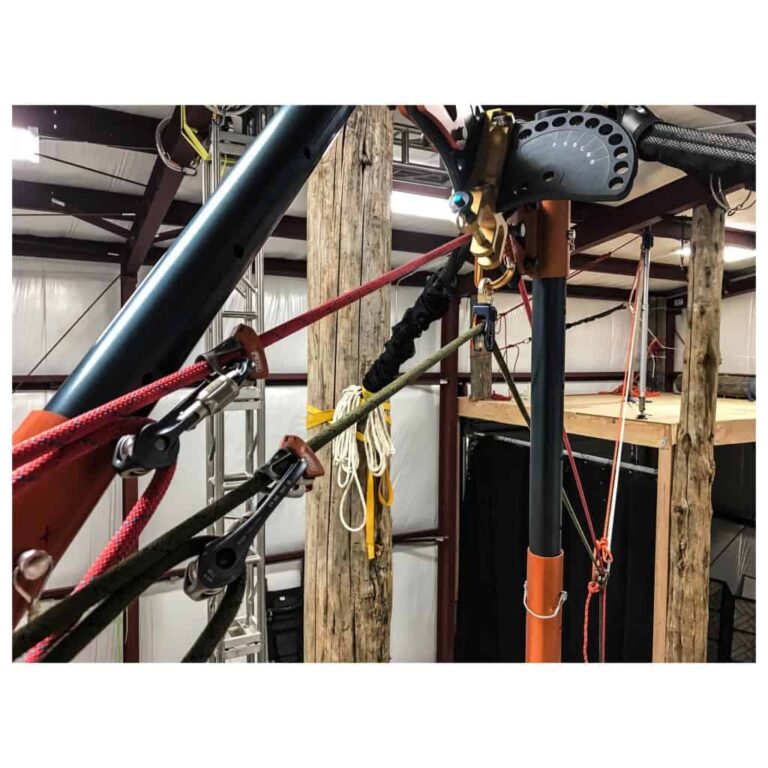
Modern compact gear allows rescuers to transport capable hauling, lowering, anchoring, edge-management, and patient-movement systems into locations that would be difficult to reach with traditional equipment loads. Multi-functional devices can replace several single-purpose components. Lightweight ropes, pulleys, connectors, anchor systems, and artificial high directional equipment can reduce the size of the equipment package while preserving meaningful operational capability.
The result is not simply a lighter rescue cache. It is a different operational model.
Small teams can move faster, establish initial control sooner, and begin solving the rescue problem while additional resources are still responding. In remote terrain, industrial facilities, confined spaces, towers, steep embankments, and high-angle environments, that time advantage can be critical.
By combining compact equipment with highly developed technical skills, small-team rescue is changing how professionals approach high-angle extractions, confined-space operations, remote access, difficult edge transitions, and other complex scenarios. The emphasis is not on doing more with less through improvisation. It is on doing more with purpose-built systems, disciplined decision-making, and a clear understanding of equipment limitations.
This blog examines the tools, strategies, and competencies that make small-team technical rescue possible—and the operational boundaries that must remain in place to keep it effective.
The Shift to Small-Team Operations
Technical rescue has traditionally relied on larger teams carrying broad equipment inventories designed to address the most demanding foreseeable conditions. This model provides depth, redundancy, personnel rotation, and the ability to assign rescuers to specialized functions such as command, rigging, hauling, belay, edge management, patient care, communications, and safety.
That capability remains valuable. However, large-team operations also introduce challenges.
More personnel require more coordination. More equipment takes longer to transport, organize, inspect, and deploy. Multiple work groups can create communication gaps, duplicated effort, and uncertainty over who is responsible for each part of the system. In remote or restricted environments, the size of the team itself may become a logistical problem.
Small-team operations offer an alternative built around a smaller operational footprint and a higher level of individual capability.
Rather than bringing every available component to the rescue site, the team selects equipment that can perform several functions and supports the most likely operational needs. Instead of dividing every task among multiple rescuers, team members are trained to understand the complete system and transition between roles as the operation develops.
The strength of this model comes from three primary advantages.
Speed and Mobility
A smaller team carrying compact equipment can often reach the operating area faster than a larger group transporting multiple equipment bags, rope caches, litter systems, and heavy rigging components.
This advantage becomes especially important when rescuers must move through:
- Steep or unstable terrain
- Narrow industrial access routes
- Towers, rooftops, and elevated platforms
- Confined-space entry points
- Remote wilderness locations
- Damaged structures
- Long approaches where all equipment must be carried by hand
Mobility allows the team to establish access, patient contact, fall protection, anchors, and initial control sooner. It may also allow rescuers to position equipment more precisely, rather than staging a large cache far from the actual operating area.
Speed, however, should not be confused with haste. The purpose of compact operations is to reduce unnecessary movement and setup time—not to bypass system analysis, equipment checks, or safety procedures.
Simplified Coordination
Fewer rescuers can simplify communication and reduce the number of handoffs required during an operation.
In a small, well-trained team, each member understands the rescue objective, the system configuration, the expected load path, and the sequence of movement. Commands can remain direct. Role changes can be clearly communicated. Equipment status can be tracked without passing information through several layers of personnel.
This can reduce common operational problems such as:
- Conflicting commands
- Unclear task ownership
- Uncoordinated system movement
- Missed equipment checks
- Improper transitions between lowering and raising
- Loss of communication between the rigging team and the patient attendant
The effectiveness of simplified coordination depends heavily on training. A small team has less room for ambiguity because each rescuer may be responsible for several connected functions. Standard terminology, predictable command language, and disciplined operating procedures are essential.
Operational Flexibility
Compact systems give rescuers the ability to adapt as the incident changes.
A lowering system may need to become a raising system. A simple edge transition may develop into an offset. An anchor location may be unsuitable, requiring the team to extend, redirect, or construct an artificial anchor system. A patient initially believed to be ambulatory may require full packaging and attendant support.
Equipment that performs only one narrow function can limit the team’s options. Multi-functional devices, modular rope systems, compact pulleys, adjustable anchor components, and lightweight directional equipment allow rescuers to reconfigure without rebuilding the operation from the ground up.
This flexibility is particularly valuable when the team cannot carry a separate equipment package for every possible scenario.
The objective is to create systems that are:
- Compact enough to transport efficiently
- Simple enough to understand and inspect
- Adaptable enough to support changing operational needs
- Strong enough for the anticipated rescue load
- Compatible with the team’s training and procedures
Small-team operations are especially relevant in urban rescues, mountain environments, industrial facilities, tower access, remote response areas, and incidents requiring rapid deployment. They are also valuable for organizations with limited staffing, provided those organizations establish clear operational limits and do not confuse compact capability with unlimited capability.
A small team can be highly effective, but it cannot replace personnel who are genuinely required for patient care, entry, backup, hauling, scene control, or sustained operations. The goal is not to eliminate resources. The goal is to create meaningful rescue capability immediately and use additional resources where they provide the greatest operational value.
The effectiveness of a small rescue team depends heavily on equipment selection.
When personnel are limited, every component must justify its place in the system. Equipment cannot simply be lightweight. It must also be reliable, compatible with the rest of the rescue package, easy to inspect, and capable of supporting more than one operational function.
The objective is not to build the smallest possible equipment cache. It is to create a compact package that allows the team to establish access, construct anchors, manage rope movement, control the load, negotiate the edge, and adapt when the original rescue plan changes.
A well-designed small-team kit reduces weight without stripping away essential capability.
1. Lightweight Rescue Ropes
Rope is often one of the heaviest and most space-consuming parts of a technical rescue package. Reducing rope diameter can significantly decrease the amount of weight rescuers must carry, particularly when multiple lines or long rope lengths are required.
Smaller-diameter static and low-stretch ropes can provide a practical advantage during:
- Remote approaches
- Tower and rooftop access
- Mountain rescue operations
- Industrial facilities
- Confined-space response
- Long carries into difficult terrain
Ropes such as 9 mm aramid-blend lines or 9.5 mm static ropes may allow teams to carry a complete working system with considerably less bulk than traditional larger-diameter rope packages.
Their lower weight improves mobility, while low-stretch construction can provide better control during hauling, lowering, and tensioning operations.
However, smaller rope does not automatically produce a better rescue system.
Teams must evaluate the rope as part of the entire system, including:
- Device compatibility
- Rope construction
- Minimum breaking strength
- Working load criteria
- Heat resistance
- Abrasion resistance
- Edge exposure
- Handling characteristics
- Manufacturer limitations
- Organizational policies
A rope may be strong enough for the anticipated load but incompatible with a descent-control device, rope grab, pulley, or progress-capture component. Smaller ropes may also provide less material between the load and a damaging surface, making edge management and rope protection even more important.
For small-team operations, rope selection must be deliberate. Weight savings are valuable only when the rope remains appropriate for the equipment, environment, and rescue load.
2. Compact Hardware
Carabiners, pulleys, rope grabs, swivels, and connection hardware can quickly add weight to a rescue package. Compact hardware reduces that burden while allowing rescuers to carry the components necessary to build functional mechanical advantage, redirects, anchor connections, and progress-capture systems.
The most useful equipment is not simply small. It is equipment that can be used in several configurations without creating unnecessary complexity.
Petzl Sm’D Carabiners
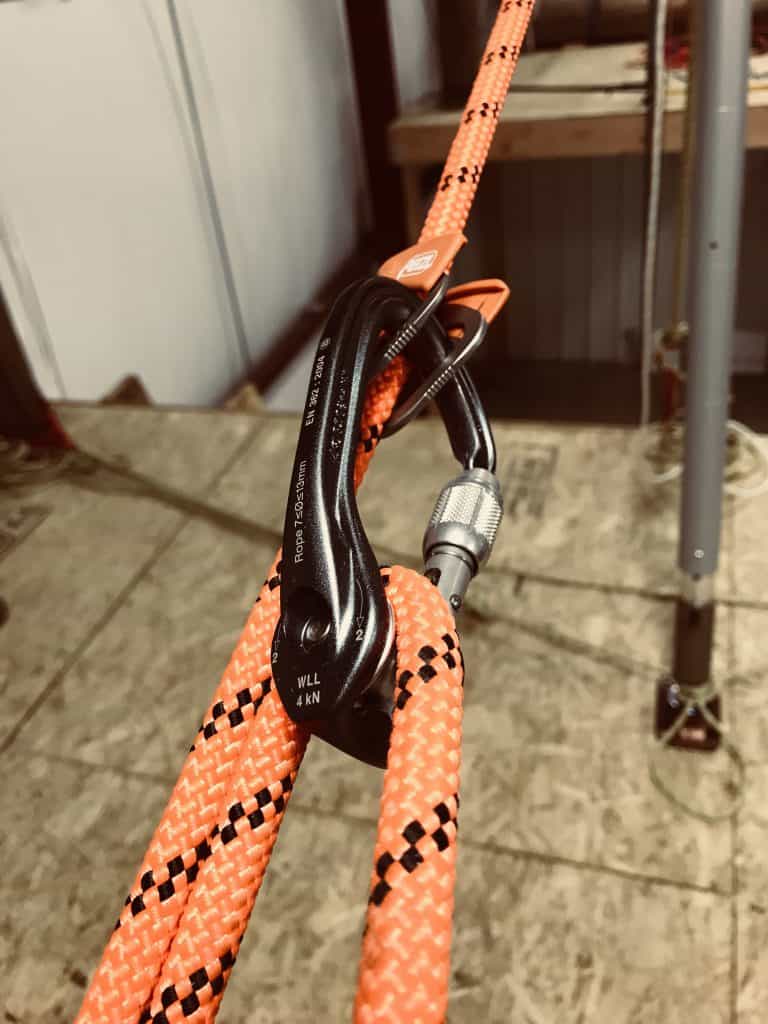
Compact locking carabiners such as the Petzl Sm’D provide a smaller connection option for equipment organization, pulley attachments, rope-grab connections, and other compatible rigging functions.
Their value in a small-team kit comes from their size and versatility. They can help reduce the volume of hardware carried while still supporting multiple connection needs throughout the operation.
As with all connectors, rescuers must remain attentive to:
- Loading direction
- Gate position
- Cross-loading
- Side loading
- Connector orientation
- Compatibility with attached equipment
- Clearance around anchor plates and devices
Compact hardware can save space, but smaller dimensions may also create tighter attachment points. The rescuer must confirm that each component can move, rotate, and align properly under load.
Petzl Tibloc with RollClip
A compact rope grab combined with a pulley-carabiner, such as a Petzl Tibloc and RollClip, can provide a lightweight method of building progress capture or simple mechanical advantage systems.
This type of pairing may be used to create:
- A compact 3:1 hauling system
- A haul-assist system
- A short reset system
- A temporary progress capture
- A tensioning or adjustment system
- A lightweight travel-restriction or positioning arrangement where appropriate
The primary advantage is efficiency. Two compact components can perform work that might otherwise require a larger pulley, separate rope grab, additional connector, and more space in the equipment bag.
The team must still understand how the rope grab engages, how the pulley aligns, how the system resets, and what happens if the device is loaded incorrectly. Compact equipment does not remove the need for system analysis. It makes that analysis more important because each component may serve several different purposes during the operation.
3. Portable Artificial High Directionals
One of the greatest challenges in high-angle rescue is managing the transition between the horizontal and vertical planes.
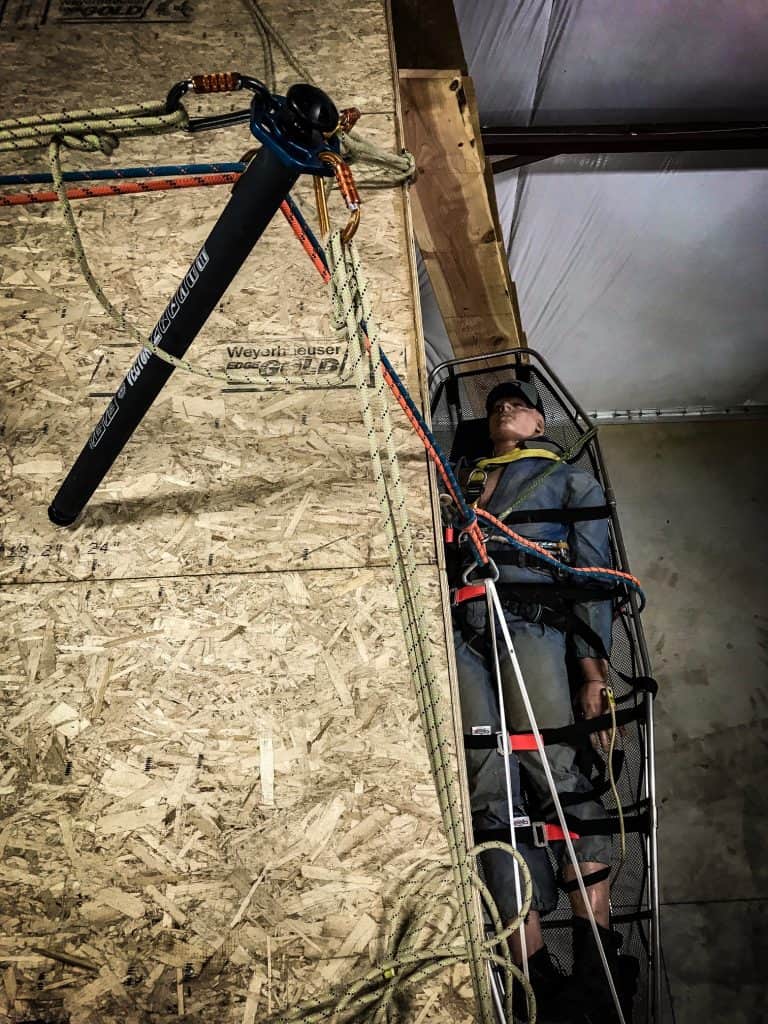
Without elevation, the rescue rope may drag across the edge, increase friction, create difficult litter movement, and expose the rope to abrasion or cutting hazards. The patient and attendant may also be pulled directly into the edge rather than moving cleanly over it.
Artificial high directionals provide the elevation needed to improve the rope path and create a more manageable edge transition.
Portable systems such as the SMC Vector Gin Pole or the Arizona Vortex can provide this elevation while remaining transportable enough for small teams to move and assemble in difficult locations.
Depending on the configuration and operational objective, an artificial high directional may help:
- Raise the rope path above an edge
- Reduce edge friction
- Improve litter clearance
- Create a directional change
- Support a confined-space entry or retrieval
- Position the load away from a structure
- Improve attendant and patient movement
- Reduce contact between the rope and damaging surfaces
The AHD itself is only one part of the system. The team must also evaluate the feet, head, anchor system, guying, resultant force, compression, stability, operating footprint, and anticipated direction of movement.
Portable does not mean simple.
A small team using an AHD must understand where the system wants to move and how the applied load affects every supporting component. The equipment may be compact, but the forces remain significant.
4. Multi-Use Descent-Control and Progress-Capture Devices
Multi-functional rope-control devices can significantly reduce the number of components required in a small-team rescue package.
Devices such as the Petzl I’D or RIG may provide controlled lowering, descent, positioning, and limited hauling support within compatible system designs. Their ability to perform several functions can reduce the need to carry separate descenders, belay devices, progress-capture components, and work-positioning tools.
A multi-use device may support:
- Controlled descent
- Load lowering
- Rope adjustment
- Work positioning
- Progress capture
- Short-haul assistance
- Transition between lowering and raising
- Controlled system release
The operational advantage is not simply that the device can do several things. It is that the team can transition between those functions without completely rebuilding the rope system.
For example, a team may lower a rescuer to the patient, stabilize the load, then convert the system to a raise using additional pulleys and a haul line. A device already integrated into the system may continue to provide control or progress capture during that transition.
This reduces equipment changes, but it also demands a higher level of device knowledge.
Rescuers must understand:
- Correct rope installation
- Compatible rope diameters
- Handle operation
- Braking behavior
- Device orientation
- Load limitations
- Panic-brake or anti-error functions where present
- Conversion between lowering and hauling
- System behavior during release
A multi-functional device should simplify the operation, not become a point of confusion. Teams must train with the exact equipment and configurations they intend to use.
Strategies for Small-Team Success
Compact equipment alone does not create a capable rescue team.
The operational model must be supported by clear procedures, defined responsibilities, system discipline, and an understanding of what a small team can realistically accomplish.
Working with fewer personnel increases the importance of every decision. There are fewer people available to identify errors, relieve exhausted rescuers, manage equipment, communicate with command, and respond when the incident changes.
Small-team success therefore depends on organization as much as equipment.
1. Functional Load Sharing
In a small team, each rescuer will often perform more than one role.
A team member may help construct the anchor, operate the lowering device, monitor the rope path, assist with patient movement, and later help convert the system into a raise. Another rescuer may manage communications, edge operations, attendant support, and progress capture.
This overlap is necessary, but it must remain controlled.
Load sharing should be based on clearly assigned functions rather than the assumption that everyone will handle everything. At each stage of the operation, the team should know:
- Who is directing system movement
- Who is operating the primary control device
- Who is monitoring the backup or second system
- Who is watching the edge
- Who is communicating with the rescuer or attendant
- Who is evaluating the anchor and rope path
- Who is managing patient care
- Who has authority to stop the operation
Roles may change as the operation develops, but those changes must be stated and acknowledged.
Effective load sharing also includes physical workload. Hauling, litter movement, equipment carries, and repeated reset cycles can exhaust a small team quickly. Teams should use mechanical advantage, terrain, redirects, and equipment placement to reduce unnecessary effort.
The purpose of a compact system is not to force fewer rescuers to work harder. It is to help them work more efficiently.
2. Redundancy Planning
Small-team operations do not eliminate the need for redundancy.
In many cases, fewer personnel make system redundancy even more important because there are fewer people available to immediately correct an error or take over a failed function.
Redundancy may include:
- Two-rope systems
- Independent anchor points
- Backup devices
- Secondary attachments
- Redundant litter connections
- Edge protection
- Equipment tie-backs
- Progress-capture backups
- Defined contingency systems
- Preplanned lowering-to-raising transitions
Redundancy should be intentional rather than excessive.
Adding components without understanding their function can create clutter, interfere with equipment operation, complicate inspections, and make the system more difficult to manage. Every backup should address a specific failure mode.
The team should be able to explain:
- What could fail
- What protects against that failure
- Whether the backup is independent
- How the system behaves after the failure
- What action the operators must take
A compact system may use fewer components, but the critical functions must remain protected.
3. Advanced Communication
Communication becomes more direct in a small team, but it also becomes more important.
A single missed command can affect the entire system because team members may be managing multiple connected functions. The person operating the haul system may also be watching progress capture. The edge rescuer may also be communicating with the attendant. The team leader may be actively rigging rather than standing apart from the operation.
Commands must therefore be brief, standardized, and clearly acknowledged.
Useful communication practices include:
- Identifying one person to direct movement
- Repeating critical commands
- Using consistent operational language
- Confirming before loading or releasing a system
- Announcing role changes
- Establishing a clear stop command
- Confirming communication failure procedures
- Using radios or hardline communication where visual contact is limited
The most important command in any technical rescue system is the command to stop.
Every team member should have the authority to stop movement when they see an unsafe condition, equipment problem, communication failure, unexpected load shift, or patient concern.
Training: The Backbone of Small-Team Operations
Small-team rescue is not primarily an equipment concept. It is a training concept.
Compact gear becomes useful only when rescuers understand how to configure it, operate it, inspect it, and adapt it under pressure. A small team cannot depend on one specialist to solve every technical problem. Each member must understand the larger system and recognize how their actions affect the load, anchors, rope path, and other operators.
Training must progress beyond memorizing standard configurations.
Teams should understand why a system works, what forces it creates, how it may fail, and how it can be converted when the original plan no longer matches the incident.
Mechanical Advantage Systems
Rescuers should understand how to construct and operate simple and compound mechanical advantage systems, including common 3:1 and 5:1 configurations.
More importantly, they should understand:
- Where the theoretical mechanical advantage comes from
- How rope travel affects load travel
- How friction reduces system performance
- Where progress capture should be positioned
- How resets affect efficiency
- How redirects change the operating position
- How to convert between lowering and raising
- When a larger system creates more complexity than benefit
A small team cannot afford to build an unnecessarily complicated haul system. The selected system should provide enough mechanical advantage to move the load while remaining manageable with the available personnel.
Advanced Rigging Techniques
Small-team rigging must be efficient, secure, and adaptable.
Training should include:
- Anchor selection
- Load-sharing anchor systems
- Rope-path management
- Directional changes
- System extensions
- Floating anchors
- Tracking and offset systems
- Twin-tension systems
- Progress capture
- Lowering and raising conversions
- Artificial high directional setup
- Contingency rigging
The goal is not to teach rescuers an unlimited number of configurations. It is to build a smaller set of reliable systems that can be modified logically as conditions change.
Edge Transitions
The edge is often where the greatest operational difficulty occurs.
Friction increases. Communication becomes difficult. The patient may rotate or contact the structure. The litter may become trapped. Rope protection can shift. The load can move unpredictably as it transitions between planes.
Small teams must be able to manage this area with limited personnel.
Training should address:
- Edge protection
- Rope elevation
- Litter orientation
- Attendant positioning
- Artificial high directionals
- Tag lines
- Guiding lines
- Tracking systems
- Patient clearance
- Communication between edge and system operators
A smooth edge transition is rarely the result of greater pulling force. It is usually the result of better rope-path design and better control of the load.
Problem-Solving Skills
Technical rescue rarely unfolds exactly as expected.
An anchor may be unavailable. The patient may be in a different position than reported. The rope path may create more friction than anticipated. Equipment may not fit the structure. The team may need to change from lowering to raising or construct an offset to clear an obstruction.
Small-team rescuers must be able to recognize these problems and modify the system without losing control.
Problem-solving training should require rescuers to:
- Identify the actual operational objective
- Evaluate available anchors and terrain
- Predict the direction of force
- Recognize system limitations
- Compare several possible solutions
- Select the simplest workable system
- Establish a contingency before movement begins
- Reassess after every major transition
Creativity is valuable, but it must be supported by technical understanding. The objective is not improvised rigging. It is informed adaptation.
Teams that train consistently and maintain a culture of technical review are better prepared to operate with fewer personnel because their decisions are based on shared understanding rather than individual guesswork.
Advantages and Challenges of Small-Team Rescue
Small-team rescue offers meaningful operational benefits, but it also creates limitations that must be acknowledged.
It should not be presented as a replacement for fully staffed technical rescue capability. It is a method of deploying focused capability quickly and efficiently within clearly understood boundaries.
Advantages
Agility
Smaller teams can move rapidly through difficult environments and carry equipment closer to the operating location.
This can reduce the time required to establish access, make patient contact, begin stabilization, and place the initial rope systems into service.
Simplified Logistics
A compact equipment cache is easier to transport, organize, inspect, deploy, and repack.
Fewer components can also reduce the likelihood of unused equipment cluttering the operating area or becoming mixed into the active system.
Faster System Transitions
Multi-use equipment and modular rigging systems can make it easier to transition from access to rescue, lowering to raising, or direct movement to an offset.
The team does not need to retrieve an entirely different equipment package for each phase.
Reduced Operational Footprint
Small teams can work more effectively in areas where space is limited, including rooftops, platforms, towers, confined spaces, narrow ledges, and industrial structures.
Cost Efficiency
A focused equipment inventory may reduce purchasing, storage, inspection, transportation, and replacement costs over time.
However, cost reduction should remain a secondary benefit. Equipment selection must first be based on operational suitability and safety.
Challenges
Personnel Limitations
Fewer rescuers means fewer people available to perform simultaneous functions.
Patient care, edge management, hauling, system control, communications, and safety oversight may compete for the same limited personnel.
This can create operational bottlenecks even when the equipment system is highly efficient.
Increased Physical and Mental Demands
Small-team members may carry heavier individual equipment loads, perform more transitions, and manage several responsibilities at once.
Fatigue can affect judgment, communication, and equipment handling. Sustained operations may require additional personnel even when the initial rescue can be started by a small team.
Reduced Margin for Error
With fewer people checking the system, an unnoticed rigging or communication error may have greater consequences.
Inspection procedures and cross-checks must be built into the operation rather than omitted for the sake of speed.
Training Demands
Each rescuer must be competent in several technical disciplines.
A team that depends on one individual to understand anchors, another to understand mechanical advantage, and another to operate the descent device may struggle when one member is unavailable or committed to patient care.
Operational Boundaries
Some rescues require more people.
A compact system cannot replace the staffing needed for confined-space entry, hazardous-atmosphere management, complex patient packaging, extended hauling, multiple attendants, structural collapse, or prolonged operations.
The team must recognize the point at which additional personnel are not merely helpful but necessary.
Real-World Applications of Small-Team Rescue
Small-team systems are most effective when they are matched to a clearly defined rescue problem.
They may be used to establish immediate capability while a larger response is developing, or they may complete operations that do not require a large number of personnel.
Mountain and Remote-Terrain Rescue
A small team may carry lightweight ropes, compact mechanical advantage components, patient packaging equipment, and a portable directional into terrain that would be difficult to access with a large equipment cache.
Once on scene, the team can establish anchors, protect the edge, reach the patient, and begin controlled movement while additional personnel support the operation from below or continue toward the site.
The primary advantage is not that two rescuers can perform every part of a major mountain rescue. It is that a small, capable team can reach the problem quickly and establish the foundation of the rescue.
Confined-Space Operations
Compact equipment is particularly valuable around confined-space openings where the operating area is restricted.
A small team may use a portable high directional, compact rope-control devices, and modular hauling systems to establish entry and retrieval capability without surrounding the opening with excessive hardware.
Confined-space operations still require appropriate staffing for entry, attendant functions, atmospheric monitoring, patient care, communications, and rescue backup. Compact rigging improves the equipment footprint but does not remove those personnel requirements.
Tower and Industrial Rescue
Industrial structures often require rescuers to climb with all necessary equipment.
Lightweight ropes, compact pulleys, rope grabs, connectors, and multi-use control devices allow rescuers to carry a functional rescue system to an elevated work area.
Once positioned, the team may create a lowering system, establish a short raise, construct an offset, or move a patient around structural obstructions.
Urban and Structural Response
In urban environments, small teams may need to operate on roofs, parking structures, bridges, cranes, utility structures, or steep embankments.
Compact systems allow rescuers to move through stairwells, access ladders, roof hatches, and narrow work areas more efficiently than teams transporting large conventional equipment caches.
Initial Rapid Intervention
One of the strongest applications of the small-team model is the initial phase of an incident.
A compact technical team can:
- Conduct the first technical assessment
- Reach or stabilize the patient
- Establish fall protection
- Build the initial anchor system
- Prepare the rope path
- Control immediate hazards
- Identify additional resource needs
- Begin the rescue when conditions allow
This early action can reduce the time between arrival and meaningful technical intervention.
Small Teams, Significant Capability
Small-team rescue with compact gear represents an important evolution in technical operations.
It recognizes that rescue capability is not measured solely by the number of personnel on scene or the amount of equipment brought to the incident. Capability comes from the relationship between trained rescuers, appropriate equipment, sound system design, and disciplined execution.
A compact team can move quickly, establish control early, and build efficient systems in places where larger teams and heavier equipment packages may struggle to operate.
That capability, however, must be developed responsibly.
Small-team rescue does not mean removing redundancy, accepting weaker systems, or placing unrealistic expectations on a few rescuers. It means eliminating unnecessary bulk while preserving the functions required to complete the operation safely.
The most effective small teams understand both their capabilities and their limits.
They know when compact equipment provides a meaningful advantage. They know how to build systems that remain simple, inspectable, and adaptable. They also know when the incident has exceeded the team’s staffing, equipment, or operational capacity and additional resources must be brought forward.
The future of technical rescue is not defined by smaller teams alone. It is defined by smarter deployment, better equipment integration, deeper technical competence, and the ability to place the right capability where it is needed most.
For additional training, technical instruction, and system-development resources focused on efficient rescue operations, visit Rigging Lab Academy.

Comments are closed.