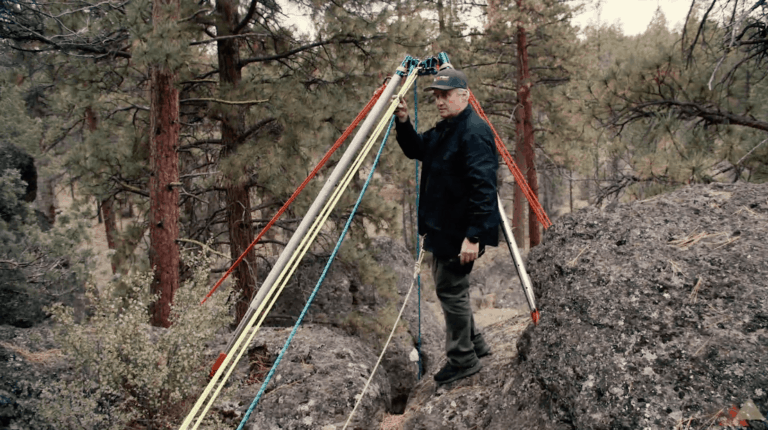
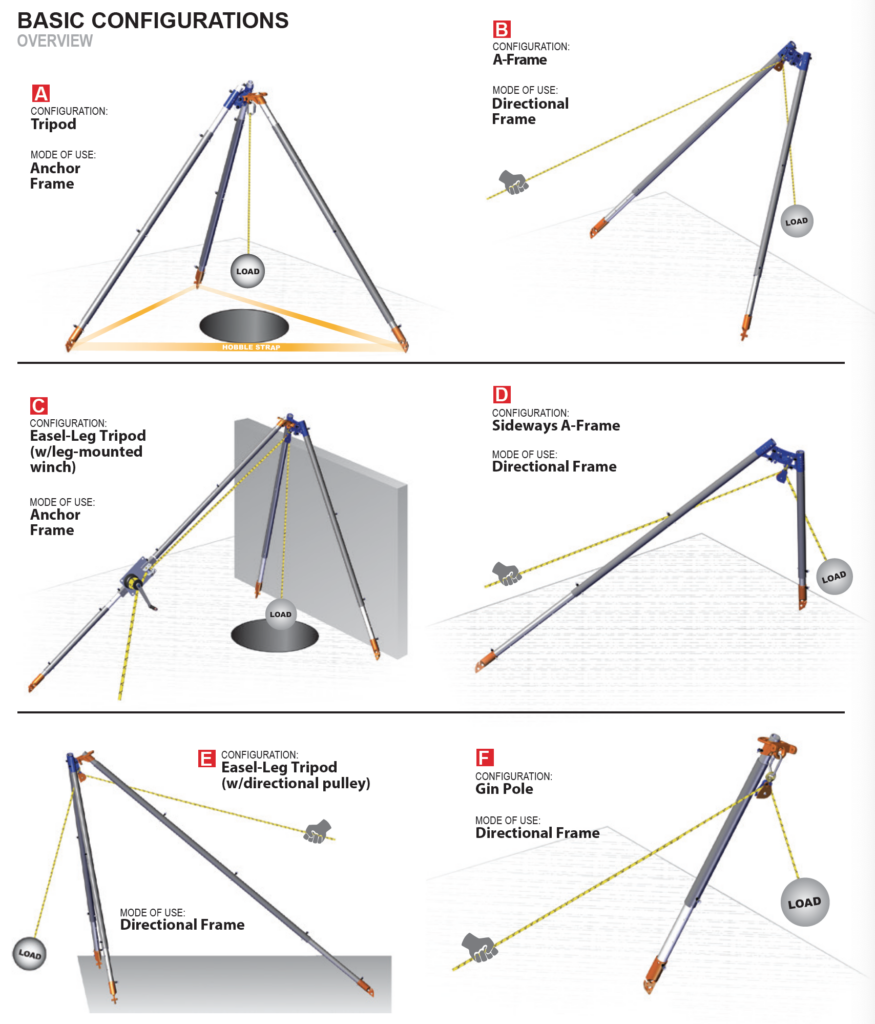
The Arizona Vortex is often taught as a collection of individual configurations: tripod, A-frame, gin pole, sideways A-frame, and easel-leg variants. But in the field, those configurations are never selected in isolation. Terrain, edge conditions, anchor availability, hauling direction, team size, load path, and operational constraints all shape the decision. This project reframes the Vortex as a functional decision-making system rather than a static equipment platform. Instead of memorizing six builds, the student is challenged to evaluate why one configuration becomes the preferred answer while another remains merely defensible — or operationally inappropriate.
The structure of the blog intentionally mirrors real rescue reasoning. Users begin by selecting terrain and operational context before evaluating the six configurations against stated constraints. The goal is not simply to “get the right answer,” but to understand why the answer changes as geometry, anchors, direction of pull, or access conditions shift. Instructor mode expands the discussion by surfacing defensible alternatives before revealing the preferred solution, allowing teams to compare tradeoffs, force paths, and deployment logic in real time. What emerges is a practical framework for directional theory, anchor behavior, and terrain-driven rigging decisions built around one of the most versatile artificial high directional systems in technical rescue.
This model is intended as a training and reasoning framework — not an absolute engineering calculator or a replacement for competent field judgment. Its purpose is to help rescuers understand why certain Vortex configurations tend to align better with specific terrain, force paths, anchor conditions, and operational constraints. The preferred answers represent conventional and defensible first choices under the stated conditions, but real-world rescue environments rarely present perfectly controlled variables.
Like the Vortex User Manual itself, configuration selection must always account for applied force, tendency of movement, securing requirements, guying angles, and system stability before personnel are committed to the system. Small changes in geometry, edge transition, anchor quality, team capability, or anticipated movement can legitimately shift the preferred configuration entirely. This tool should therefore be viewed as a rule-of-thumb decision model designed to strengthen operational understanding and discussion — not as a substitute for training, manufacturer guidance, engineering review, or field verification.
This interactive Vortex decision model moves beyond configuration identification and into operational reasoning. Each scenario evaluates the relationship between terrain, edge transition, anchor placement, load direction, and available resources to determine which Vortex configuration best fits the situation. The six core configurations remain constant, but their appropriateness changes dynamically based on constraints introduced within each rescue environment.
The result is a training tool designed to develop judgment, not memorization. Students learn why an A-frame dominates many cliff-side operations, why a gin pole becomes valuable in constrained geometry, or why a sideways A-frame may outperform conventional setups when edge alignment collapses. By walking through preferred, defensible, and inappropriate outcomes, rescuers build a deeper understanding of force management, directional framing, and system selection under real-world conditions.
Peace on your Days
Lance