
The Two-Tensioned Rope Raising System
In the high-stakes world of rope rescue and technical rigging, achieving safety and absolute control stands as our highest priority. When we need to move loads or personnel upward, the demands intensify, requiring systems that offer maximum security and efficiency. This brings us to the Two-Tensioned Rope System (TTRS), a gold standard for raising operations.
The TTRS isn’t just about having two ropes; it embodies a core principle: both ropes remain under tension, constantly sharing the load and acting as mutual backups. This ingenious design significantly enhances safety and control during any raising operation.
Understanding the Two-Tensioned Rope Raising System
Imagine needing to lift a heavy load or a patient up a vertical face. The Two-Tensioned Rope System provides two parallel, independent lines, both actively engaged in the raising process.
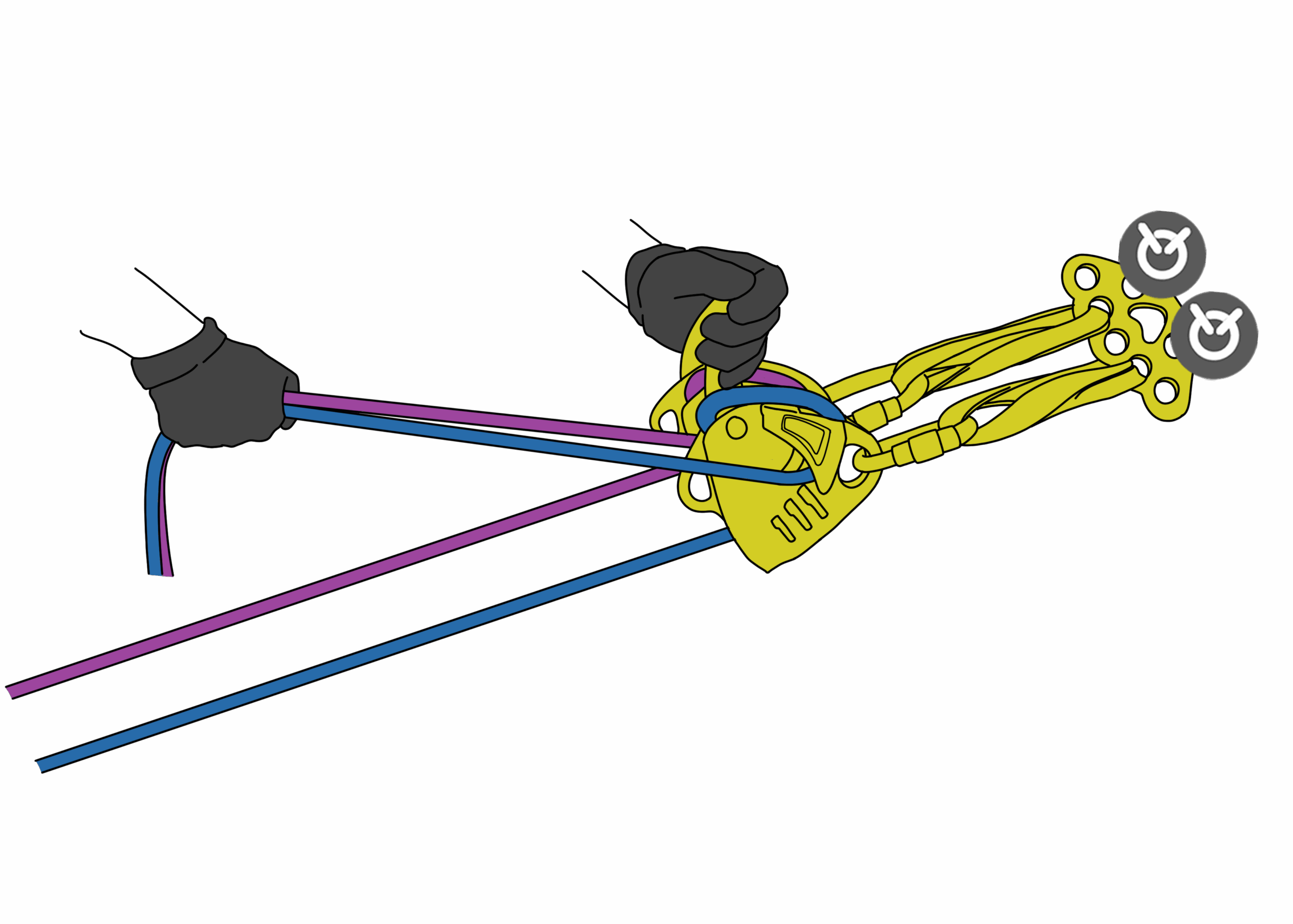
Its core principle centers on redundancy. Each system operates independently, yet collectively, meaning each rope can function as either the main hauling line or a critical backup/belay to the other line during the upward movement. This mutual support drastically reduces the risk of catastrophic failure and offers an unparalleled level of safety for those being raised and those operating the system. You can clearly see this two-line system configured for a raise, indicated by the prominent upward arrow in the accompanying diagram.
Essential Components for a TTRS Raise
A robust TTRS for raising relies on specific, high-quality components, meticulously chosen for their performance under tension:
- Ropes (x2): You’ll need two high-quality, low-stretch ropes, such as AXIS, RAY 11, or VECTOR. Low-stretch properties are crucial for efficient hauling and stable load management.
- Descenders (x2): Devices like the MAESTRO descender (x2) serve multiple roles. While primarily designed for controlled lowering, their auto-locking and progress-capture features make them versatile for securing the system during a raise or managing a controlled descent if needed after a lift.
- Pulleys (x2): ROLLCLIP Z or A pulleys (x2) are vital. These create the mechanical advantage (often a 3:1 in a basic raising system, as depicted) that significantly reduces the effort required to lift the load.
- Rope Clamps (x2): Devices like the RESCUCENDER (x2) are indispensable. They grip the rope, holding the progress gained during each pull, preventing the load from slipping back down.
- Connectors (x2 or more): Robust carabiners such as AM’D, VULCAN, or OXAN are used throughout the system for secure connections between components.
- Edge Protector: A critical, often overlooked component like the ROLLER COASTER edge protector ensures both ropes are shielded from abrasion at the edge, even during an upward pull. This prevents damage that could compromise the system’s integrity.


The Undeniable Benefits: Why Choose TTRS for Raising?
Implementing a Two-Tensioned Rope System for raising operations offers profound advantages:
- Superior Load Distribution: The load distributes between two systems. This significantly reduces the force concentration on any single component, meaning no single piece of gear bears the entire burden alone. This enhances the overall strength and longevity of your equipment during the raise.
- Critical Line Failure Mitigation: In the unlikely event of one rope failing during the raise, the load immediately transfers to the remaining line. This drastically minimizes the potential for a catastrophic drop and an uncontrolled descent, providing a vital safety net.
- Simplified Rigging & Training: Both sides of the TTRS often employ the same rigging techniques. This standardization reduces the complexity of both training and actual operations, minimizing potential for human error under stress.
- Streamlined Knot-Passing: While focused on raising, if you later need to lower the load and encounter knots in the system, having two independent lines greatly simplifies the complex process of passing those knots over edges or through pulleys.
Spotlight on the MAESTRO Descender: A Raising Ally
The MAESTRO descender, often used in a TTRS, boasts features highly relevant to a raising system:
- AUTO-LOCK Function: This function automatically captures rope progress when hauling. It locks the rope securely in place when the handle is not in use, effectively preventing any accidental slippage of the raised load.
- Integrated Progress-Capture Pulley: The device includes an integrated pulley for increased hauling efficiency, streamlining the raising process.
- Audible Clicking Sound: During haul mode, an audible clicking sound confirms that the rope is in motion, providing crucial sensory feedback to the raising team, especially in noisy or low-visibility environments.
Conclusion: Elevating Safety, Elevating Standards
The Two-Tensioned Rope System stands as the industry gold standard for safety and control when raising loads or personnel in rope rescue and other high-angle operations. Its inherent redundancy, efficient load sharing, operational simplicity, and the enhanced safety features of its integrated devices make it indispensable.
Deploying this critical system effectively demands thorough training and a comprehensive understanding of its principles and components. By embracing the TTRS for your raising operations, you not only meet but exceed safety standards, ensuring the utmost protection for all involved.
For top-tier rope rescue and rigging gear, essential for building robust systems like the Two-Tensioned Rope System, we recommend exploring Rescue Response Gear for all your rescue gear.
Continue your professional development in advanced rope rescue techniques, especially those focused on safe and efficient two-tensioned raising systems.
Peace on your Days
Lance