Climber Rescue Team Using Twin Tension Rope Systems
A climber begins their ascent. Movements are steady and deliberate. Each step shows control. But even skilled climbers can fall. And when they do, preparation makes the difference and it is here we see a Climber Rescue Team Using Twin Tension Rope Systems.
The Fall: Fast Response Starts with Smart Rigging
Without warning, the climber slips.
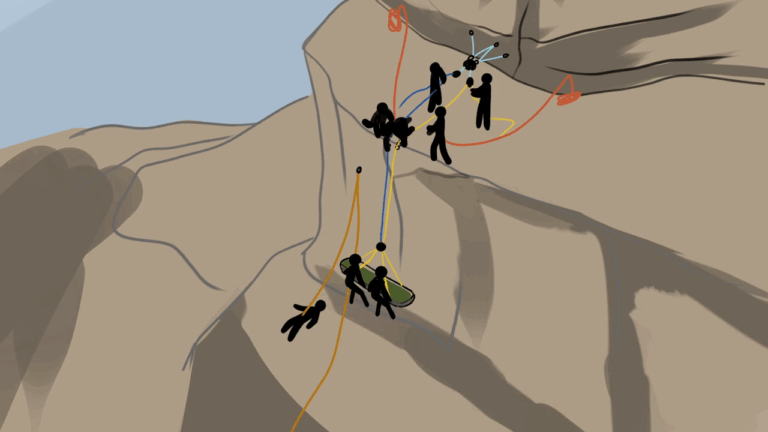
The fall is sudden. But it stops almost immediately. The twin tension rope system (TTRS) does its job. Equal lines. Equal tension. No delay.
This is not luck. It’s a well-designed system at work.
TTRS setups use two fully tensioned lines that share the load equally. There’s no backup—just two active lines. If one line slips, the other holds. That’s why this system is trusted in high-risk scenarios.
Clear Communication and Fast Team Activation
After the fall, communication kicks in right away.
The team responds fast. Everyone knows their role:
-
The anchor tech checks line integrity.
-
The medical lead prepares for contact.
-
The haul tech sets up control devices.
-
The team lead keeps the plan on track.
This clarity reduces confusion. It speeds up rescue. No one is guessing. Everyone moves with purpose.
Rigging the TTRS and Securing Anchors
Next, the system is rechecked.
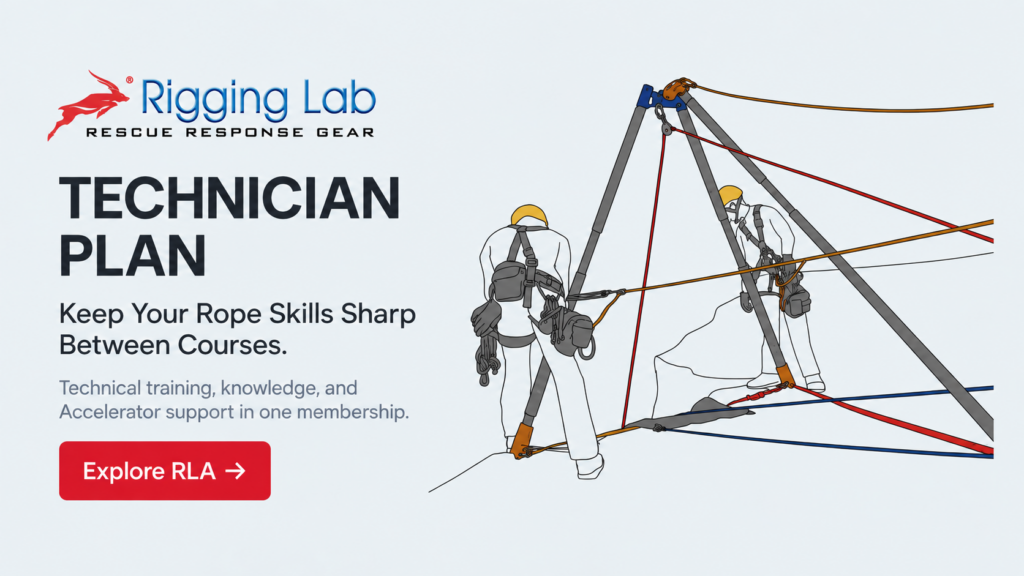
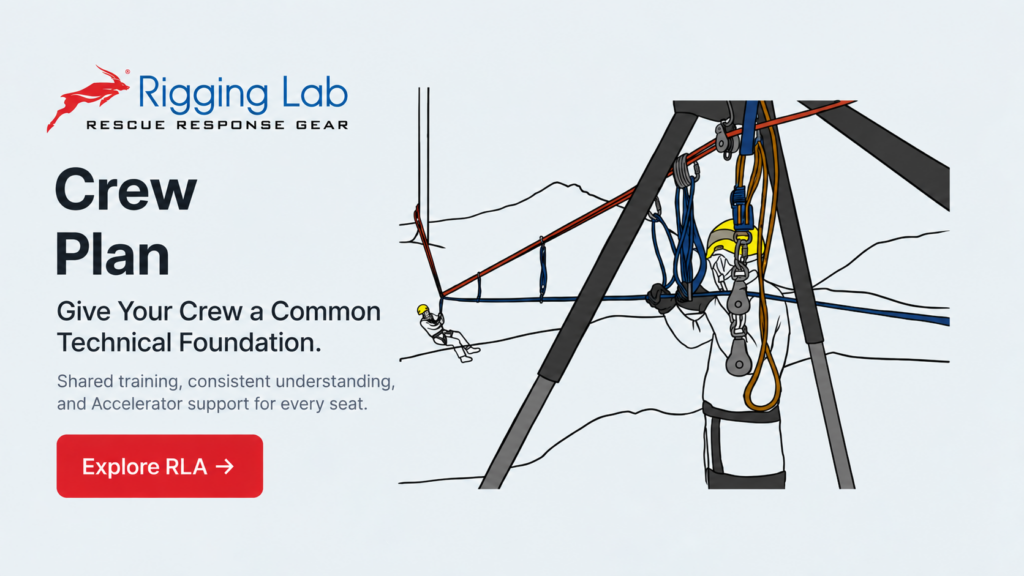
The anchors are solid. The rope paths are clean. The tripod is centered. Control devices—like MPDs or IDs—are in place and ready.
A litter team gets in position. They route the ropes to make sure the angle is smooth. The goal is simple: avoid drag and prevent swing.
Patient Packaging: Quick and Clean
The team reaches the patient and begins packaging.
Every step here matters:
-
Backboarding if spinal injury is possible.
-
Lashing to keep the patient stable.
-
Connection to the litter bridle and twin lines.
Speed matters. But not at the cost of safety. The rigging allows for smooth motion while keeping the load balanced.
Controlled Lower and Safe Transfer
Once packaged, the patient is lowered.
Spotters keep eyes on everything. Edge techs guide the descent. The TTRS gives full control, even with changing tension.
Even if one device slips or fails, the second line holds steady. The result? A safe, level lower to the next platform.
Once there, the team transfers the litter for final evacuation.
Why This Works: Preparation, Teamwork, and TTRS
This rescue shows how planning turns chaos into action.
The TTRS is a key tool—but it only works when the team does too. In this case:
-
Anchors held.
-
Roles were clear.
-
Systems flowed.
-
And the climber got out safely.
This is what modern rope rescue looks like—smart, safe, and smooth.
Peace on your Days
Lance