Sideways A-Frame with Winch Load Control and Guying Strategy
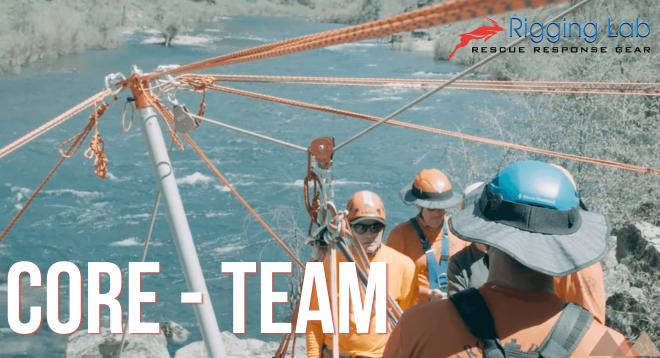
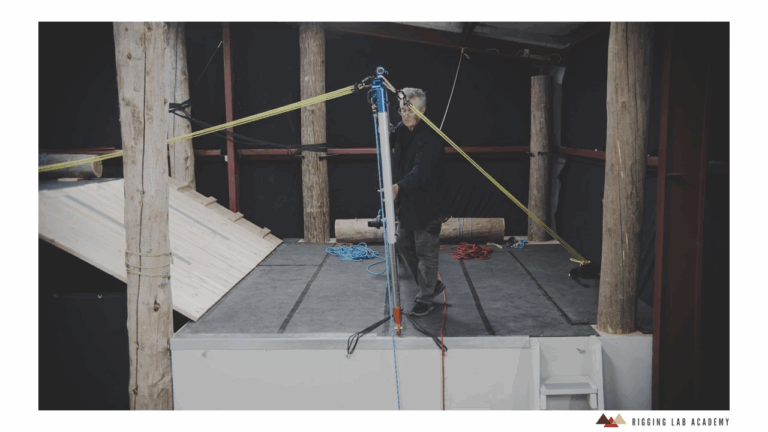
When rigging a sideways A-frame for load movement, especially with a winch mounted to the rear leg, the entire structure behaves more like a torquing monopod than a traditional tripod or A-frame. The applied force pushes downward through the head, but the system’s tendency to rotate and collapse forward must be carefully neutralized through proper guying, pin orientation, and anchor placement. Lets look at a Sideways A-Frame with Winch Load Control and Guying Strategy.
In this system, the rope runs from the winch at the rear leg, through a pulley at the blue head, and over the edge—creating a clean vertical load path. But once tension is applied, the structure is under complex forces that must be addressed before movement ever begins.
Anchor Frame Behavior Under Load
At first glance, the structure appears to be standing securely. But the moment the winch introduces load, that vertical force vector begins to shift. The frame naturally wants to tip forward, driving the front foot into the edge or even over it. This tendency is what defines the system’s weakest direction, and it must be counteracted by tensioned guy lines.
To prevent collapse or shift under load:
-
Two front-side guys oppose forward tipping
-
A rear guy line resists the rotational tendency and absorbs lateral force when the load pivots
-
Guy angles are carefully managed: ~60–70° at the rear, ~35–40° at the front
Pin Orientation and Head Reconfiguration
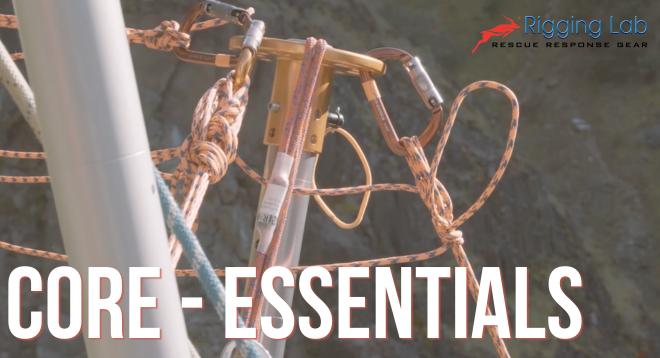
The Vortex head used in this system includes 45-degree adjustment increments. Initially, the pin heads and rope lines interfere with one another, risking abrasion or limiting pulley articulation. To solve this, the pins are reoriented to opposite sides of the frame, keeping the moving rope clear of any hardware.
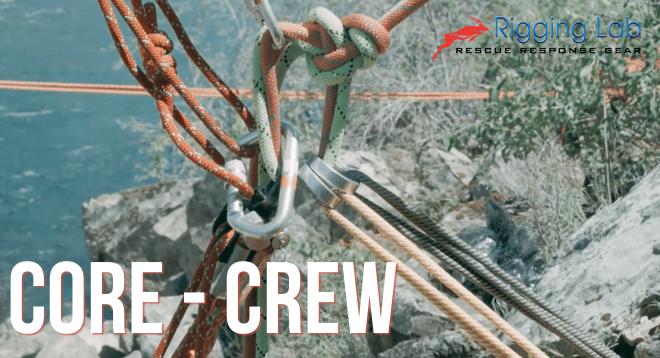
The pulley itself is connected to a horizontal hole on the blue head. This position was chosen deliberately—it offsets the rope slightly and allows the carabiner to track with the load. Had it been placed elsewhere, rope travel could have been restricted or brought dangerously close to frame components.
Tension, Lift, and Counterforce
As tension is added to the system, several shifts occur. The applied force travels cleanly through the pulley at first—but as the load ascends and swings, that force vector moves laterally. This shift means the front leg is no longer directly loaded—it’s potentially lifted off the ground, depending on the weight and movement of the haul.
This is where the rear guy line becomes critical. It doesn’t just keep the frame upright—it controls force movement and counters forward rotation. When tuned correctly, it redirects the applied force vector back toward the anchor footprint, maintaining frame balance.
Key Design Considerations
This setup isn’t just a field improvisation. It’s the result of planning for mechanical behavior, not just holding things in place. Every part of the system is purposefully configured to absorb directional movement and minimize unpredictable shifts.
To build a stable sideways A-frame with a leg-mounted winch:
-
Use a pulley position that allows clean rope tracking and minimal frame interference
-
Reorient all head pins using Vortex’s 45° increments to avoid friction points
-
Place front guys wide enough (~35–40°) to resist tipping
-
Anchor the rear guy at a steep angle (~60–70°) to control swing and lift
-
Ensure all pins, footing, and guy connections are locked in before load is applied
Conclusion
Rigging a sideways A-frame for horizontal movement isn’t just about standing it up—it’s about predicting how the system will behave when it starts moving. By managing guy angles, force direction, and pin layout, you’re not just stabilizing a structure—you’re making controlled load movement possible.
Whether you’re lifting, swinging, or tensioning across a void, the rear guy isn’t just a backup—it’s the strategic anchor that keeps the whole system from tipping forward. This approach transforms a high-risk layout into a deliberate, effective tool.
Peace on your Days
Lance