Integrating Mechanical Advantage into Cross Haul Systems
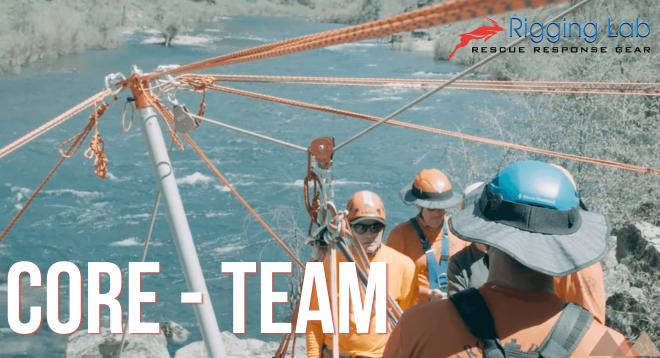
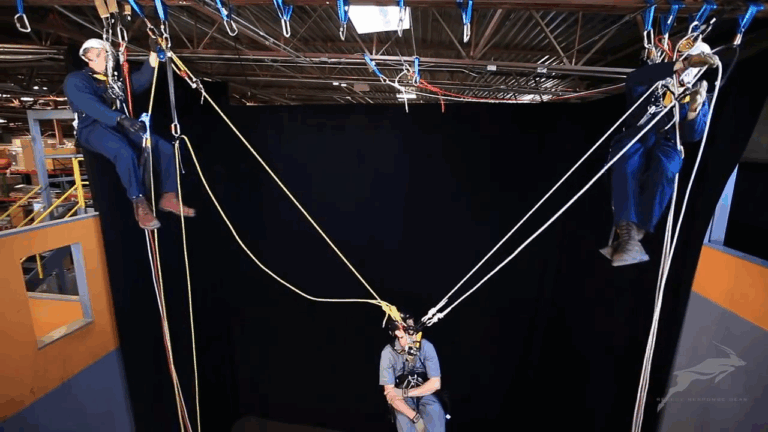
Cross-haul systems are one of the most versatile tools in the rescuer’s rigging arsenal. By using two opposing haul lines, teams can precisely move a load horizontally or diagonally, making cross-hauls ideal for guiding victims across rivers, canyons, industrial voids, or unstable terrain. But as loads increase or team size decreases, raw manpower alone may not be enough. This is where mechanical advantage (MA) transforms a cross-haul from a basic rig into an efficient, controlled system.
Why Add Mechanical Advantage to a Cross Haul
Rescue environments rarely present light loads in convenient conditions. Stokes baskets, litter attendants, and technical terrain combine to create hauling demands that exceed the capacity of a small team. Adding MA into a cross-haul provides:
-
Reduced hauling effort for small teams.
-
Fine control over horizontal movement.
-
Balanced tensioning to prevent swinging or shock-loading.
-
Adaptability — teams can scale the system depending on conditions.
In short, mechanical advantage allows rescuers to move heavy or delicate loads smoothly, even with limited personnel.
Balanced vs Unbalanced Systems
A standard cross-haul uses two haul lines running in opposition. Ideally, both sides share the load evenly. However, once MA is introduced, balance becomes a critical consideration:
-
Balanced MA on both sides: Each line is given the same MA (e.g., 3:1 + 3:1). This keeps forces even, reduces swing, and provides predictable control.
-
Unbalanced MA: One side has more mechanical advantage than the other (e.g., 3:1 + 5:1). This can be used deliberately to bias the load’s movement, but requires careful communication and monitoring to avoid shock-loading.
In either case, rescuers must constantly monitor angles, anchor strength, and progress capture to maintain stability.
Practical Configurations
1. 3:1 on Each Haul Line
One of the simplest upgrades is adding a 3:1 Z-rig to each line. Each team now needs only one-third the force to move the load, and balance is easily maintained. This setup works well for small teams operating on relatively flat terrain.
Key Points
-
Easy to build with basic gear.
-
Efficient for two teams of 2–3 haulers each.
-
Resetting can slow progress on long moves.
2. Opposed Piggybacks
Instead of full Z-rigs, teams can clip compact piggyback kits (like AZTEK or JAG) onto each line. These provide short, high-control hauls that are excellent for fine-tuning load position or making incremental moves.
Key Points
-
Rapid deployment with minimal gear.
-
Excellent for adjusting position in tight spots.
-
Limited range — best used in combination with other hauling systems.
3. Mixed MA Ratios
In some cases, one side may require more leverage than the other. For example, if terrain or angles create friction on one line, a 5:1 can be applied on that side while the other remains a 3:1. This keeps haul effort balanced across teams even though the ratios differ.
Key Points
-
Useful for offset loads or uneven anchor placements.
-
Must monitor carefully to prevent uneven loading or shock events.
-
Requires strong communication between haul teams.
4. Hybrid Systems with Progress Capture Devices
By integrating progress capture devices (PCDs) such as a Maestro, Clutch, or MPD into each haul line, teams can lock and reset efficiently. This allows cross-hauls with MA to be run smoothly, even over long distances.
Key Points
-
Improves safety by preventing accidental backsliding.
-
Enables smoother resets under tension.
-
Device friction must be factored into the effective MA.
Managing Force Distribution
Every added pulley or strand of rope introduces complexity. Rescuers should remember:
-
Anchors must be bombproof: With MA added, anchor forces increase significantly.
-
Angle control is critical: Wide angles between haul lines reduce efficiency and increase side-loading.
-
Shock loads multiply: Jerking or uneven pulls can spike forces dramatically when MA is present.
Using load cells during training can reveal the true forces at play — a reminder that theoretical ratios rarely match real-world efficiency.
Best Practices
-
Keep systems simple and mirrored when possible.
-
Use progress capture to prevent setbacks.
-
Favor larger haul teams with smaller ratios over high-ratio systems that magnify inefficiency.
-
Always brief teams on communication and reset procedures before hauling begins.
Conclusion
Cross-haul systems allow rescuers to position loads with precision across challenging terrain. By integrating mechanical advantage into each haul line, teams can reduce effort, improve control, and adapt to difficult conditions. Whether through 3:1 Z-rigs, piggyback hauls, or mixed-ratio setups, MA provides the flexibility to tailor a cross-haul system to the situation at hand.
The takeaway is simple: mechanical advantage isn’t just for vertical lifts — it’s a powerful tool for horizontal control as well. Practice, refine, and master these integrations so your team can apply them confidently when the scenario demands.
Peace on your Days
Lance