
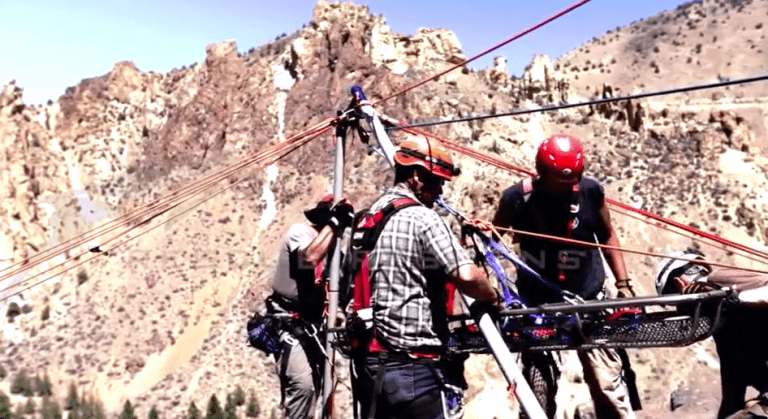
The Arizona Vortex is an indispensable tool in technical rope rescue operations, offering unmatched versatility and adaptability for handling complex edge transitions, hauling systems, and unique rescue scenarios. Its modular design allows rescuers to configure the Vortex for various situations, making it a critical component of advanced rescue kits.
How the Arizona Vortex Works
Key Configurations of the Arizona Vortex
The Arizona Vortex can be set up in multiple configurations depending on the rescue environment. Each configuration offers distinct advantages and considerations.
1. Tripod Configuration
The tripod setup is the most stable and versatile configuration of the Arizona Vortex. With three legs, it provides a centered and balanced anchor point ideal for vertical rescues and edge transitions. This configuration ensures exceptional stability, making it the go-to choice for high-angle operations where safety is paramount.
Learn more from Rigging Lab Academy: Tripod Systems and Applications.
2. Bipod (A-Frame) Configuration
The bipod, or A-frame setup, uses two legs to direct loads over edges or obstacles. While it is more flexible than the tripod, the bipod requires precise guying to maintain stability. It is particularly useful in situations where space is limited, such as cliff edges or narrow passages.
Explore this setup in Rigging Lab Academy: Bipod Techniques for Rescue.
3. Monopod (Gin Pole) Configuration
The monopod configuration is a single-leg setup that excels in confined spaces or scenarios with restricted footprints. While it is the least stable of the configurations, the monopod offers maximum flexibility in tight quarters. Careful attention to guying and force alignment is critical to ensure safety.
Learn more at Rigging Lab Academy: Monopod Configurations.
4. Specialized Configurations
Specialized or hybrid configurations combine elements of the tripod, bipod, and monopod setups to address unique or complex rescue challenges. These configurations often involve additional rigging techniques and require advanced training to execute safely and effectively.
Explore advanced configurations in Rigging Lab Academy: Hybrid Arizona Vortex Setups.
Key Considerations for Setup and Use
To ensure safe and effective use of the Arizona Vortex, it’s essential to follow best practices for assembly, force management, and safety protocols.
1. Assembly and Stability
Always assemble the Arizona Vortex away from the edge to maintain control during setup. Verify that all connections are secure before moving the system into position. Stability is critical for reliable operations, especially in dynamic environments.
See assembly guidance in Rigging Lab Academy: Arizona Vortex Assembly Guide.
2. Force Management
Understanding resultant forces and force vectors is a fundamental skill when using the Arizona Vortex. Ensuring that the force remains centered within the configuration’s footprint prevents tipping and enhances operational safety.
Learn more in Rigging Lab Academy: Force Dynamics in Rescue.
3. Safety Protocols
Safety is paramount when using the Arizona Vortex, particularly with bipod and monopod setups. Proper guying and anchor placement are critical to maintaining stability. Regular practice in controlled conditions builds proficiency and ensures the team can respond confidently during real-world rescues.
Review safety tips at Rigging Lab Academy: Safe Use of Artificial High Directionals.
Conclusion
The Arizona Vortex is an essential tool for rescuers working in high-angle and complex terrain environments. Its modular design, combined with a variety of configurations, provides unparalleled flexibility and adaptability for diverse rescue scenarios. By understanding and practicing key setups, assembly techniques, and safety protocols, rescue teams can maximize the effectiveness of this advanced tool. Rigging Lab Academy offers valuable resources to help teams master the Arizona Vortex and elevate their technical rescue capabilities.

Comments are closed.