
In confined space rigging operations, the integration of anchors, pulleys, and the haul field is crucial for the safety and efficiency of the mission. This article delves into the configuration of a compound 6:1 mechanical advantage system within a confined space rig, highlighting best practices and essential considerations.
Anchors serve as the backbone of any rope rigging system, providing the necessary support to handle loads safely. In confined spaces, selecting appropriate anchor points is vital due to limited options and space constraints.
Key Considerations:
- Anchor Selection: Identify robust structures capable of withstanding anticipated loads.
- Anchor Configuration: Utilize multi-point anchors to distribute forces evenly, enhancing stability.
- Load Distribution: Ensure that the anchor system effectively manages the forces applied during operations.
For an in-depth exploration of anchor systems, refer to Anchors: They Are the Underpinning of Everything That Has a System Attached to It.
Pulleys: Facilitating Mechanical Advantage
Pulleys are integral in creating mechanical advantage systems, allowing rescuers to move loads with reduced effort. In confined space rigs, pulleys are configured to achieve the desired mechanical advantage.
Mechanical Advantage Configuration:
- 2:1 Lowering System: A straightforward setup where the load is lowered directly into the confined space.
- 3:1 Hauling System: Pre-rigged on the opposite side to facilitate raising the load.
- Compound 6:1 System: Combining the 3:1 hauling system acting on the 2:1 lowering system results in a 6:1 mechanical advantage, optimizing efficiency.
For a comprehensive guide on pulley systems and mechanical advantage, see Rigging Physics 101: Pulleys and Mechanical Advantage.
The Haul Field: Optimizing Operations
The haul field refers to the area where the hauling team operates. Proper management of this space is essential for smooth and safe operations.
Best Practices:
- Space Management: Ensure the haul field is clear of obstacles to allow unrestricted movement.
- Team Coordination: Maintain clear communication among team members to synchronize efforts.
- Safety Protocols: Implement safety measures to protect the team during hauling and lowering activities.
Understanding the dynamics of the haul field enhances the overall efficiency of the rescue operation.
Practical Application: Confined Space Rig Demonstration
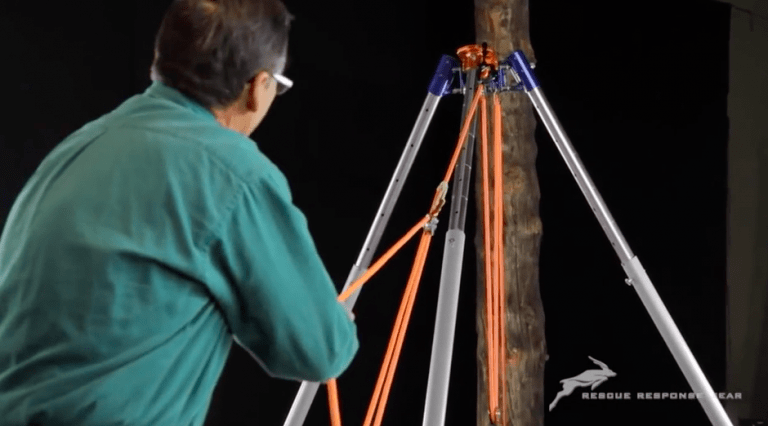
A practical example of this setup involves using a tripod as the high directional anchor. On one side, a 2:1 lowering system is employed, while a 3:1 hauling system is pre-rigged on the other. This configuration allows for seamless transition between lowering and raising operations, with the compound 6:1 mechanical advantage facilitating efficient load movement.
For a visual demonstration, watch the video tutorial in Elements of Rigging.
Conclusion
Mastering the integration of anchors, pulleys, and the haul field in confined space rigging systems is essential for effective rescue operations. By adhering to best practices and understanding the mechanical principles involved, rescue teams can enhance both safety and efficiency.
For further training and resources, visit Rigging Lab Academy.
Peace on your Days…
Lance

Comments are closed.