
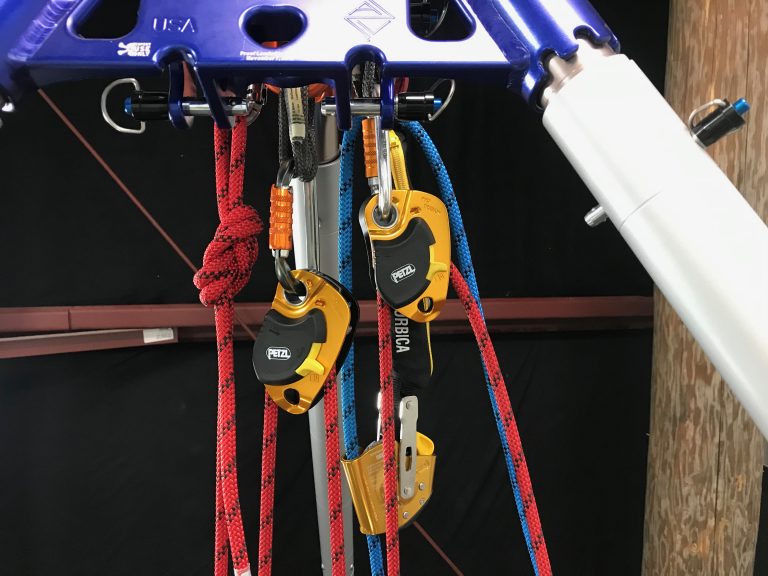
Confined Space Rescue: The Split 4:1 Raise System
Confined space rescues are often defined by their unique challenges—tight spaces, limited overhead clearance, and a need for highly efficient mechanical advantage systems. The Split 4:1 Raise System, while somewhat traditional compared to modern tools like the Petzl Grillon or AZTEK systems, remains a valuable technique for scenarios where these advanced devices may not be available.
This method is especially effective in environments where overhead clearance is limited, such as atop silos, vats, or other industrial confined spaces, and requires strategic execution both on the top and bottom sides of the operation.
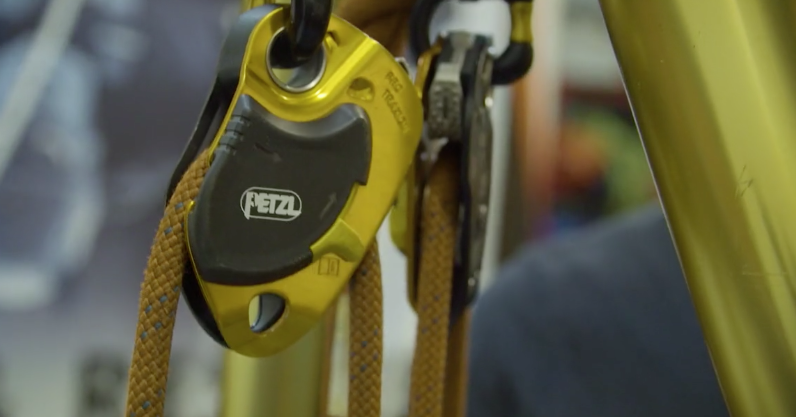
In doing this, you’ve created a 4:1 mechanical advantage with single pulleys which will allow you to split the system as the need arises once you get the patient closer to the top of the space.
Why Would We Use This?
Setting Up the Split 4:1 Raise System
The Split 4:1 system involves creating a 4:1 mechanical advantage using single pulleys, with the flexibility to split it into two independent 2:1 systems as needed.
Steps to Build the Split 4:1 Raise System:
- Dead-End the Rope
Attach the rope to the tripod head or AHD (Artificial High Directional). - Pulley Setup
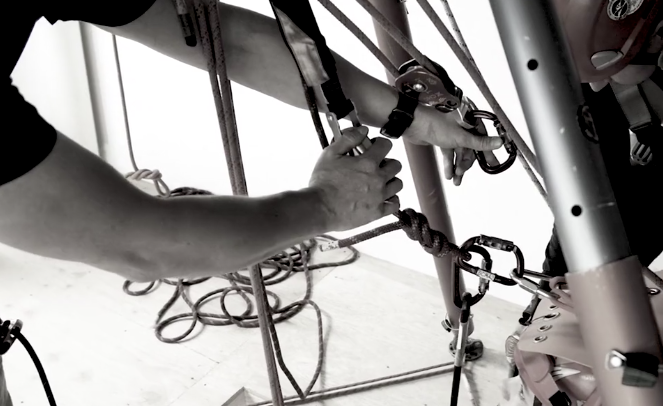
- Use a swivel pulley to create a 2:1 system and connect it to the tripod head with a capture device like a Petzl Pro Traxion.
- Extend a line from the Pro Traxion to the foot end of the patient’s package.
- Add another pulley at the head end of the package and run the rope back to a second capture pulley at the tripod head.
- Split Capability
By using single pulleys and separate capture devices, the system can be split into two independent 2:1 systems to accommodate obstacles or limited space during the raise.
Split 4:1 Operations - Bottom Side
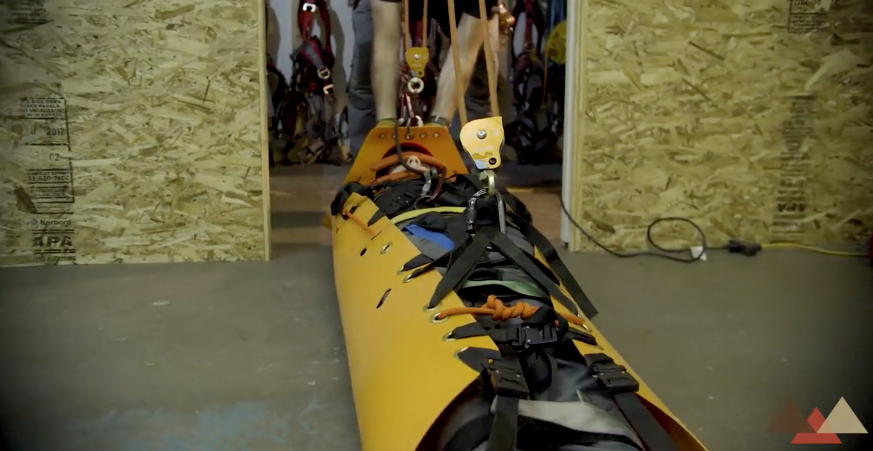
Operations Breakdown
Bottom-Side Operations
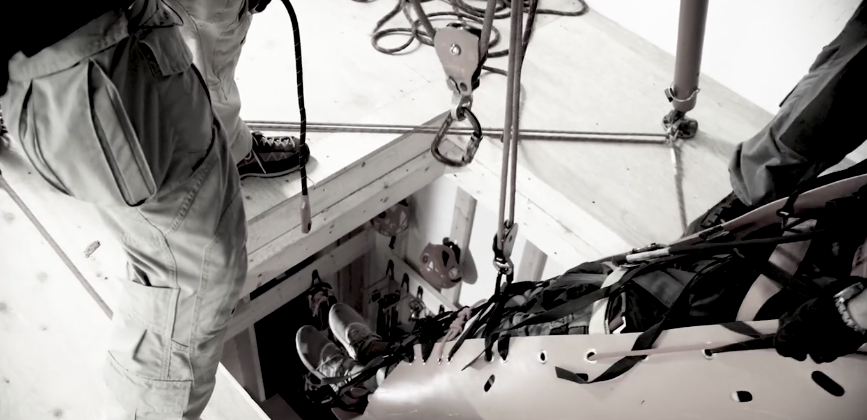
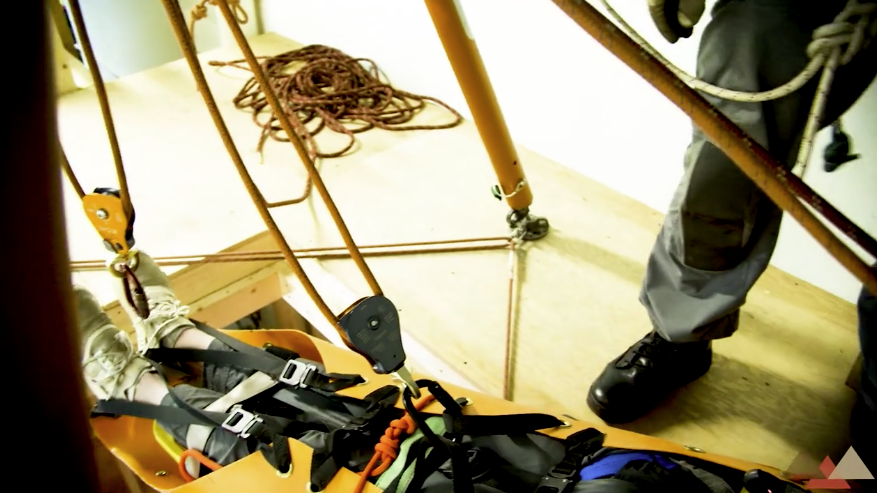
- Secure the first pulley to the foot end of the patient’s package, allowing controlled upward movement.
- The head pulley is removed first during the raise to orient the patient vertically.
- Use a safety line, tethering the patient’s Class II harness directly to the line. This setup ensures an independent backup in case of a mainline failure.
Top-Side Operations
- Anchor the terminated end of the system to the tripod or AHD.
- Incorporate a Pro Traxion or similar device for progress capture and locking.
- The system alternates between two 2:1 mechanical advantages, one at the head and one at the feet, depending on the stage of the rescue.
Split 4:1 Operations - Top Side
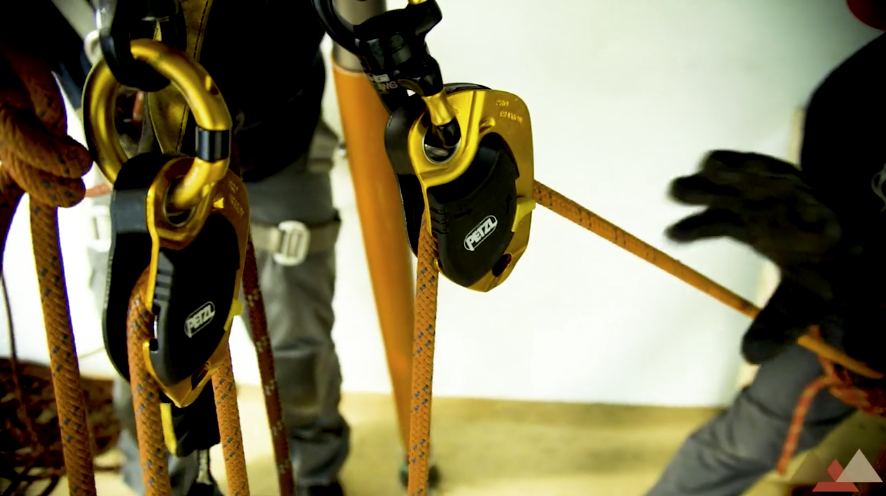
Advantages of the Split 4:1 Raise System
- Adaptability in Tight Spaces
Perfect for scenarios with limited overhead clearance, such as industrial tanks or silos. - Controlled Transitions
The split design allows for controlled movement of the patient package in stages, critical for clearing tight entry points. - Safety and Redundancy
Incorporating safety lines with devices like the Petzl ASAP ensures backup protection during complex operations. - Versatility with Available Gear
Unlike specialized devices, the Split 4:1 system relies on widely available pulleys, making it a practical solution in many setups.
CMC and Rock Exotica Swivel Pulleys
Final Thoughts
The Split 4:1 Raise System bridges the gap between traditional rigging methods and the adaptability demanded by modern confined space rescues. Its simplicity, reliance on accessible gear, and ability to operate in tight spaces make it an indispensable technique for technical rescuers.
For more insights into confined space rescue techniques and gear, explore our comprehensive courses and resources at Rigging Lab Academy.
Peace on your days…
Lance






Comments are closed.