
In technical rescue operations, selecting the appropriate descent control device is crucial for efficiency and safety. Two prominent devices in this field are the CMC Multi-Purpose Device (MPD) and the Petzl I’D. This article provides a comparative analysis of their features, performance, and suitability for various rescue scenarios.
Overview of CMC MPD and Petzl I’D
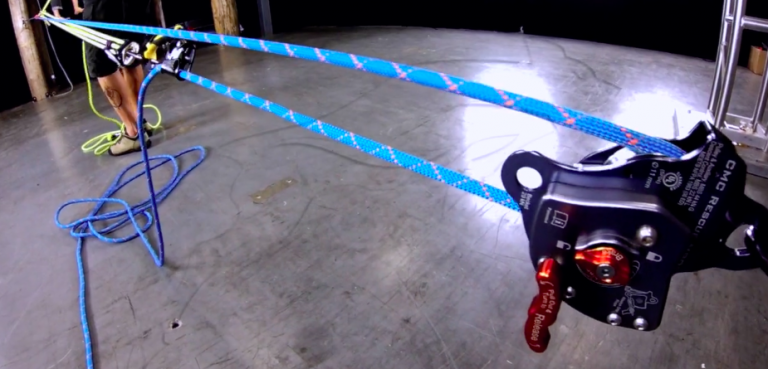
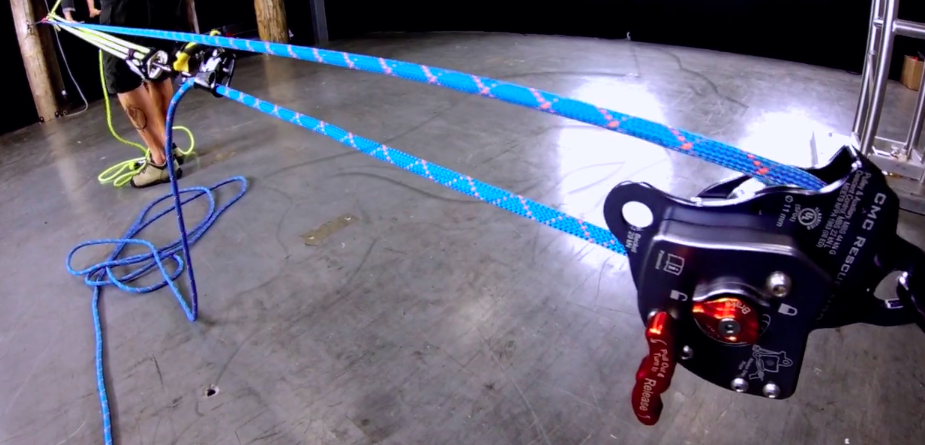
CMC MPD: The MPD is an innovative device that combines multiple functions, including a high-efficiency pulley, a built-in rope-grabbing mechanism, and a variable friction descent control. This design allows seamless transition between lowering and raising operations without changing hardware.
Petzl I’D: The I’D is a self-braking descender with an anti-panic function, widely used in rescue and rope access. It facilitates controlled descent and can serve as a belay device. However, it lacks an integrated pulley, which may affect mechanical advantage in certain setups.
[thrive_leads id=’50654′]
We’ll be getting into this more in later blog article releases.
Comparative Analysis
The following table summarizes the key specifications and features of both devices:
| Feature | CMC MPD | Petzl I’D |
|---|---|---|
| Functionality | Descent control, belay device, pulley | Descent control, belay device |
| Integrated Pulley | Yes | No |
| Mechanical Advantage | High (up to 9:1 with “Inside 9” system) | Lower due to lack of pulley |
| Rope Compatibility | 11 mm (Technical Use), 13 mm (General Use) | 10-11.5 mm |
| Maximum Breaking Strength | 44 kN (Pulley), 20-23 kN (Descent Control) | Not specified |
| Weight | 1.2 kg | 0.53 kg |
| Certifications | UL Classified for pulley, descent control, and belay | CE EN 341, NFPA 1983 |
Note: The “Inside 9” system refers to a mechanical advantage setup that achieves a 9:1 ratio, effectively utilizing the MPD’s integrated pulley.
Performance in Rescue Scenarios
Mechanical Advantage: The CMC MPD’s integrated pulley enhances efficiency in raising systems, providing a significant mechanical advantage. In contrast, the Petzl I’D lacks this feature, potentially requiring additional equipment to achieve similar efficiency.
Ease of Transition: The MPD allows for seamless transition between lowering and raising without changing hardware, streamlining operations. The I’D may necessitate additional steps or equipment for such transitions.
Weight Consideration: The Petzl I’D is lighter (0.53 kg) compared to the CMC MPD (1.2 kg), which may be advantageous in scenarios where weight is a critical factor.
Conclusion
Both the CMC MPD and Petzl I’D are reputable devices in the field of technical rescue. The choice between them should be based on specific operational needs:
- CMC MPD: Ideal for scenarios requiring high mechanical advantage and seamless transition between lowering and raising operations.
- Petzl I’D: Suitable for situations where a lighter device suffices, and additional mechanical advantage is not a primary concern.
Peace on your days…
Lance






Comments are closed.