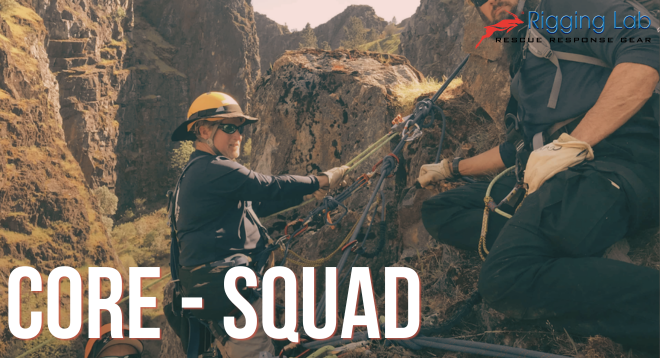
Working Near the Edge in Rope Rescue is one of the most critical safety practices in technical operations. The edge is one of the most dangerous zones in rope rescue. Even a small slip near a vertical drop can have serious consequences. For this reason, edge personnel must always maintain two points of contact when working near drop-offs where a fall of six feet or more is possible.
What Counts as Two Points of Contact?
-
Primary Point: A travel restrict line or edge kit that prevents the rescuer from reaching the fall hazard.
-
Secondary Point: A belay or backup line that provides fall protection if the primary point fails.
Key Rule: The belay line must be weighted if the rescuer intends to place body weight on the travel restrict. If the restrict is only preventing forward travel (not supporting weight), the belay can remain unweighted.
Setting Up for Edge Safety
-
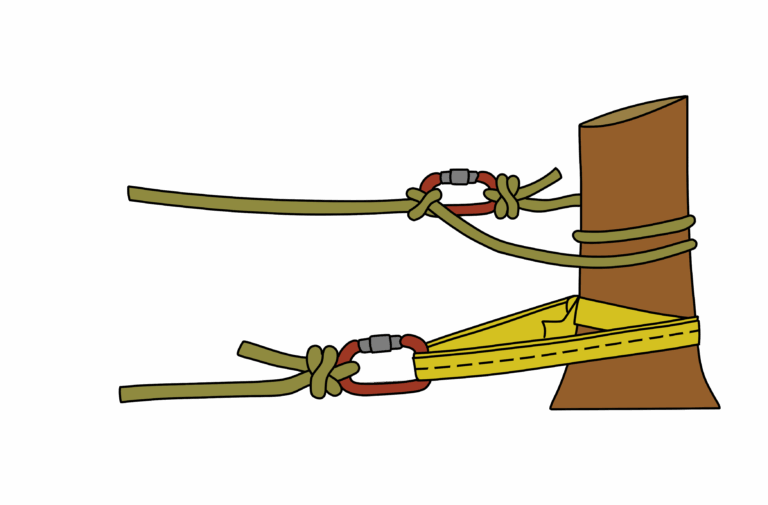
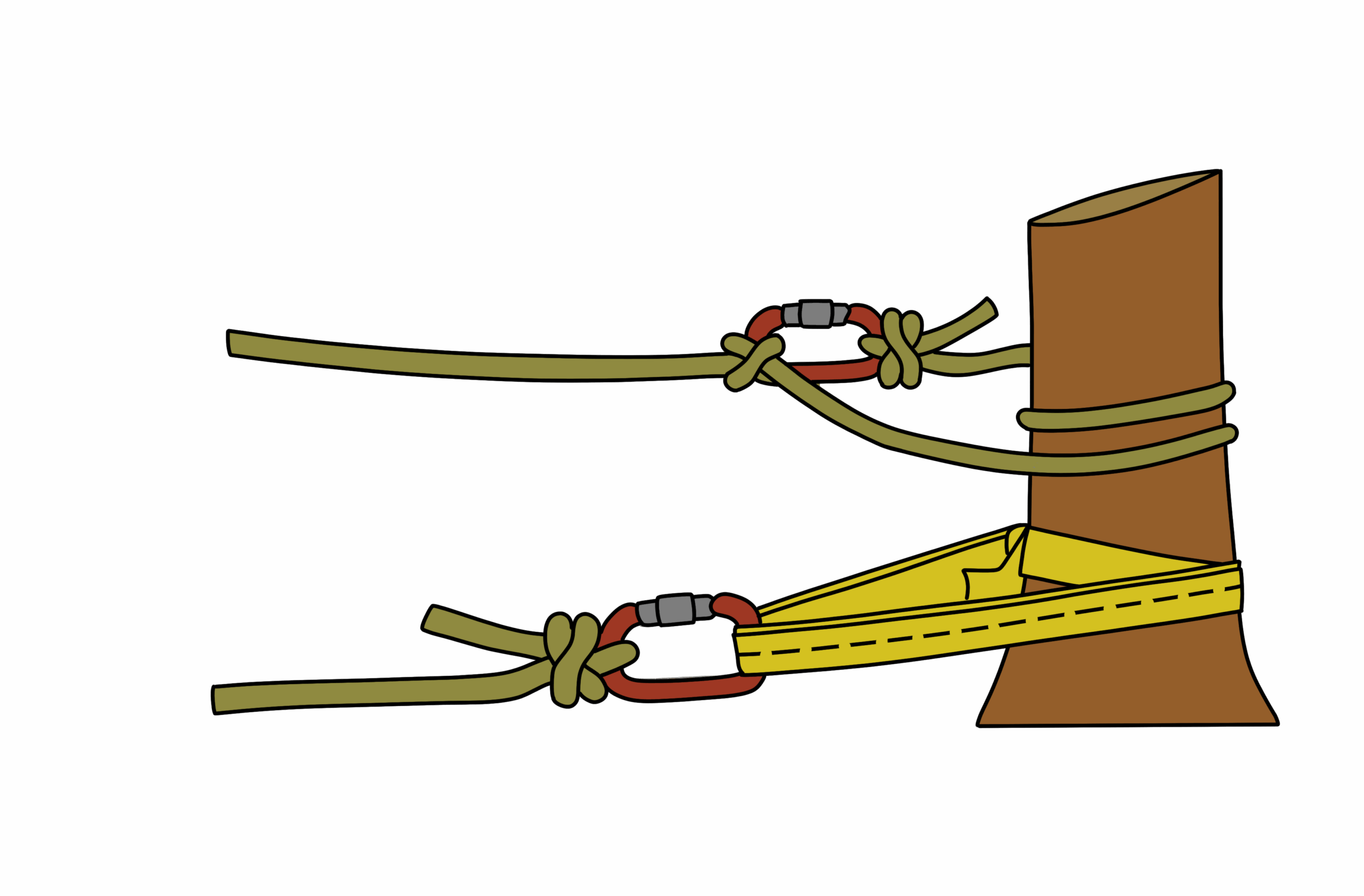
Anchor the Edge Kit
-
Clip into webbing, or wrap directly around a tree or structural member.
-
Secure with a clove hitch or other approved knot.
-
-
Travel Restrict Line
-
Attach to the rescuer’s harness with a Purcell prusik or adjustable tether.
-
Tie off so that the maximum travel distance stops short of the edge.
-
-
Belay Line (As Needed)
-
Run a separate belay line from an independent anchor.
-
Keep slack minimal to reduce fall distance if engaged.
-
-
Edge Protection
-
Secure a separate line or sling to hold protective pads, rollers, or edge guards.
-
This prevents rope damage and prolongs equipment life.
-
Example in Practice
A rescuer working on a steep cliff face sets up an edge kit Purcell loop to keep them two feet back from the lip. The line is short enough to restrict movement, but still adjustable for tasks like positioning a high directional. At the same time, a belay line is clipped to their harness as backup. This combination provides redundancy while they operate in one of the highest-risk areas of the rescue.

Advantages of Edge Control Systems
-
Redundancy – Two independent points of contact minimize fall risk.
-
Adjustability – Purcell prusiks allow fine movement control near the edge.
-
Integration – Compatible with belay systems, travel restricts, and edge protection setups.
-
Versatility – Can be adapted to natural anchors, structural members, or artificial systems.
Safety Considerations
-
Always use two points of contact when within fall range.
-
Keep travel restricts adjusted tightly — avoid long slack loops.
-
If body weight will rest on the restrict, ensure the belay is weighted as well.
-
Protect all ropes and straps from abrasion with padding or edge guards.
-
Train edge personnel to communicate clearly with mainline and belay teams.
When to Apply Edge Systems
-
During rope placement — while setting edge rollers or friction devices.
-
During litter transitions — moving patients from vertical to horizontal or vice versa.
-
During system monitoring — watching rope path and managing slack near the edge.
-
In training environments — whenever rescuers work within reach of a fall hazard.
Conclusion
Working near the edge is one of the most hazardous parts of rope rescue, requiring discipline and redundancy at all times. By maintaining two points of contact through travel restricts and belay systems, rescuers protect themselves while performing critical tasks. Edge control setups are simple, fast, and effective — and they remain one of the most important layers of safety in technical rope operations.
Peace on your Days
Lance