
Trackline Skate Blocks and the Art of Horizontal Rope Rescue
Not all rope rescues go up or down. Some go sideways—and those call for a different set of tools and skills. Trackline Skate Blocks solve the problem of horizontal movement across open spans, rough terrain, or tight industrial structures.
In these situations, vertical lifts won’t cut it. You need a high-tension line and a rolling connection that lets you guide the load from one point to another without swinging or dragging. This is where the trackline skate block system shines.
What Is a Trackline Skate Block?
At its core, a trackline skate block is a movable pulley that rides along a horizontal tensioned rope (the “trackline”). It holds the load—usually a litter, gear package, or patient—and glides side-to-side, powered by a separate hauling system.
This isn’t just a pulley on a rope. It’s part of a complete rigging system designed for:
-
Lateral movement
-
Controlled hauling
-
Edge clearance
-
Load stability
Because the load never drags along the ground or rubs on a surface, it stays secure and easy to manage. That’s a huge win in urban, confined space, or wilderness rescues where vertical drop zones aren’t available.
How the System Works
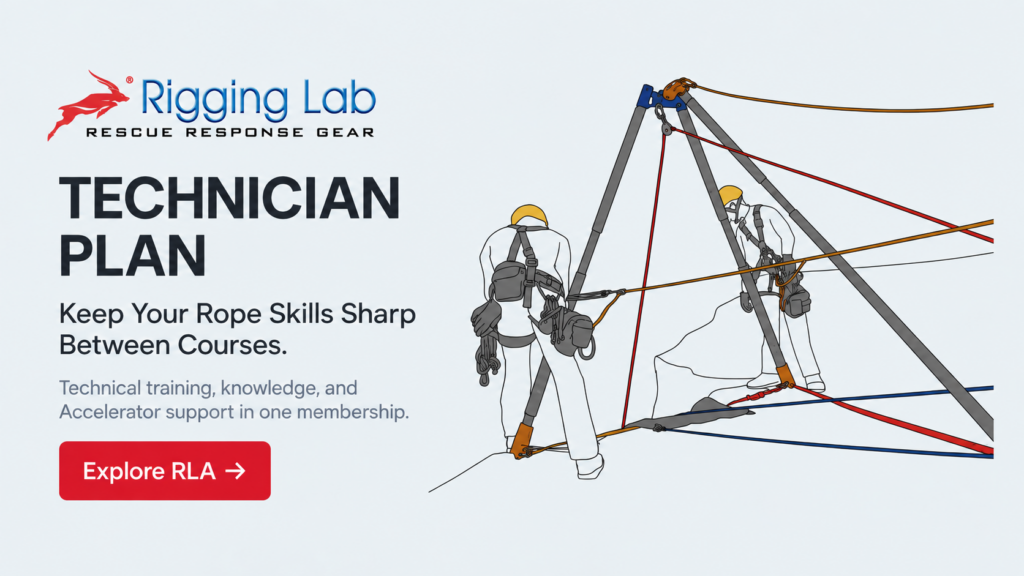
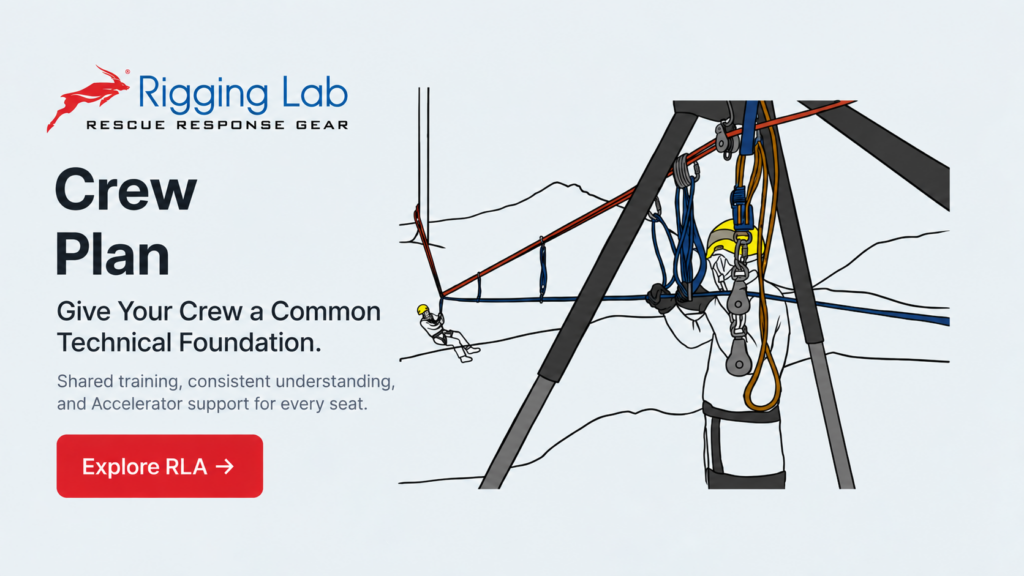
A trackline spans the gap between two anchors—raised high on A-frames, tripods, or natural features. A pulley attaches to that line, and the load hangs beneath it. To move it horizontally, rescuers control one or both ends of a twin tension haul system.
The haul system might include:
-
3:1 or 5:1 mechanical advantage for easy movement
-
MPDs or Petzl IDs for progress capture and safety
-
Guiding lines to reduce sway or control descent angles
-
Back-tensioned lines to equalize load between the anchors
This keeps the system dynamic yet stable. The load moves side-to-side but stays suspended and balanced, even over sloped or uneven terrain.
Why Use a Trackline Skate Block?
In many rescues, a straight-line vertical lift or lower isn’t an option. You might face cliffs with brush-filled ledges, catwalks that block direct access, or canyon gaps with no vertical anchor points.
Trackline skate blocks solve those problems. They allow:
-
Smooth lateral transitions
-
Load positioning before descent
-
Reduced risk of edge damage
-
Safer confined space entry or exit
Rescue teams use them in everything from tower rescues to cave extractions. With proper training, the system becomes a flexible tool for many unique environments.
Key Advantages of This System
Let’s break down what makes the skate block setup so effective:
-
Simplicity – One tensioned line, one pulley, and one haul system keep things clean.
-
Efficiency – It reduces friction and eliminates the need for edge redirects.
-
Control – Dual haul lines give precise directional command.
-
Redundancy – Twin tension setups add safety and balance.
-
Adaptability – Use it with A-frames, monopods, or fixed anchors.
These factors make it a go-to option for horizontal movement when conditions call for more than just a vertical raise or lower.
Pairing With Other Systems
Trackline skate blocks rarely work alone. You’ll often see them integrated into more complex rescue systems, such as:
-
Guiding lines to stabilize the load path
-
Two tension rope systems (TTRS) for mirrored hauling
-
Edge protection systems for transitions onto or off the deck
-
Articulated high directionals like TerrAdaptors or AZ Vortex setups
Together, these systems create a smooth, secure path for rescuing or repositioning loads in high-stakes environments.
When to Deploy a Skate Block
Choose a trackline skate block setup when:
-
The terrain blocks vertical movement
-
You need to bypass hazardous edges
-
A patient must be moved across horizontal space
-
You want safer, more controlled transitions between high points
These scenarios demand precision. With proper rigging and monitoring, the skate block system gives that and more.
Peace on your Days
Lance