In technical rescue, harnesses are often treated as static pieces of personal protective equipment. In reality, the harness becomes the central interface between the rescuer and the entire rope system. Every ascent, descent, edge transition, positioning movement, litter operation, and directional shift passes through that platform. The harness is not merely something a rescuer wears. It is the structural and operational connection point between the human body and the mechanics of the rescue environment.
This distinction matters more than many teams realize. A poorly configured or poorly understood harness system can create inefficiencies that compound across the entire operation. Descenders twist unnaturally, chest ascenders sit too high or too low, equipment clusters interfere with movement, suspension becomes uncomfortable during extended operations, and transitions become more difficult than necessary. These issues rarely appear dramatic in isolation, but together they influence fatigue, efficiency, and operational control in meaningful ways.
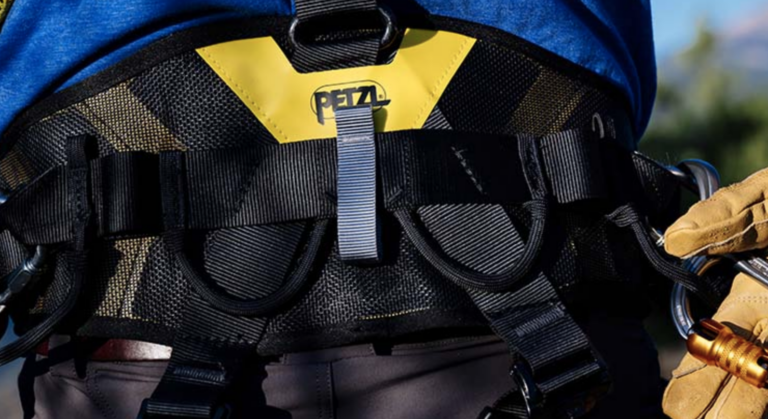
Modern rescue harnesses have evolved well beyond the traditional “one-size-fits-all” concept. Lightweight modular systems like the Petzl Falcon Harness series reflect a broader shift toward mission-specific configuration. Rather than forcing every rescuer into the same operational geometry, these systems allow teams to prioritize movement efficiency, rope progression, work positioning, or compact deployment depending on the environment and objective.
Harnesses as Operational Platforms
The most important concept in rescue harness design is understanding that the harness functions as an operational platform rather than a passive support device. The position of the ventral attachment point influences rope alignment and descender orientation. The spacing between the waist belt and leg loops affects suspension posture and ascending mechanics. Gear loop placement impacts accessibility and movement efficiency during transitions.
When these elements are properly integrated, the rescuer moves more fluidly through the system. Rope ascent becomes smoother. Device management becomes cleaner. Edge transitions require less adjustment. Fatigue accumulation decreases during long operations.
This is particularly important in technical rescue because the rescuer is rarely static. Unlike recreational climbing environments, rescue personnel often move through changing operational modes within a single mission:
- ascending
- descending
- positioning
- patient management
- directional transitions
- confined-space movement
- litter accompaniment
- horizontal offset travel.
The harness must support all of these functions without becoming the limiting factor.
Why Lightweight Harness Systems Matter
Lightweight harness systems are often misunderstood as purely comfort-oriented equipment. In reality, reducing harness bulk can significantly improve operational mobility.
The Petzl Falcon Mountain demonstrates this principle well. Its streamlined profile reduces interference during climbing and movement-heavy operations while still maintaining critical rescue functionality.
In mountain rescue, tower rescue, wilderness operations, and rope access environments, rescuers frequently move across terrain before the technical system is ever deployed. Bulkier harness systems can restrict hip movement, create unnecessary snag hazards, and increase fatigue over long approaches or repetitive vertical movement.
A lighter harness does not simply “feel better.” It changes how efficiently the rescuer moves through the operational environment.
This becomes especially noticeable during:
- long rope ascents
- repeated edge transitions
- confined-space entries
- high-angle traverses
- extended suspension operations.
Minimalist systems also compress more efficiently into deployment packs, making them advantageous for teams operating in alpine or remote rescue environments where volume and weight management directly affect operational capability.
Rope Ascension and Movement Efficiency
One of the more overlooked aspects of harness architecture is how the system affects rope progression efficiency.
The Petzl Falcon Ascent approaches this issue through a lower attachment configuration designed to optimize chest ascender positioning during rope ascent.
While this may appear minor at first glance, the geometry of the ascender-to-harness interface directly affects climbing efficiency. A poorly positioned ascender shortens stroke length and increases unnecessary body compression during upward movement. Over long vertical distances, these inefficiencies accumulate rapidly.
Efficient rope ascent is not solely about strength. It is heavily influenced by movement economy.
When the harness geometry supports smoother rope progression:
- rescuer fatigue decreases
- climbing rhythm improves
- body posture becomes more upright
- energy transfer becomes more efficient.
This is especially valuable in:
- cave rescue
- tower rescue
- industrial access
- wilderness vertical evacuation
- prolonged ascending operations.
The relationship between harness architecture and rope movement is often underappreciated because it becomes most noticeable during extended operational exposure rather than short training evolutions.
Front-End Organization and Device Orientation
Another critical aspect of harness design is front-end equipment organization.
As rescue systems become more complex, the area around the ventral attachment point often becomes congested with:
- descenders
- lanyards
- progress-capture devices
- chest ascenders
- swivels
- connectors.
Poor organization at the harness front can create twisting, cross-loading, inefficient clipping sequences, and unnecessary clutter during transitions.
The transcript’s discussion of the ring integration accessory highlights a subtle but important operational improvement: cleaner descender orientation.
Instead of forcing a descender to twist against a textile bridge or attachment loop, the accessory creates a more vertically aligned interface. While seemingly small, these improvements reduce system clutter and create more efficient movement at the primary operational connection point.
In technical rescue, cleaner systems are often safer systems.
Reducing unnecessary hardware stacking and awkward orientation:
- improves inspection visibility
- reduces tangling
- simplifies transitions
- minimizes device interference
- improves overall operational clarity.
This is particularly important during high-consequence operations where multiple systems converge at the rescuer interface.
Modular Rescue Systems and Adaptability
Modern rescue environments demand flexibility. A harness that performs well during rope access may not perform equally well during litter evacuation or prolonged suspension work.
This is where modular systems become valuable.
The Falcon series allows teams to configure the harness differently depending on mission profile by integrating upper-body components, chest ascenders, or additional positioning systems.
This adaptability matters because technical rescue rarely operates within a single operational condition. Teams may move from:
- access
- to positioning
- to patient packaging
- to lowering
- to horizontal movement
- within the same incident.
The harness becomes part of an evolving operational ecosystem rather than a fixed piece of equipment.
The RLA Perspective on Harness Systems
At Rigging Lab Academy, rescue systems are taught as integrated operational environments rather than isolated equipment categories. Harness selection influences far more than comfort or fit. It directly affects movement efficiency, rope progression, device management, suspension posture, edge transition behavior, and overall system organization.
Understanding how these variables interact is part of developing operational fluency within technical rescue systems.
A rescuer who understands harness architecture understands more than equipment preference. They begin to recognize:
- how force paths move through the body
- how device orientation affects workflow
- how geometry influences efficiency
- how equipment organization impacts operational control.
That deeper systems understanding is where technical rescue moves beyond gear familiarity and into true operational competence.
The harness may appear to be a small component within a larger rescue system, but in practice, it is the point where the rescuer physically enters the mechanics of the operation itself.