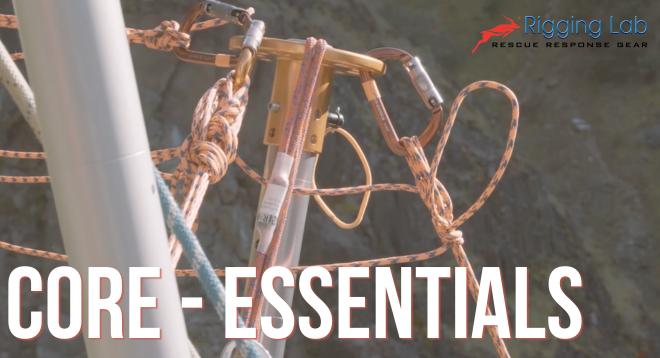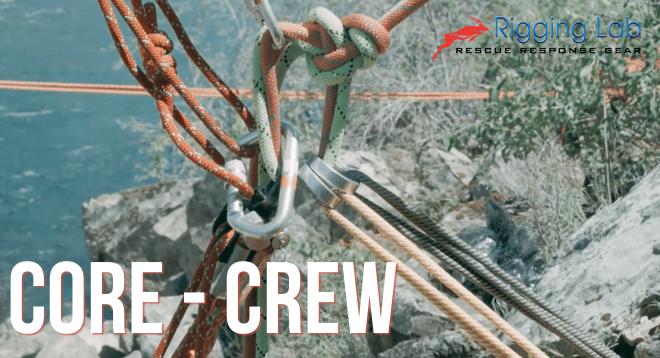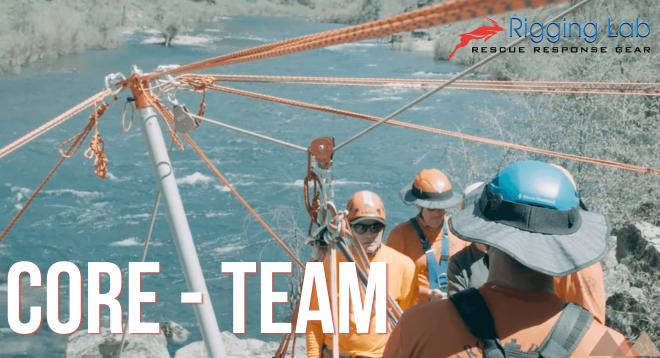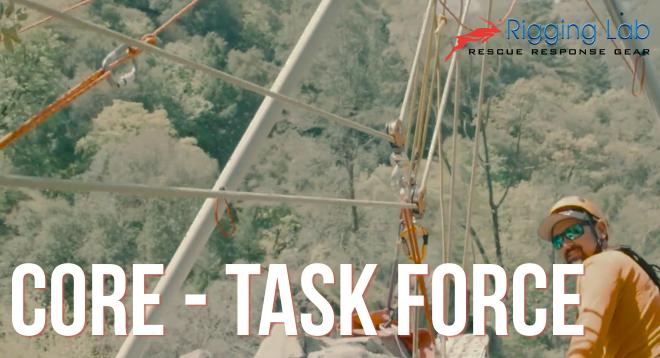
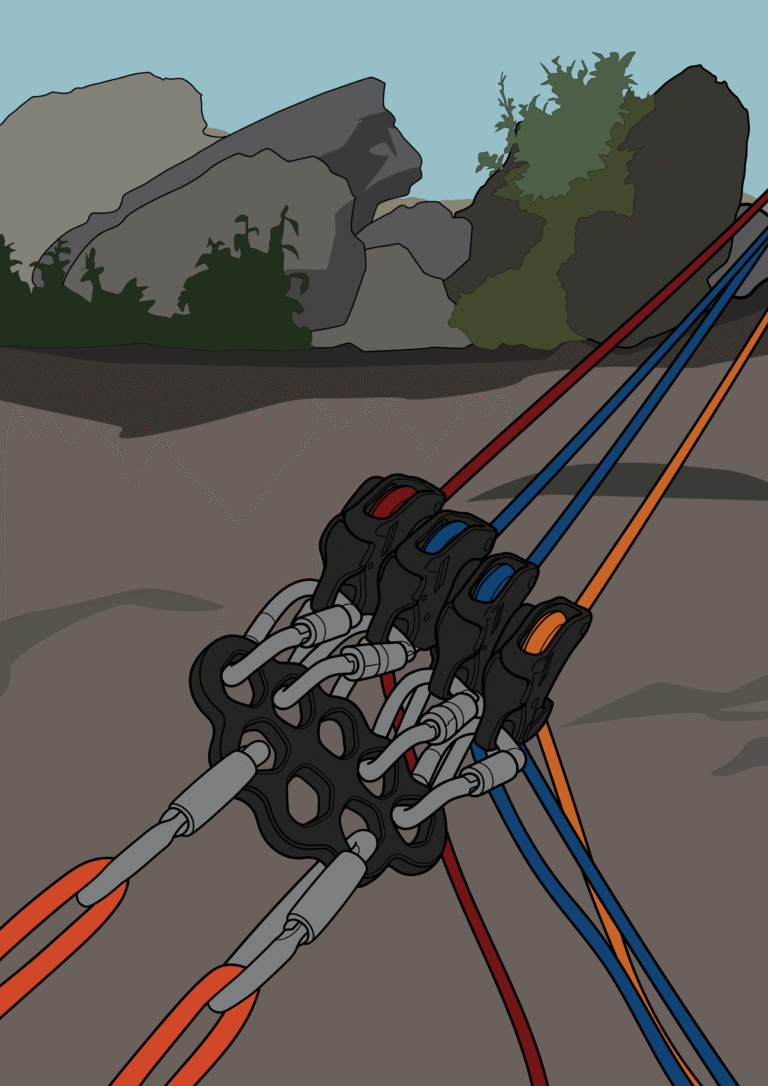
Walk up to a focal in training and watch what happens. Eyes go to the plate, the carabiners, the cams, the sling angles, the way the anchor legs come in. Hands check orientation. Someone names the gear, someone else nods, and inside a minute the group has “assessed” the rig — except they have not. They have assessed a focal. The system that makes it trustworthy — anchors, load, line assignments, architecture, operators, intent — mostly lives somewhere else and mostly went unspoken. The difference between what just happened and an actual assessment is the difference between reporting on hardware and being accountable for a system, and closing that gap is the habit this piece is about.
What a focal gives us
A focal is a single point where the anchor side and the working side meet. Standing in front of one, the components can be evaluated in isolation: is this the right piece of gear, is it oriented correctly, is it loaded along its designed axis. Those are legitimate questions and we should be able to answer them. Answering them tells us the parts in view are correct. That is the honest limit of what a focal can tell us.
What a focal does not give us
The rest of the system stands outside the focal. Before forming an opinion on the rig, name what the focal alone cannot show:
-
The anchors themselves. Legs come into the focal, but where do they terminate? One point or several? Bombproof or marginal? What is the internal angle between them, and what does that do to the load on each?
-
The load. Person, litter, tensioned line, static mass? Held or moving?
-
The far end of the working lines. Which line does what? Independent functions, tensioned pairs, or something else entirely?
-
The system architecture. The hardware does not declare itself. What kind of system this is — and therefore what each line is actually doing — is a decision made elsewhere in the rig, not at the focal.
-
The operators. Who tends each device? Is anyone assigned to it? Are the captures the plan, or a backup to a plan?
-
The intent. Raise, lower, hold, traverse? Purpose drives architecture, and neither is visible standing at the focal.
None of these are failures of the technician doing the looking. They are limits of where the technician is standing.
The habit worth building
The failure mode is straightforward: every visible component can be correct and the system can still be wrong. A sound focal on an unsound anchor is an unsound system. A textbook capture on the wrong line is an unsound system. Good geometry serving the wrong intent is an unsound system. Component knowledge tells us whether the piece in front of us is right. Systems thinking tells us whether the piece belongs there at all. Both are the technician’s responsibility, in that order, and neither replaces the other.
How we run the assessment
When a rig is handed to us to evaluate — in training, in the field, in a scenario, or in our own hands — we work through the same short list. Say it out loud if it helps.
-
Anchors — what is holding this, and is it adequate?
-
Connections — how does load travel from anchor to load, in order?
-
Redundancy — what fails if any single element fails?
-
Control — who moves the load, who arrests it, who is watching?
-
Intent — what is this rig for, and does the geometry serve that purpose?
-
Bounds — what loads, angles, and conditions is this rig valid within?
Closing
The focal is the part we can see. The system is what makes it work. One does not prove the other. Gear literacy earns us a seat at the assessment — systems thinking is the assessment. Until we can account for what lives outside the focal, we are not evaluating a rig. We are admiring a piece of it.