In the high-stakes world of rope rescue, every action starts with one fundamental principle: a secure anchor. It’s the silent hero that holds the line. However, a single mistake in its setup can cause a catastrophic failure. On to The Essential Guide to Point Anchors
At Rigging Lab Academy, we believe that understanding anchors is a non-negotiable prerequisite for safety. This guide goes beyond basic definitions. Instead, we’ll explore some of the most effective point anchor methods. Our goal is to provide you with the knowledge to build a dependable foundation for any operation, from a simple rappel to a complex high-line system.
1. The Full Strength Tie-Off: Unyielding Efficiency
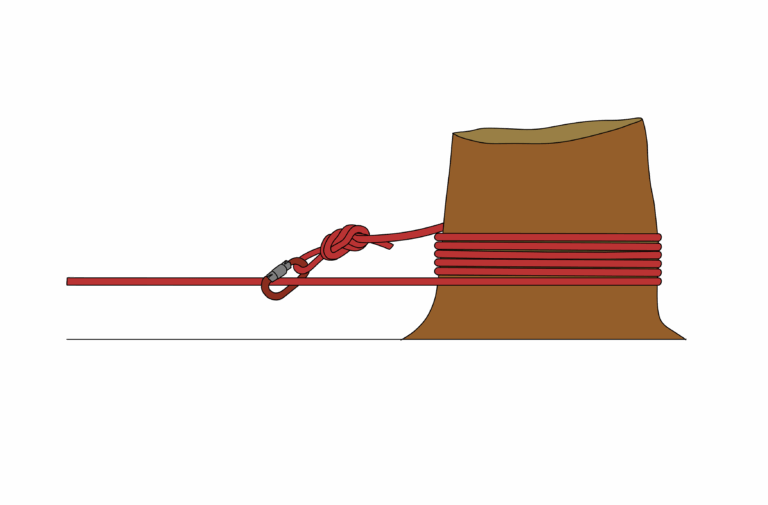
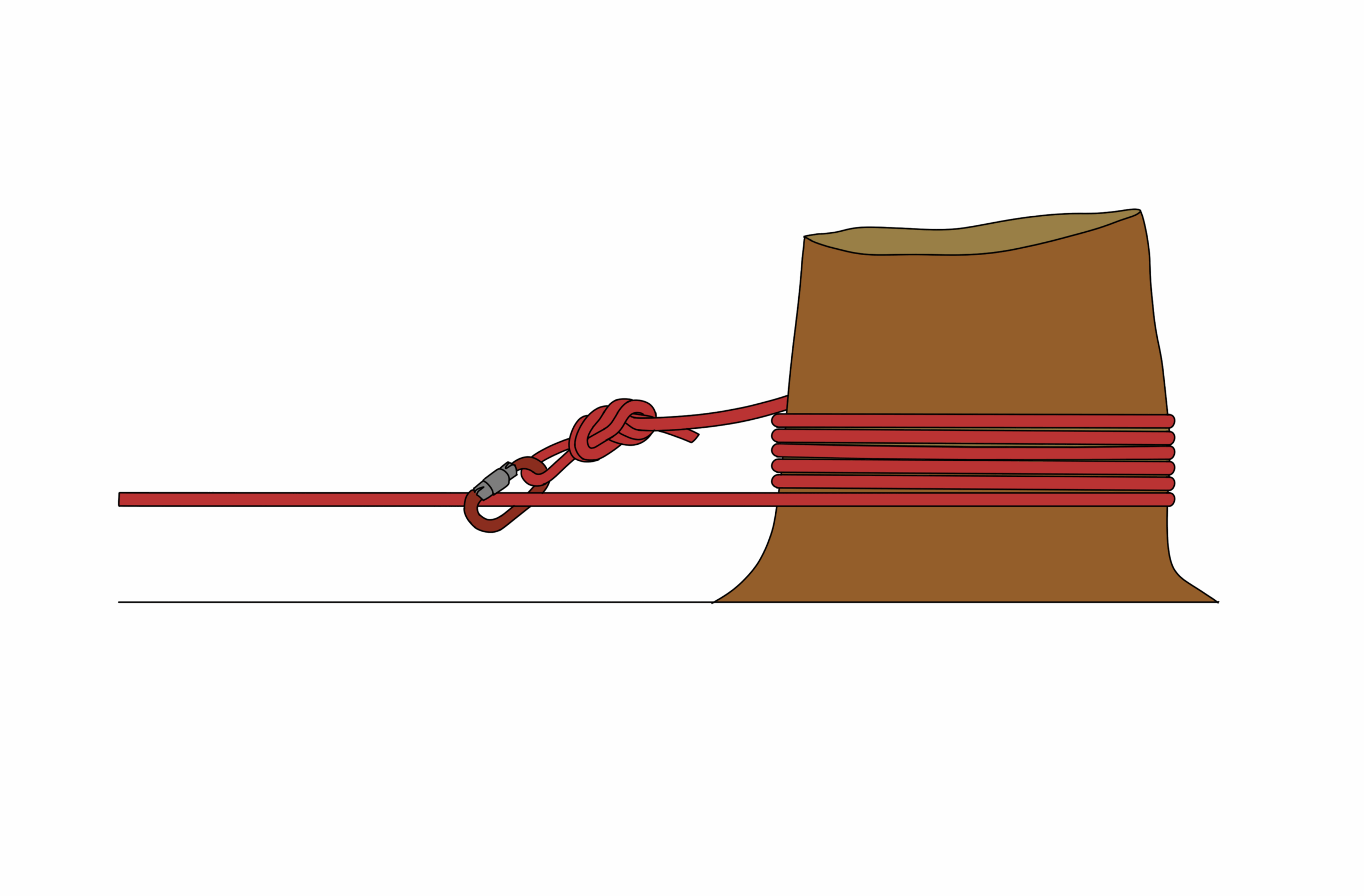
When your operation demands absolute efficiency, the Full Strength Tie-Off is the best choice. This technique maximizes the rope’s own strength. As a result, it is perfect for high-stress applications. We use this method to establish a fixed anchor, guaranteeing zero slippage and maximum load capacity.
Key Applications:
- Anchor for a fixed rappel line: Use it to provide a static, non-moving point for a single or double rope rappel.
- Anchor for a track line of a high line: This is essential for maintaining tension on systems where the anchor must withstand significant forces.
Technical Insight: The method uses a minimum of 4 to 6 wraps around a substantial object. This is a critical factor. The multiple wraps distribute the load over a larger surface area. This process prevents stress concentration. It ensures the rope material keeps its 100% efficiency.
2. Wrap 3, Pull 2: The Practical Workhorse
The “Wrap 3, Pull 2” method offers a great balance of simplicity and strength. It’s a quick and effective way to create a strong anchor point. Furthermore, it works well with a single rope. It is a testament to the principle of “simple and strong.”
Key Applications:
- Use this method to rapidly establish a secure anchor when time is short.
- It is a good option for rigging systems that don’t need a full-strength, non-moving track line.
Technical Insight: You start by making three full wraps around the anchor object. The key is how the final loops are configured. The third wrap is tied with a water bend knot. This configuration, while simple, achieves an impressive average break strength of 8910 lbf (39.6 kN). Therefore, you don’t always need a complex knot to achieve a high degree of security.
3. Prusik Loop, Basket Hitch: The Rescuer’s Rigging Extension
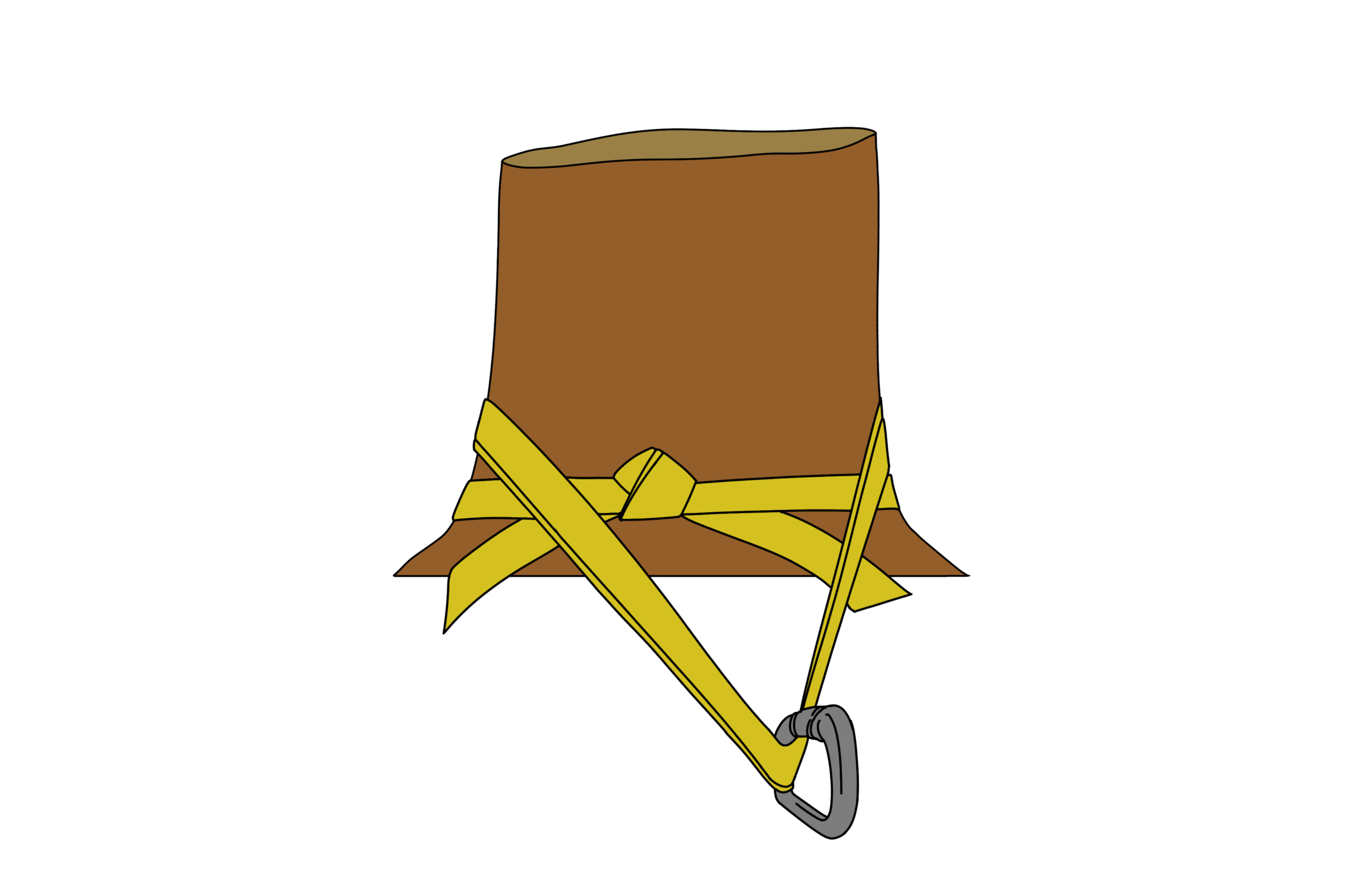
When you need an anchor that is both strong and adaptable, a Prusik loop in a Basket hitch is an indispensable tool. This method is all about versatility. For example, it allows you to create a robust rigging extension that you can easily adjust or reposition. It is an essential component for building multi-point anchors.
Key Applications:
- Create a handy rigging extension for a primary anchor point.
- Build a self-adjusting or load-sharing system.
Technical Insight: We build this system with a sewn 8mm Prusik loop. This setup achieves an average break strength of 12,000 lbf (53 kN). The “basket” configuration distributes the load evenly. In addition, it leverages the full strength of the hitch. This strength, plus its ease of use, makes it a staple in any rigger’s toolbox.
4. Prusik Loop, Girth Hitch: The Specialized Attaché
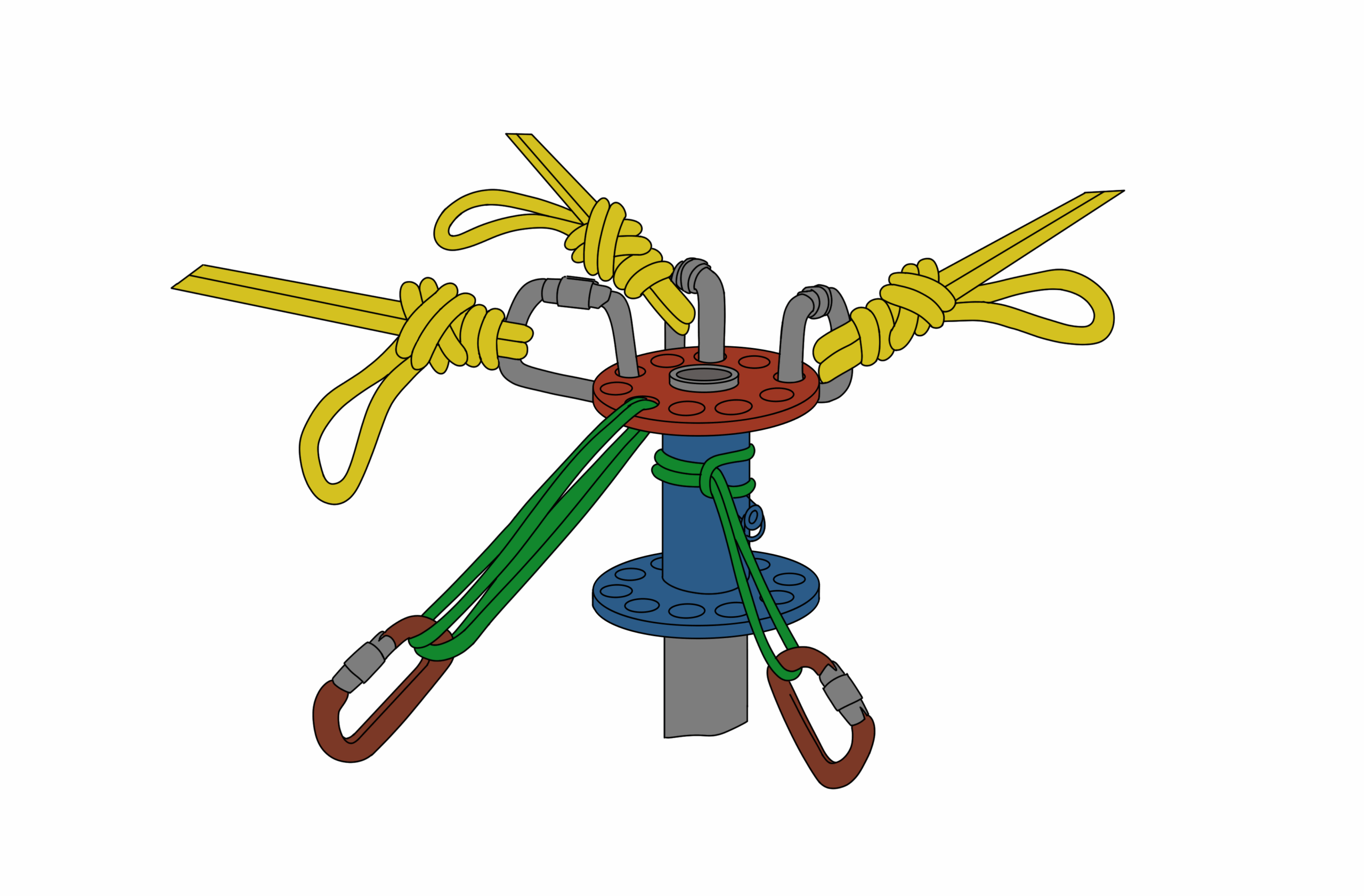
The Prusik loop with a Girth hitch is a specialized but critical component. Its primary use is for creating a secure attachment for ancillary systems. For instance, its most common role is as an opposition front tie. Here, it helps prevent the main anchor from shifting forward under load.
Key Applications:
- Attachment for opposition front ties: This is a crucial safety element in systems with floating anchors or high-directionals.
- Good for multi-point anchor systems: Use it to connect to a load-sharing system.
Technical Insight: This hitch, built with an 8mm sewn Prusik, achieves an average break strength of 4900 lbf (21.7 kN). This number might seem lower than other methods. However, its function is key. It is not designed to be the main load-bearing anchor. Instead, it provides a secure point of opposition, ensuring the overall system remains stable.
Building Your Expertise: A Continuous Journey
Mastering these point anchor techniques is foundational to all advanced rigging and rescue work. It’s not just about knowing the names; it’s about understanding their specific applications. By practicing these methods, you build the muscle memory and judgment needed to select the right tool. Your commitment to training is the final component of a truly safe and effective system.
Peace on your Days
Lance