
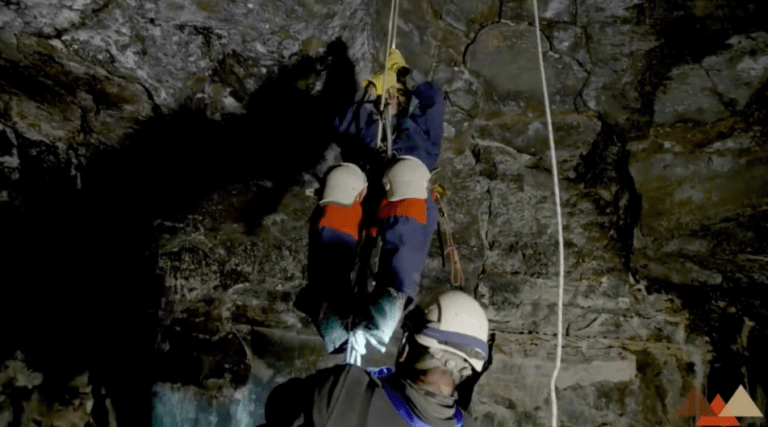
So what is Small Party Assisted Rescue? Well, it’s essentially a 2-4 “person” (cavers, climbers, mountain SAR, etc.) assisting an injured member of their team or party without the reliance or assistance from outside resources or teams.
I am going to share with you a very small but important part of cave rescue that applies all rescue teams. We train and train presuming that everyone shows up with the game on. The reality is the “having their game on” normally isn’t what happens. It becomes even worse when a small team becomes smaller.
I know of more than just a few teams, where becomes of short sided leadership and a lack of ownership, the teams failed… not because they couldn’t handle it, but because they couldn’t see past their own end and into something fresh and new. If everything revolves around “someone” and that someone is “royalty”, then the end is closer than you think and there is no future to look for.
However, such is not true with a team that provides a culture of freedom. And with freedom, alternatives are in abundance!
So getting back to the relevance of caving rescue and (say) fire service or mountain rescue… A 2-4 person team could look like a 2 person team only and with top side raise and lower systems not being a timely option, other alternatives need to take the higher ground. Here is one such option.
Caving, by comparison, mostly remains as remote as it gets. No cell phones, no GPS, no SPOT or radio… Nothing works underground. Contrary to popular belief, it is not just ill-prepared caver that gets into trouble. Experienced cavers, often during the course of well-planned expeditions, have also sustained injuries. The difference for many is that well prepared and experienced cavers often have the skills to effect their own rescue and never have to tap; into outside resources for help.
This is likely the first of a number of Cave Rescue (Small Party Assisted) courses. This course, designed primarily around pickoffs (counterweight, diminishing loop, and direct haul), was chosen due to its focused end goal: to get the patient to safety. Most often, small teams need to retrace their steps and bring the patient along with them.
We hope you enjoy this first ever and very unique look at “the caver”. Also, don’t lose sight that everything in this course has elements that apply to you; fire service, SAR, climbing, mountain rescue and even canyoneering.
Pickoffs: What Are They?
A pickoff is a single rescuer technique that allows retrieval of a person stuck on rope. It entails the rescuer climbing up (or rappelling down) to the stuck caver, typically on the same rope that the caver is stuck on and performing a series of connections and weight transfers in order to lower the patient back to the ground, either by rappelling with them or by lowering them down separately. We’ll be covering only the former here in this post.
A pickoff is the riskiest alternative to retrieving a climber on rope partially because it commits the rescuer to similar hazards as the patient. The odds of getting stuck and becoming a 2nd patient are high.
With pickoffs, a stranded caver or climber is a real emergency, both in terms of exposure to hypothermia and suspension trauma. Much less anything that may have contributed to their demise. Thus, this is a small party rescue skill.
Pickoffs are high complexity, low frequency, high consequence maneuvers. Since they don’t happen much skills can drop. Practice this stuff regularly and don’t always use the same gear. See what your minimal gear allotment looks like.
General Pickoff Tips
Virtually all pickoffs involve climbing up to the stuck or unconscious caver, on their rope, and climb “through” their system to get to a point somewhere above them. The patient’s system is almost always loaded and will normally require one if not two weight transfers. Generally, you’ll need to be performing some kind of a short “lift” to get the patient off their system and onto yours.
- When coming from below, be extra attentive to everything that patient has (in use or not). Make sure everything is out of the before you start the rescue.
- If possible, prior to ascending the patients rope, see about building a QAS (Quick Attachment System) for yourself, a third ascender attached to your harness. A very easy way to “bypass” the patient regardless of your own climbing system.
- Consider the patients gear “Fair Game”.
- Don’t take shortcuts. Both the stakes and stress are high and it is easy to overlook things.
- Remember that when you’re connected, the patient and you are using their gear and thus you have multiple attachment points (that you share). You’re required to have at least two (2) and are collectively shared when connected together.
- Practice moving passed the patient. It’s often awkward at first but will become easier with practice.
- Use your cowstail properly.
- Use the patient’s own gear as much as possible.
- Keep rope housekeeping as a priority. Pickoffs can get messy!
- Make sure the descender to be in service will handle a second person load.
- Have an escape plan.
- Know how to deal with deviations and rebelays.
Cave Rescue Diminishing Loop Counterweight Haul System Overview Connection
This technique is used in small party rescue where the patient needs to be transported up a drop. The only gear used is that which is on your person. The rope length must be over twice the height of the drop. A two-person anchor is mandatory as well as a good efficient pulley. No progress captures are used in the technique as there may be a circumstance where going back down is necessary.
As you’ll see, the mechanical advantage occurs when the system connection is closed between patient and rescuer via a cows tail or lanyard. Thus gaining a 2:1 mechanical advantage system.
Cave Rescue Diminishing Loop Active Haul to Changeover
The DLC is a light rigging option that requires little equipment and just, a single rescuer. It’s fast, efficient, can be incredibly simple, and is easy to use under the right conditions (in conjunction with an edge transition plan). The system allows a single patient and rescuer to ascend and can be used either with or without a litter. As with most rope rescue systems, it requires practice to rig and operate efficiently, but it can be an elegant solution under the right conditions.
The DLC can be incredibly efficient when skillfully rigged and executed – but can be problematic if rigged or operated poorly. Addressing the following three conditions will facilitate success:
-
Rig for a free hang. The DLC works efficiently when the rope runs up and over a pulley without contacting walls, edges, or other surfaces. Even a modest amount of friction can make the system difficult or impossible to operate, so care must be taken when rigging to achieve a free hanging condition. Two options for accomplishing this objective (rigging to a high point, or using a series of systems) are discussed in the Edge Problem section. If a free hang is not possible, it may be better to utilize another method other than the DLC.
-
Have enough rope. Since this is a full-length counterbalance system, it requires a rope at least twice the length of the pitch. If rope length is a limiting factor, a standard haul, or a standard counterbalance with the counterweight positioned at the top, may be more appropriate.
- The rescuer should possess and employ excellent single rope technique skills. In this system, the rescuer serves simultaneously as the haul team and patient attendant. The rescuer must be competent on rope and must have an efficient climbing system. The rescuer must be able to climb rope efficiently, change over from climb to rappel, and from rappel to climb. Additionally, it is useful for the rescuer to know how to change ropes while hanging, to cross knots both while ascending and rappelling. All these skills are more easily accomplished if the climber is using mechanical ascenders for on-rope maneuvers.
Single Rope Pickoffs: A Critical SPAR Technique
A fundamental SPAR method is the single rope pickoff, where a rescuer ascends or descends a rope to reach a stranded individual and then safely brings them to the ground. This technique is essential in situations where traditional rescue setups are impractical.
Key Considerations for Single Rope Pickoffs:
- Risk Assessment: Evaluate the situation to ensure the safety of both rescuer and victim.
- Equipment Proficiency: Mastery of ascenders, descenders, and other gear is vital for a successful operation.
- Communication: Maintaining clear communication with team members and the victim is crucial throughout the rescue process.
Regular training in single rope pickoffs enhances a team’s capability to perform under pressure, ensuring readiness for real-world applications.
Integrating SPAR Techniques into Training
To effectively incorporate SPAR methods, rope rescue teams should:
- Conduct Scenario-Based Drills: Simulate various rescue situations to build competence and confidence.
- Emphasize Minimalist Approaches: Train with limited equipment to develop problem-solving skills and adaptability.
- Foster Team Cohesion: Encourage collaboration and trust among team members to enhance operational efficiency.
By embedding SPAR techniques into regular training, teams can ensure that all members are prepared to execute rescues effectively, regardless of the circumstances.
Conclusion
The principles of Small Party Assisted Rescue and single rope pickoffs extend beyond cave rescue, offering valuable strategies for all rope rescue teams. By embracing these techniques, teams can enhance their self-reliance, adaptability, and proficiency, ultimately improving their ability to save lives in diverse and challenging environments.
For a comprehensive exploration of these concepts, including visual demonstrations and detailed analyses, visit the full article on Rigging Lab Academy.
Peace on your Days
Lance



Comments are closed.