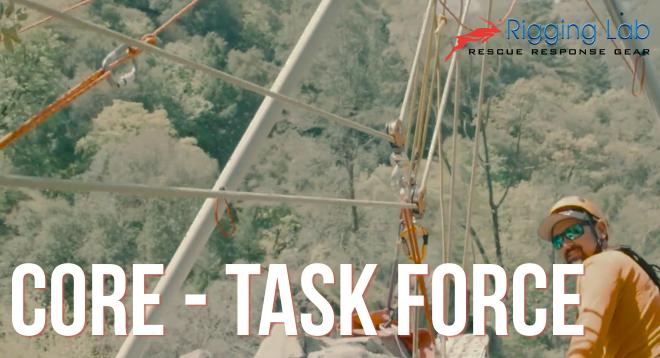
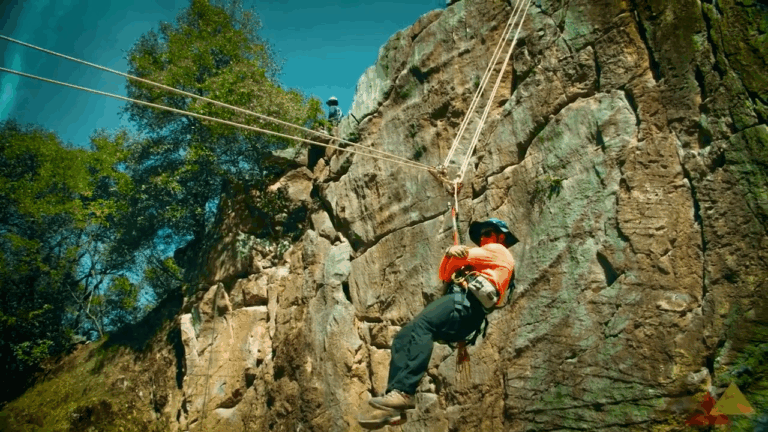
Skate Block Highline with Gin Pole Directional in Rope Rescue – How a highline configured as a skate block with a monopod directional improves efficiency, control, and safety in complex terrain. Highlines are a cornerstone of modern rope rescue, allowing teams to move loads across obstacles such as rivers, canyons, cliffs, or collapsed structures. Traditionally, highlines rely on a fully tensioned track line spanning two anchors. While effective, this approach can generate massive anchor forces and require extensive gear, manpower, and time to rig.
An alternative is the skate block configuration, where the load is “floated” across the span using a moving pulley system rather than pulling the load along a fixed track. When paired with a gin pole monopod directional, the skate block highline becomes a highly efficient and controlled method for transporting litters or equipment across demanding terrain.
This blog examines how the system works, the benefits it provides, and why it is a valuable option in technical rescue.
What Is a Skate Block Highline?
A skate block is a pulley-based system where the carriage pulley rides along a single rope track, but the rope itself is moved back and forth to transport the load. Instead of building a fully tensioned track line like a traditional highline, rescuers create a dynamic system that allows the rope to “float” the load.
-
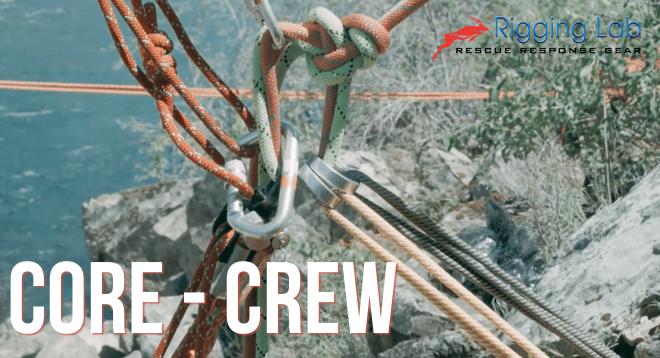
Pulley as Carriage: The load is attached to a pulley or set of pulleys that slide along the rope.
-
Dynamic Haul and Lower: Operators on opposite sides manage rope tension, pulling the line one way to move the load forward and the other way to bring it back.
-
Reduced Anchor Load: Because the rope is not held in constant high tension, anchor forces are significantly lower than with static highlines.
Key Advantage: The skate block achieves similar movement across the span as a highline but with less gear, less force, and faster rigging.
Role of the Gin Pole Monopod
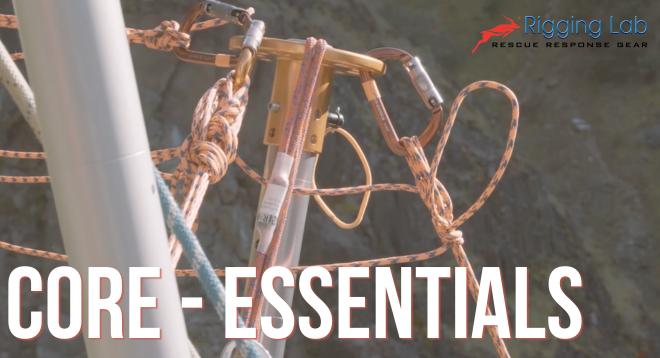
The gin pole monopod acts as a directional high point, guiding the rope and the load during travel. In this setup, the gin pole is guyed outward to provide stability in both the lateral and vertical planes.
-
Lateral Stability: Prevents the monopod from tipping under side loading.
-
Vertical Stability: Holds the rope path high enough to keep the load clear of edges and obstacles.
-
Directional Control: Keeps the rope and load aligned, ensuring smooth movement and avoiding collisions with terrain or structures.
The monopod’s role is essential: without it, the rope would cut across the edge, creating friction, wear, and dangerous force angles.
How the System Works — Step by Step
1. Anchor and Rigging Setup
-
Establish solid anchors on both sides of the span.
-
Rig the gin pole monopod at the near side, guyed with two or more lines to stabilize it.
-
Route the mainline rope through the gin pole head, creating the track for the skate block.
2. Carriage and Load Connection
-
Attach a pulley carriage to the mainline.
-
Secure the litter or load to the pulley with a rigging plate and swivels to prevent spin.
3. Haul and Belay Control
-
On the far side, rescuers operate both the haul line and belay system, applying and releasing tension as needed.
-
By pulling, they move the rope and carriage across the span; by controlling slack, they manage descent or stability.
4. Directional Management
-
The gin pole guides the rope up and away from the edge.
-
The angle of the guy lines ensures that both vertical and horizontal vectors remain stable.
5. Load Movement Across the Span
-
Operators coordinate movement, maintaining smooth tension to “float” the load across.
-
The system allows both horizontal travel and control of vertical drop at the same time.
Advantages of the Skate Block with Gin Pole
Reduced Anchor Forces
Unlike fully tensioned highlines, the skate block does not impose massive static loads on the anchors. Forces remain dynamic and lower, making the system safer and more adaptable.
Simplicity and Speed
-
Fewer components than traditional highlines.
-
Faster to rig, requiring less manpower.
-
Ideal in urgent scenarios where time is critical.
Precision in Load Movement
-
The gin pole stabilizes the rope path.
-
Remote operators can finely control the load’s position across the span.
-
Smooth transitions reduce patient discomfort and risk of shock loading.
Versatility in Terrain
-
Effective in canyons, gorges, or urban environments with partial spans.
-
Works well where a full highline is impractical due to limited gear or anchors.
-
Can be scaled up or down depending on load and environment.
Technical Considerations
Vector Forces
Even though forces are lower than in a traditional highline, rescuers must still calculate angles carefully. The wider the span and the lower the rope tension, the greater the vertical sag and force distribution.
Gin Pole Guying
A monopod directional must be properly guyed on at least two axes. Poor guying can lead to collapse or uncontrolled movement.
Progress Capture Devices (PCDs)
Haul and belay systems should be equipped with reliable PCDs (e.g., MPD, Maestro, Clutch) to ensure control and prevent backsliding.
Communication
Because movement is coordinated from the far side, clear voice or whistle signals are essential to synchronize haul and belay teams.
Applications in Rope Rescue
-
Canyon Rescues: Where a litter must be floated across to reach a safe landing zone.
-
Steep Rock Faces: Allows rescuers to lift and then transport a patient horizontally without edge drag.
-
Urban Disasters: Effective for bridging gaps where structures are unstable or partially collapsed.
-
Remote Environments: Reduces the need for heavy anchor infrastructure, making it ideal for lightweight, mobile teams.
Field Example
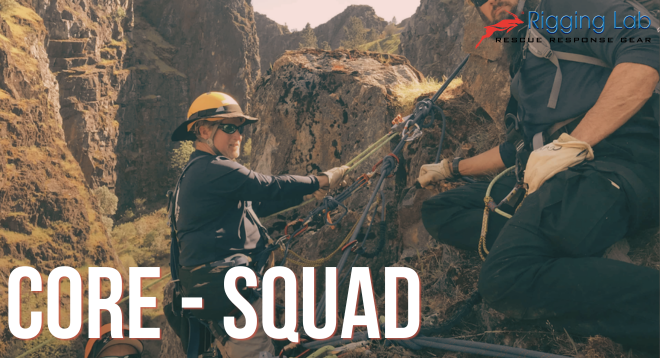
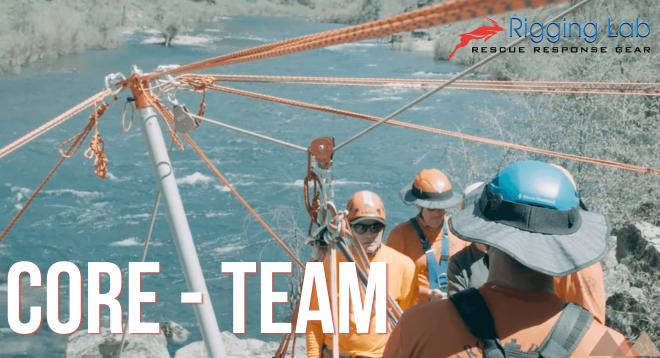
During a training operation in a mountain gorge, rescuers used a skate block highline with a gin pole monopod to move a patient across a 30-foot span. Anchors were limited, and a fully tensioned highline would have overloaded the available bolts. By rigging the skate block, the team reduced anchor stress, used less rope, and maintained full control over the patient’s movement.
The gin pole provided the clearance needed to keep the litter above jagged rocks at the edge, while far-side operators managed the haul and belay. The patient was transported quickly, smoothly, and without system shock — proving the value of this configuration in real-world conditions.
Benefits Recap
-
Lower anchor forces than traditional highlines.
-
Faster setup with fewer resources.
-
Smooth, precise load movement.
-
Versatile across vertical and horizontal terrain.
-
Safer edge transitions with monopod control.
Conclusion
The skate block highline with a gin pole monopod directional is a powerful tool for rope rescue teams. By combining the efficiency of a skate block with the stability of a directional high point, rescuers gain a system that is lighter, safer, and faster to rig than traditional highlines.
This setup is particularly effective in remote or technical environments where anchor options are limited, time is critical, and safety cannot be compromised. For rescue teams seeking versatile solutions, the skate block highline with a monopod directional is a proven and highly effective option.
Next Step: Practice the system in training. Start with controlled spans, refine communication protocols, and build familiarity with anchor loading. The more fluent your team becomes, the more this system will expand your operational capabilities.
Peace on your Days
Lance
-
Skate Block Highline with Gin Pole Directional in Rope Rescue
-