
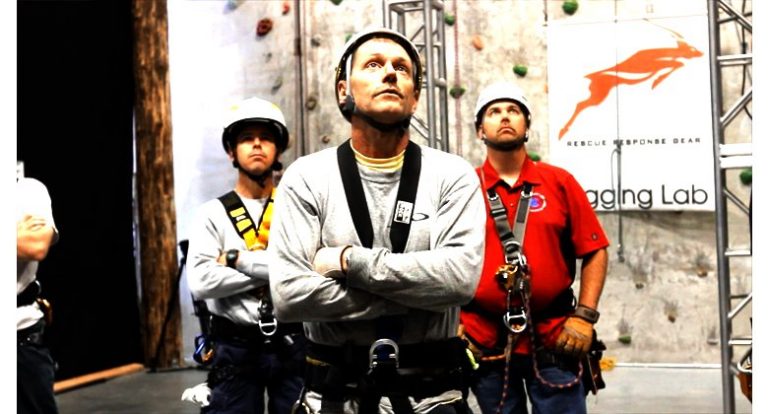
Rigging Foundations and Training
Rigging and rescue require more than strength and tools—they demand precision, strategy, and a deep understanding of foundational principles. The cornerstone of any successful operation is a well-rounded knowledge of essential techniques, from building anchors to mastering mechanical advantage systems. These foundational skills not only ensure safety but also create the confidence needed to tackle even the most complex scenarios.
At Rigging Lab Academy, the foundational courses are designed to provide a comprehensive education for professionals who want to elevate their expertise and lead with precision. By diving into topics like knot craft, edge management, and litter operations, these courses prepare individuals and teams to approach challenges with a level of skill and assurance that sets them apart
1. Equipment: The Foundation of Safe Operations
Understanding your gear is the first step to mastering rigging and rescue. This course offers a detailed examination of essential equipment, emphasizing its proper use and maintenance.
Key Topics:
- Material and Design: Learn about the construction and performance characteristics of ropes, harnesses, carabiners, pulleys, and other gear.
- Usage Standards: Explore manufacturer guidelines, strength ratings, and certifications (e.g., NFPA, CE, ANSI).
- Inspection and Maintenance: Develop routines to identify wear, damage, and potential failure points, ensuring all equipment functions at peak efficiency.
Proper equipment knowledge ensures safety, reduces wear, and builds confidence in the field.
2. Knot Craft: Mastering Essential Knots
Knots are the backbone of any rigging system. This course covers critical knots, bends, and hitches, teaching their proper application and techniques to master them.
Key Topics:
- Fundamental Knots: Figure-eight series, Prusik, clove hitch, and bowline, tailored for rescue and rigging.
- Applications: Understand when and why to use specific knots for anchoring, securing loads, or creating mechanical advantage systems.
- Efficiency and Safety: Minimize rope stress and maximize knot security with correct tying techniques.
Mastery of knot craft simplifies system building and ensures operational safety under pressure.
3. Anchors: The Cornerstone of Rigging Systems
Anchors are the foundation of every rigging and rescue system. This course delves into selecting, building, and assessing anchor systems to maximize stability and reliability.
Key Topics:
- Natural Anchors: Trees, rocks, and other environmental features, with techniques for securing systems in variable terrain.
- Artificial Anchors: Bolts, pickets, and portable anchor systems tailored to industrial and urban environments.
- Load Distribution: Understand multi-point anchor systems and how equalization ensures load stability during dynamic operations.
A solid anchor system is the difference between success and failure in any rigging operation.
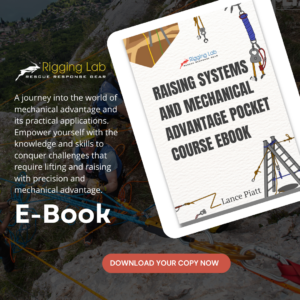
4. Mechanical Advantage Theory: Doing More with Less
Mechanical Advantage Systems (MAS) amplify human effort, making lifting and lowering operations efficient and effective. This course teaches the principles behind force multiplication and system optimization.
Key Topics:
- Force and Load Management: Understand how pulleys and rope systems reduce the effort required to move heavy loads.
- Simple and Compound Systems: From basic 3:1 setups to more complex compound systems like 9:1, learn how to design for maximum efficiency.
- Friction and Efficiency: Address friction points to improve system performance, including pulley selection and rope path optimization.
Mastering MAS enables teams to tackle challenging rescues and industrial tasks with precision and control.
5. Mainline Systems: Raising and Lowering with Confidence
Mainline systems are the heart of rigging operations, responsible for moving loads safely and efficiently. This course covers techniques for managing mass, tension, and load positioning.
Key Topics:
- Mass and Force Management: Calculate and control the forces acting on mainlines during raising and lowering.
- Tensioned Anchor Systems: Explore dynamic systems for handling off-angle or multi-directional loads.
- Edge Transition Techniques: Ensure smooth load movement across edges, minimizing wear on ropes and hardware.
Reliable mainline systems are essential for both rescue and industrial operations.
6. Belay Systems: Redundancy and Safety
Belay systems provide critical backup in rescue operations. This course examines both traditional and modern belay techniques, emphasizing redundancy and system safety.
Key Topics:
- Traditional Belay Systems: Explore single-rope belays and lowering systems with proven reliability.
- Twin Tension Rope Systems (TTRS): Dive into advanced systems where both ropes actively share the load.
- Friction and Progression Control: Learn how to manage belay tension with devices like MPDs, Petzl I’Ds, and Prusiks.
Belay systems are the ultimate safeguard in high-stakes operations.
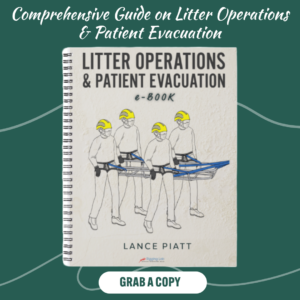
7. Litter Operations: Moving Patients Safely
Rope-based litter operations are complex and require precision. This course addresses patient packaging, litter movement, and team coordination.
Key Topics:
- Patient Packaging: Techniques for securing patients in litters to ensure safety and comfort during transport.
- Litter Movement: Navigate vertical, horizontal, and confined spaces with control and efficiency.
- Team Dynamics: Coordinate with team members to ensure smooth, safe operations in challenging environments.
Proper litter operations save lives while minimizing risks to both patients and rescuers.
8. Personal Skills: Building Individual Proficiency
Personal skills are the foundation of team success. This course focuses on enhancing individual capabilities, ensuring each team member can contribute effectively.
Key Topics:
- Rappelling and Ascending: Master techniques for efficient movement on fixed ropes.
- Self-Rescue: Develop the ability to handle emergencies, such as freeing oneself from entanglements or blocked descenders.
- Rope Management: Learn effective coiling, storage, and deployment methods to prevent tangles and delays during operations.
Strong personal skills enhance team performance and ensure preparedness for any scenario.
Mastery of foundational rigging and rescue principles is the key to operational excellence. Whether it’s understanding the nuances of anchor systems, refining edge management techniques, or building personal skills for high-stakes situations, Rigging Lab Academy’s courses equip professionals with the tools to excel. These lessons aren’t just about knowledge—they’re about transforming that knowledge into action, ensuring safety, efficiency, and confidence on every job.
Explore these foundational courses and start building a stronger, safer future at Rigging Lab Academy.
Peace on your Days
Lance

Comments are closed.