
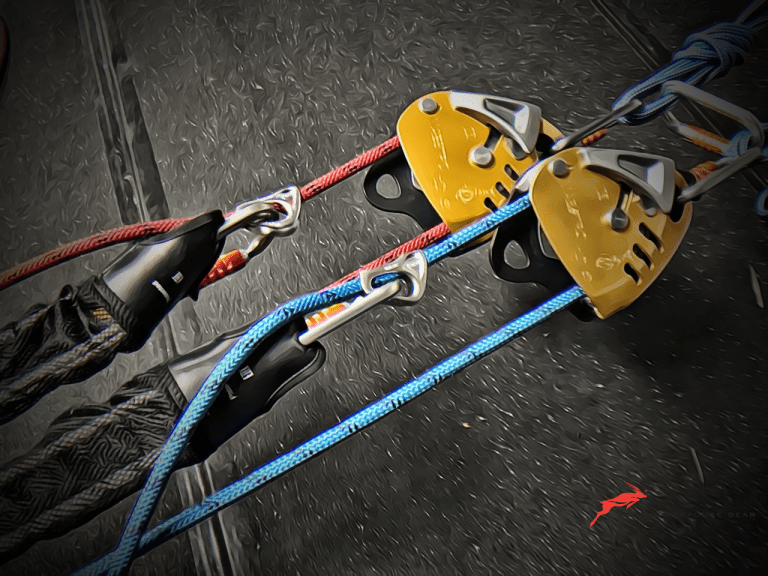
Pulley System Efficiency Tests with Petzl Devices: Insights and Practical Applications
When it comes to technical rescue operations, the efficiency of a pulley system can significantly impact the success and safety of the operation. While theoretical calculations of mechanical advantage provide a foundation, real-world performance often deviates due to variables like rope diameter, hauling speed, and system configuration. Understanding these discrepancies is critical for rescue teams and rigging professionals. The Petzl lab conducted a series of comprehensive tests to analyze the actual efficiency of various pulley systems using devices like the Petzl Maestro, ID S, Pro Traxion, and others.
This article breaks down the findings from these tests, offering a detailed exploration of the results and practical advice for maximizing system efficiency.
Understanding Pulley Efficiency at the System’s Head
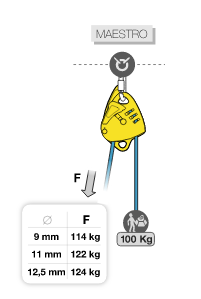
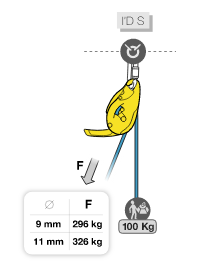
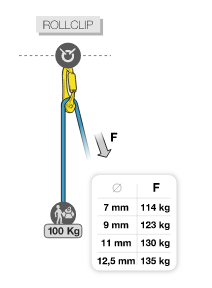
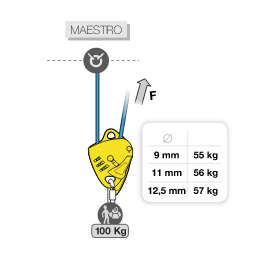
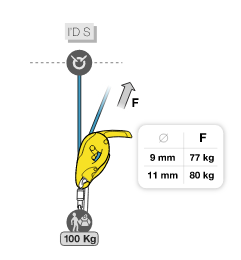
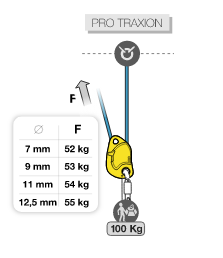
The head of the pulley system, where the load is directly influenced by the hauling force, is a critical point of evaluation. Petzl tested the force required to lift a 100 kg mass under various configurations, using different devices and rope diameters. These tests highlighted how each device performs under real-world conditions.
The Petzl Maestro (S and L models), for instance, demonstrated consistent efficiency due to its advanced pulley design, which minimizes friction and optimizes load movement. This made it a standout performer in systems requiring high reliability and efficiency. Similarly, the Petzl ID S and Pro Traxion showcased strong results, particularly in 1:1 and 2:1 setups. Compact devices like the Petzl MicroTraxion were less efficient in handling larger loads but offered significant versatility in smaller setups.
Each device has strengths and weaknesses, and understanding these nuances allows teams to select the best tool for their specific needs.
Simple Directional (1:1)

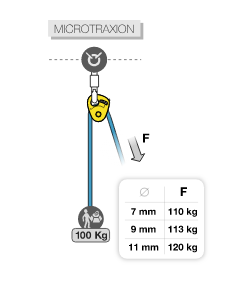

Simple Directional (2:1)
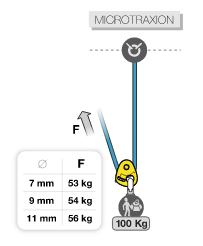
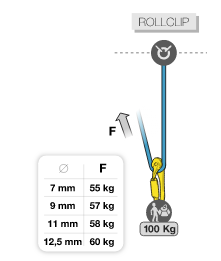
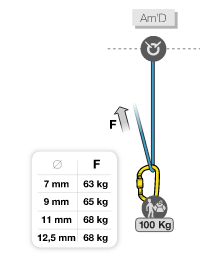
Haul System (3:1)
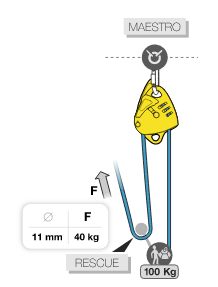
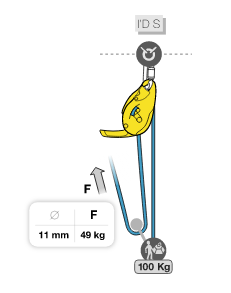
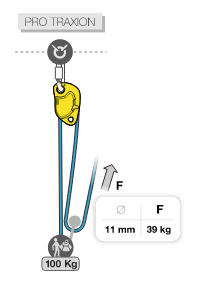
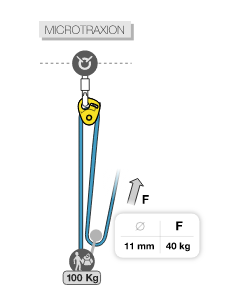
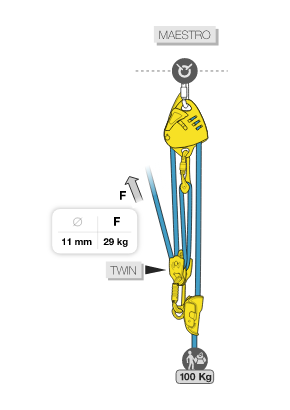
Haul System (4:1)
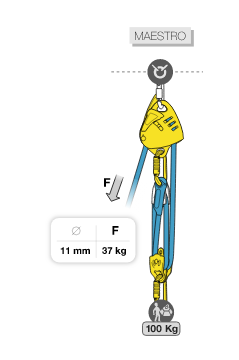
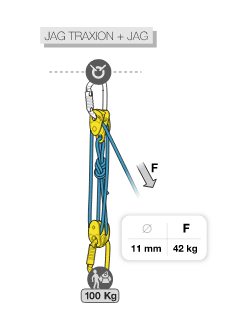
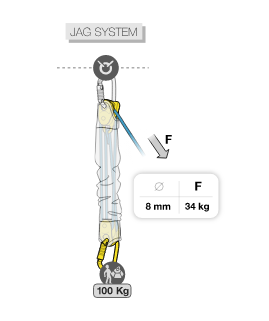
Haul System (5:1)
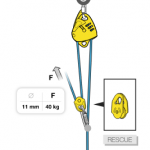
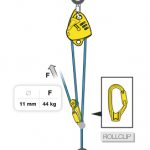
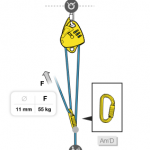
2. 3:1 Haul system efficiency depending on the redirect point used.
Configurations Tested
Petzl evaluated multiple pulley system configurations, ranging from simple directional setups to complex multi-point haul systems. Here’s an overview of the tested setups:
- 1:1 Simple Directional Systems
These setups tested devices like the Petzl Maestro, ID S, Pro Traxion, MiniTraxion, RollClip, and Am’d Carabiner. The simplicity of a 1:1 system made it a good baseline for evaluating raw device performance. - 2:1 Simple Directional Systems
The 2:1 configuration added an extra level of mechanical advantage. Devices such as the MicroTraxion and RollClip demonstrated adequate performance but with noticeable differences in force requirements compared to dedicated systems like the Pro Traxion and Maestro. - 3:1 Haul Systems
This configuration introduced increased complexity, with devices like the Petzl Maestro, ID S, and Pro Traxion showing strong results. The MicroTraxion, while compact, displayed slightly reduced efficiency in handling heavier loads. - 4:1 and 5:1 Haul Systems
In these setups, the Petzl Maestro, Jag System, and Jag Traxion excelled due to their robust designs, which are optimized for higher mechanical advantage and larger loads. These systems require precise setup and operation to achieve optimal performance.
Redirect Points in 3:1 Haul Systems
Redirect points play a pivotal role in determining the efficiency of a 3:1 haul system. Tests revealed significant differences based on the type of redirect device used:
- The Petzl Rescue Pulley delivered the highest efficiency, ensuring smooth operation and minimal friction.
- The Petzl RollClip, combining a pulley and carabiner, offered moderate efficiency with added versatility for rigging.
- The Petzl Am’d Carabiner functioned adequately as a simple directional but resulted in higher friction and reduced overall system efficiency.
These findings underscore the importance of carefully selecting the right redirect point based on the operation’s demands and system configuration.
Key Findings from the Tests
The Petzl lab’s efficiency tests provided several critical insights for technical rescue teams:
- Device Selection Is Critical
The Petzl Maestro emerged as the most consistent and efficient device across multiple configurations, making it an ideal choice for high-load operations requiring precision and reliability. - Rope Diameter Matters
Larger diameter ropes, such as the 12.5 mm VECTOR, consistently outperformed thinner ropes in minimizing friction and optimizing system performance. This highlights the importance of matching rope size to the demands of the operation. - Operator Skill Affects Results
Smooth and controlled hauling techniques had a significant impact on efficiency, emphasizing the importance of operator training and experience in achieving optimal results. - Redirect Points Influence Performance
The choice of redirect devices directly affected system efficiency, with specialized pulleys outperforming simpler carabiner-based solutions.
Practical Applications for Rigging Teams
The results of these tests have important implications for rigging professionals and rescue teams:
- Choose the Right Tools: Selecting devices like the Petzl Maestro or Pro Traxion for their intended use can significantly improve efficiency and safety.
- Consider Rope and Load Factors: Match rope diameter and system configuration to the load requirements for optimal performance.
- Train Regularly: Hauling technique and system setup play a critical role in overall efficiency. Teams should practice regularly to refine their skills.
- Use High-Quality Redirect Points: Investing in dedicated pulleys like the Petzl Rescue Pulley can enhance system efficiency and reduce friction.
Conclusion
The efficiency of a pulley system is influenced by a combination of factors, including device selection, rope diameter, and operator technique. The Petzl lab’s tests reveal that while theoretical efficiency provides a baseline, real-world performance requires careful consideration of these variables. By understanding the strengths and limitations of devices like the Petzl Maestro, Pro Traxion, and others, rescue teams can build safer and more effective systems.
For more in-depth tutorials and training resources, visit Rigging Lab Academy:
Peace on your days…
Lance





Comments are closed.