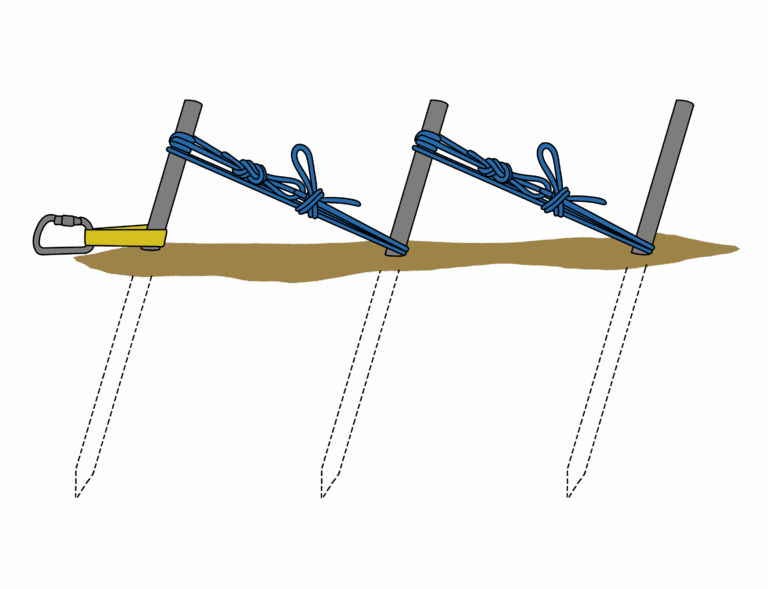
In rope rescue, not every environment offers solid natural anchors such as trees or boulders. In open terrain like soil, sand, or snow, rescuers must create their own secure anchor system. The picket anchor system is a proven solution, using steel stakes driven into the ground to create reliable attachment points for rescue loads.
When installed properly, a set of three pickets in solid soil can safely hold rescue forces, providing a strong alternative when other anchors are unavailable.
What Is a Picket Anchor System?
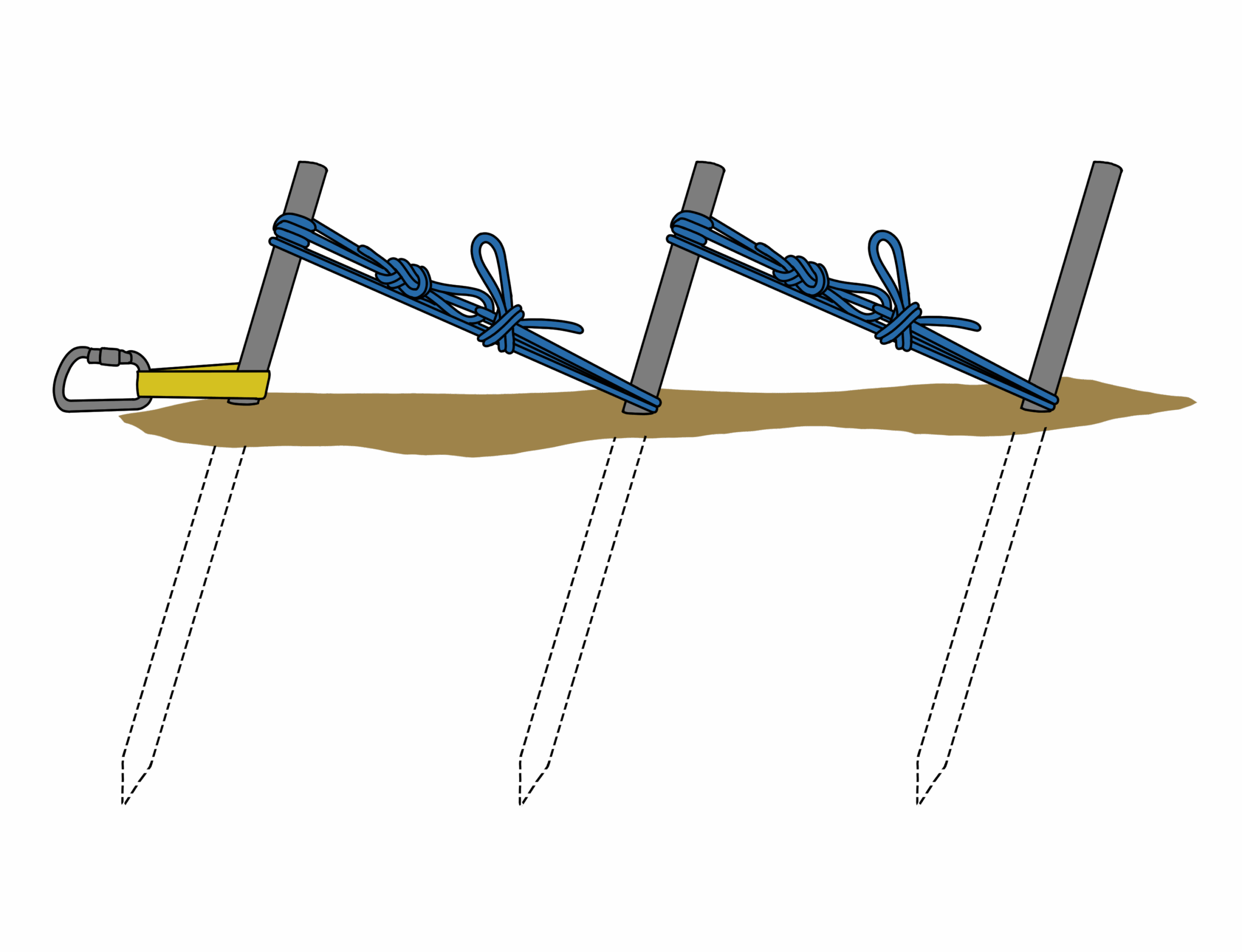
A picket anchor system uses steel stakes (pickets) driven into the ground at an angle, connected with cord, webbing, or cable to form a unified anchor point. By interlinking multiple pickets, the system distributes load forces across the soil, dramatically increasing holding strength.
In practice: Think of each picket as a tooth in a comb — individually they might not hold much, but together they lock in and resist movement.
Equipment Requirements
-
Pickets: 1 inch (25 mm) in diameter, 4 feet (1.2 m) long.
-
Cord/Webbing: 33 feet (10 m) of 9 mm cord (or 11 mm cord for added margin).
-
Configuration Options:
-
1-1-1 (three pickets in series, standard setup)
-
2-1 (two pickets in tandem with one forward)
-
3-2-1 (heaviest-duty, multiple back-tied pickets)
-

Step-by-Step Setup
-
Drive the Pickets
-
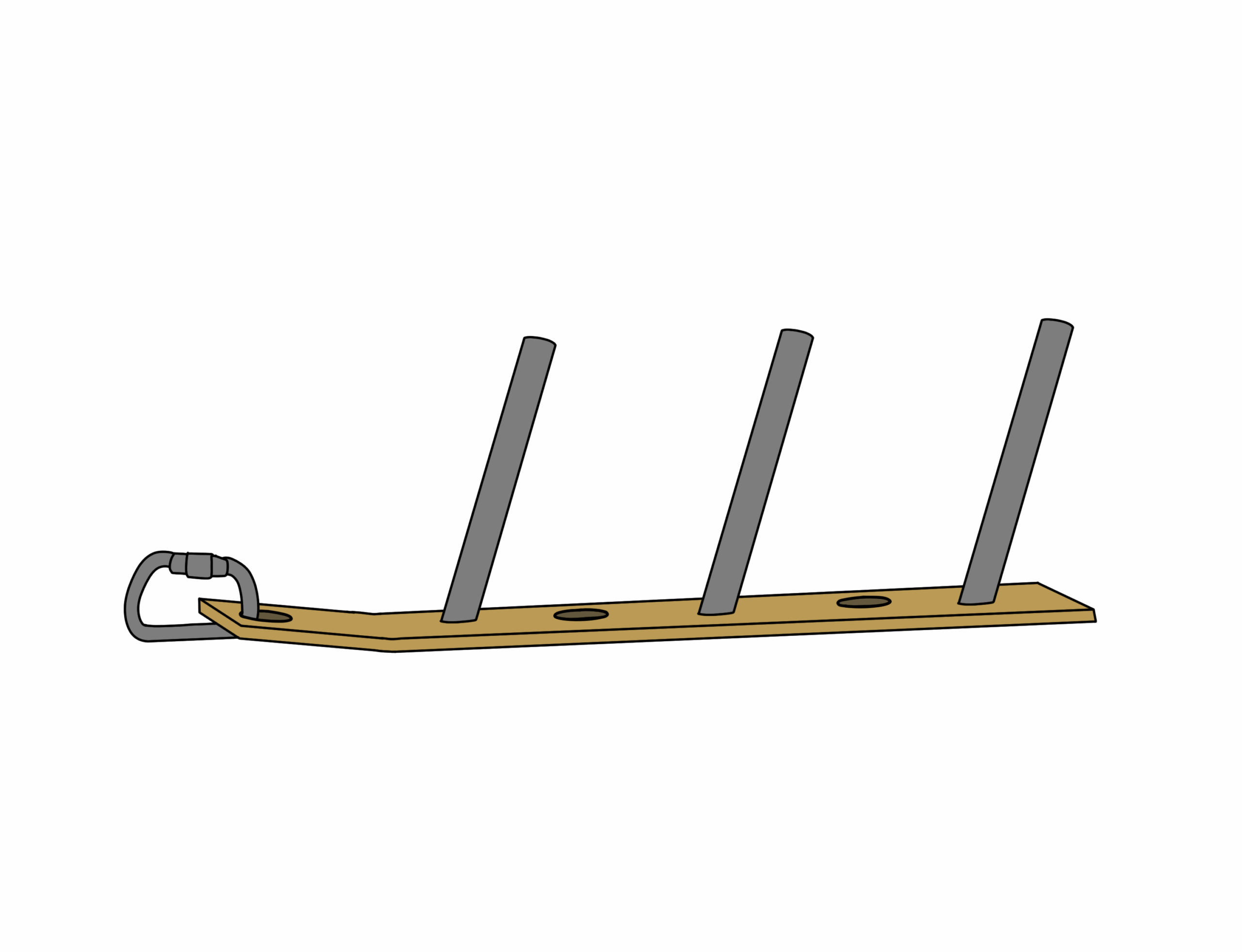
Insert each picket into the soil at a 15° back angle, burying at least two-thirds of its length.
-
Space pickets approximately 2.8 feet (80 cm) apart in line with the load.
-
-
Anchor the Cord
-
Start with a figure eight on a bight, tied into 33 feet of cord or webbing.
-
Secure to the rear picket with an overhand on a bight.
-
-
Wrap the First Picket
-
Use a clove hitch to connect the cord to the first picket.
-
Wrap the cord from front to back 2–3 times for friction and stability.
-
-
Link the Pickets
-
Continue forward, repeating the clove hitch and wrap sequence with the next picket(s).
-
Maintain consistent spacing and wrap tension.
-
-
Final Tensioning
-
Finish with a figure eight on a bight at the front picket, secured with two half hitches and one overhand.
-
Adjust wraps until the entire system is taut.
-
-
Optional Strengthening
-
For maximum holding power, connect the base of all pickets together with extra webbing or cord.
-
This reinforcement reduces the chance of individual picket movement.
-
Advantages of the Picket Anchor System
-
Field Adaptability – Functions in open terrain where no natural anchors exist.
-
Scalability – Configurable as 1-1-1, 2-1, or 3-2-1 depending on soil and load conditions.
-
Strength – Properly installed, three pickets can withstand forces around 5000 lbf (22 kN).
-
Simplicity – Built with basic cord/webbing and steel stakes, making it reliable and repeatable.
Safety Considerations
-
Test soil conditions — loose sand or gravel reduces holding capacity.
-
Drive pickets to at least two-thirds their length to ensure embedment.
-
Keep pickets aligned with the expected load direction to prevent shear.
-
Avoid reusing bent or damaged pickets.
-
Reinforce bases when dealing with high loads or uncertain ground.
When to Use a Picket Anchor System
-
Wilderness rescues on open slopes with no trees or rocks.
-
Urban/training environments where natural anchors are absent.
-
Snow or soft soil conditions where traditional anchors may shift or uproot.
Conclusion
The Picket Anchor System remains a staple in rope rescue because of its simplicity, adaptability, and effectiveness in terrain with no natural anchors. By driving pickets to proper depth, maintaining correct angles, and linking them with solid cord or webbing, rescuers can construct a secure anchor that withstands significant forces. Whether used in wilderness rescue or training grounds, this system provides a reliable solution when nature does not.
Peace on your Days
Lance