
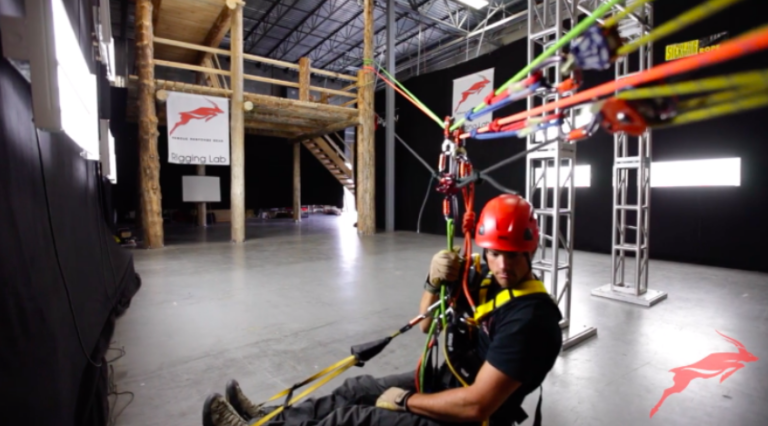
Mechanical Advantage Systems
Mechanical Advantage Progression (MA) systems are foundational in rescue operations, enabling teams to manage heavy loads effectively with minimal effort. Rooted in principles of physics, these systems leverage pulleys—a timeless invention refined by Archimedes—to amplify human force. The concept remains as relevant today as it was in Archimedes’ legendary demonstration of moving a ship single-handedly.
Understanding Mechanical Advantage Systems
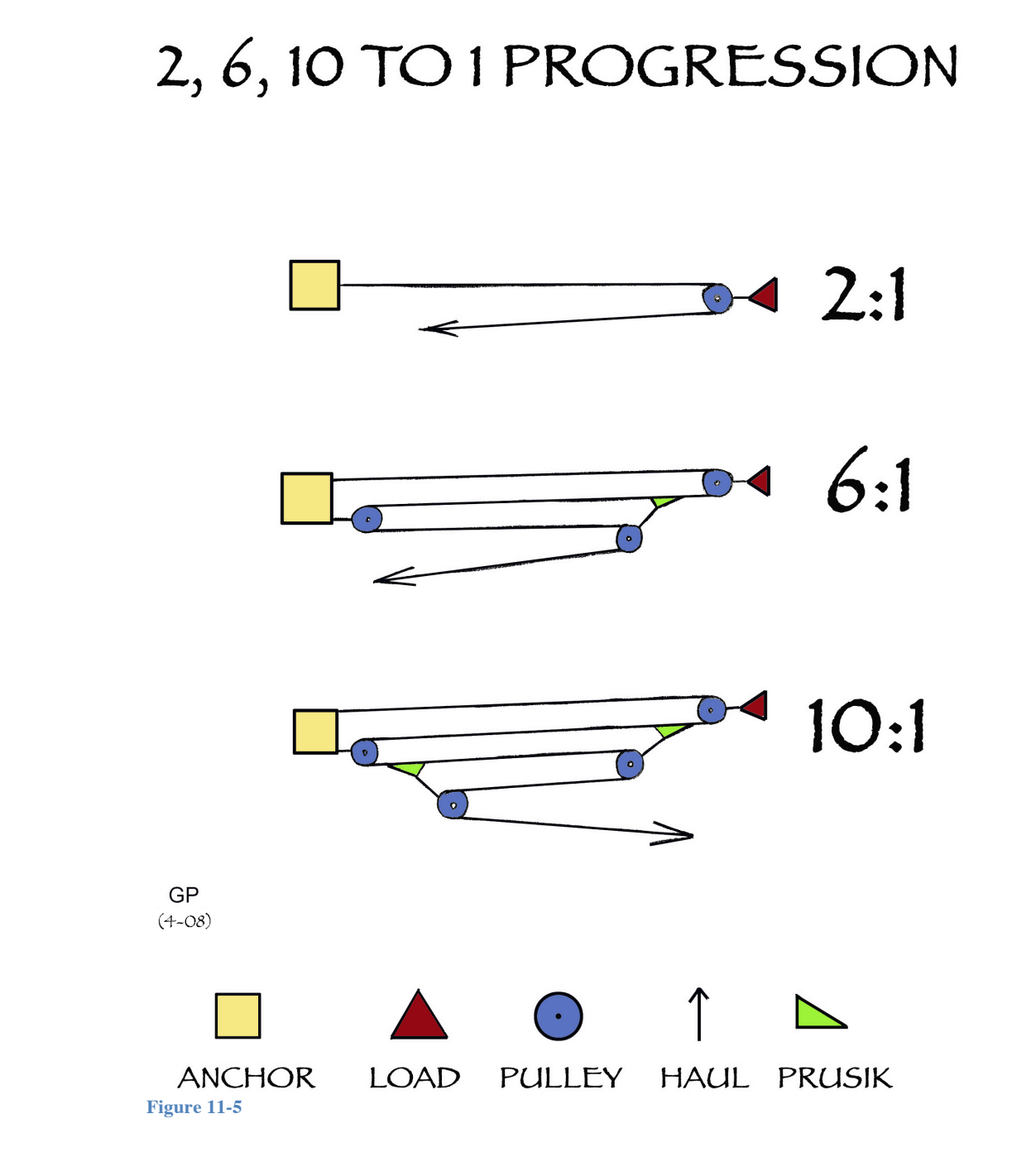
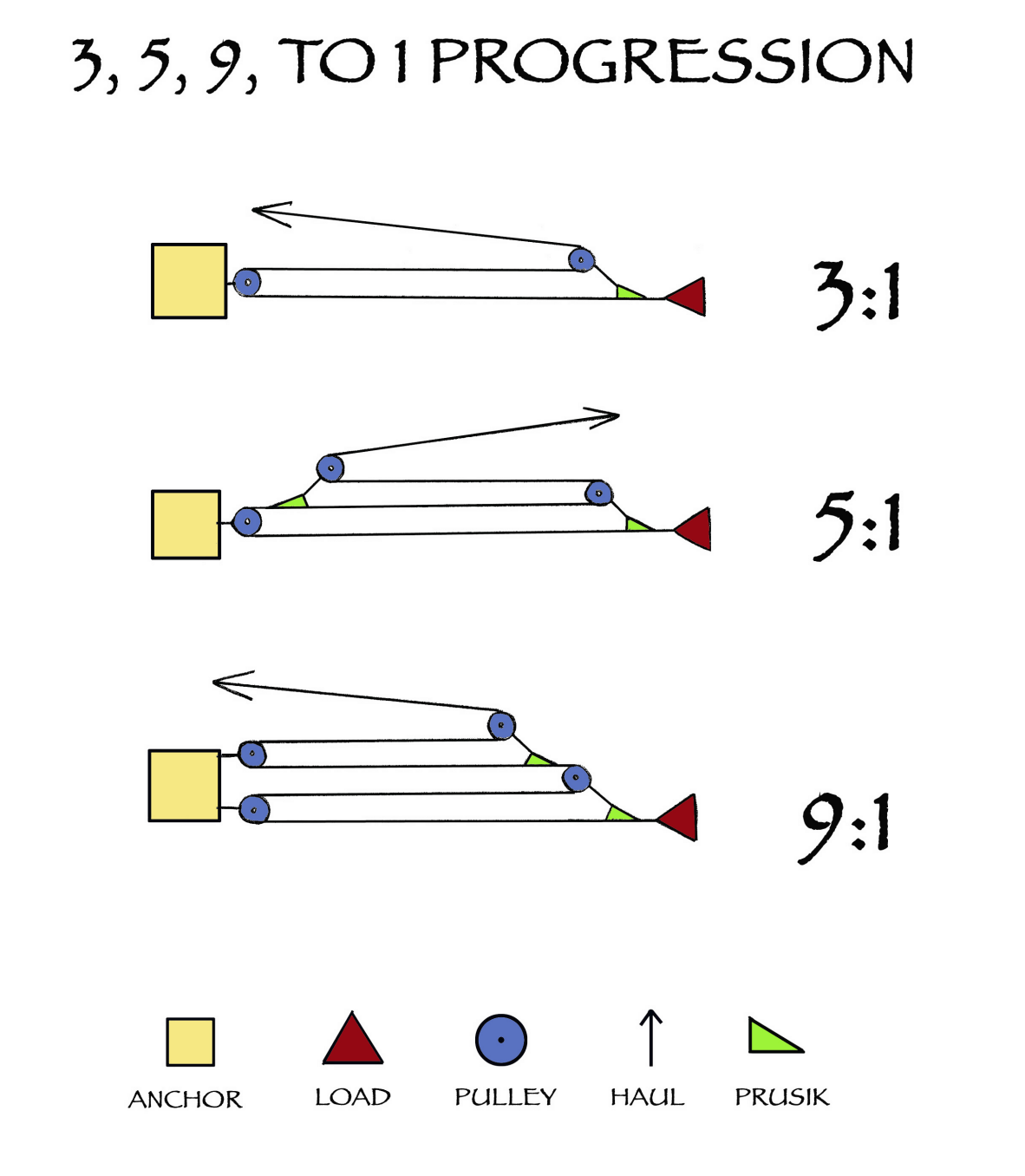
At their core, MA systems reduce the force needed to lift or haul a load, making otherwise unmanageable tasks achievable. The efficiency of these systems depends on their configuration, which determines the ratio of input force to output force. For example, a 3:1 MA system reduces the effort required to lift a 300-pound load to approximately 100 pounds. However, this increased mechanical advantage comes with trade-offs: as the system’s advantage grows, the speed of load movement decreases, and more rope must be pulled through the system.
Why Mechanical Advantage Matters
Rescue scenarios often demand rapid and efficient solutions. Whether raising a litter from a confined space or hauling a team member to safety, MA systems ensure operations are manageable, efficient, and safe.
Constant communication between the haul team and the load is vital.
Key Components of MA Systems
Pulleys: The Heart of Mechanical Advantage
- Fixed Pulleys: Change the direction of force without increasing mechanical advantage, making operations smoother and more ergonomic.
- Movable Pulleys: Directly increase mechanical advantage by reducing the input force needed.
- Compound Pulleys: Combine fixed and movable pulleys to achieve higher mechanical advantage ratios for complex tasks.
Anchors and Ropes: Stability and Connectivity
Anchors provide the foundational stability required to secure the system, while ropes serve as the medium through which force is transmitted. Proper anchor selection and rope handling are critical for ensuring safety and efficiency.
Progress Capture Devices (PCDs):
PCDs, such as prusiks or mechanical rope grabs, prevent the load from slipping back when tension is released. These devices act as safety measures during system resets and transitions.
Theoretical vs. Practical Mechanical Advantage
Theoretical Mechanical Advantage (TMA):
TMA assumes a frictionless system, offering an idealized calculation of force ratios. For example, a 5:1 system theoretically requires one-fifth the effort to lift a given load.
Practical Mechanical Advantage (PMA):
PMA accounts for real-world inefficiencies, such as friction at pulley interfaces and rope contact points. A 5:1 TMA system might function closer to 4:1 PMA due to these losses. Employing high-efficiency pulleys and proper edge protection can mitigate these effects and enhance system performance.
Friction: The Hidden Variable
Sources of Friction:
- Pulley Interfaces: Even high-quality pulleys introduce some friction, with sealed bearings performing better than bushings.
- Rope-on-Rope Contact: Crossing ropes within an MA system can significantly reduce efficiency.
- Surface Contact: Ropes rubbing against edges or terrain increase resistance.
Reducing Friction:
- Use high-quality pulleys with large diameters for smoother rope travel.
- Employ padding or rollers at contact points to minimize resistance.
- Optimize rope alignment to maintain parallel entry and exit at pulleys.
Choosing the Right MA System
Factors to Consider:
- Load Weight: Heavier loads may require higher mechanical advantage ratios, such as 5:1 or 6:1 systems.
- Available Haulers: A limited number of haulers necessitates greater mechanical advantage to distribute effort effectively.
- Friction Management: Proper edge protection and pulley selection can make lower-ratio systems viable.
- Operation Type: Lowering operations are often more efficient than hauling due to the natural assistance of gravity.
Best Practices:
Rescuers should aim for simplicity by using the lowest effective mechanical advantage ratio. Overcomplicating a system with excessive components or haulers can strain equipment, reduce efficiency, and compromise safety.
Practical Applications and Advanced Concepts
Real-World Scenarios:
- Confined space rescues often utilize block-and-tackle systems for vertical entry.
- Highline rescues rely on compound MA systems to navigate steep or inaccessible terrain.
Advanced Techniques:
Progressing from basic systems, such as a 3:1, to advanced setups like 9:1 can be achieved by building upon existing configurations. This progression minimizes downtime and maximizes operational efficiency.
Master the art of Mechanical Advantage systems with Rigging Lab Academy’s in-depth courses and resources. Explore tutorials, tools, and expert insights to elevate your rescue operations.
Discover more about Mechanical Advantage Systems at Rigging Lab Academy
Reference Journal Articles
Peace on your Days
Lance






Comments are closed.