Independent Belay Systems for Technical Rope Rescue
In rope rescue, redundancy isn’t a luxury—it’s a requirement. An independent belay system offers a critical safety layer during rappelling operations by providing a backup to arrest a fall if the primary system fails. Whether using a tandem Prusik belay or advanced mechanical devices like the CLUTCH or MPD, these systems ensure a safer, more controlled descent in high-stakes environments.
Tandem Prusik Belay System
The tandem Prusik belay is a proven and widely accepted method used in technical rescue. It employs two Prusik loops attached to a separate belay line, offering layered protection against slippage or system failure.
Key Components:
-
Belay Line: Anchored separately from the rappel line for full redundancy.
-
Tandem Prusiks: Two friction hitches spaced along the belay rope, offering backup if one fails.
-
Belayer: Manages rope tension and actively monitors the descent.
Why It Works:
-
Redundant Catch Points: If one Prusik slips, the second arrests the fall.
-
Hands-Free Arrest: Once engaged, the system halts descent automatically.
-
Trusted Method: Recognized across rescue disciplines for its simplicity and reliability.
Operational Notes:
-
Use matched materials and correct sizing for the Prusiks.
-
Belayers must maintain light tension—enough for engagement but not so much that it interferes with the rappel.
Mechanical Belay Devices: CLUTCH and MPD
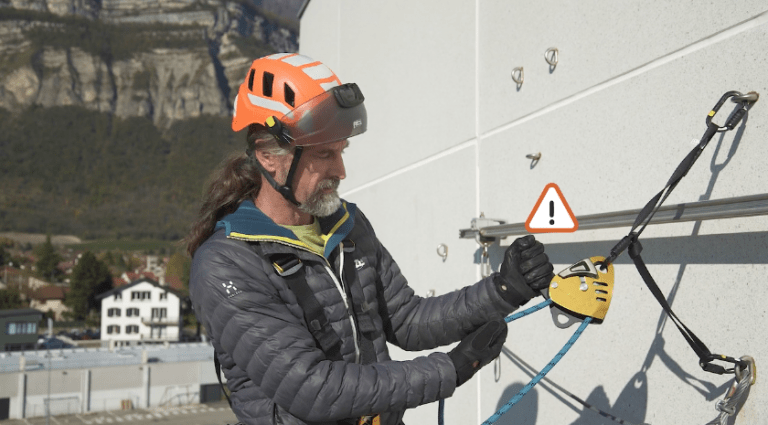
Modern rope rescue now offers mechanical solutions that enhance efficiency while preserving safety. Devices like the CMC CLUTCH and MPD (Multi-Purpose Device) are engineered to provide automatic locking, smooth rope control, and quick transitions between functions—all with minimal physical demand.
CLUTCH
-
Automatic Locking: Engages immediately when the handle is released.
-
Precision Control: Allows fine-tuned lowering and belaying.
-
Multi-Use Tool: Suitable for descent, haul, and belay roles in complex systems.
MPD
-
Built-In Pulley: Enhances hauling efficiency and reduces friction loss.
-
Fail-Safe Design: Locks under load without requiring hand intervention.
-
Versatility: Supports both single and twin rope configurations.
MAESTRO
-
Automatic Locking: Engages immediately when the handle is released.
-
Precision Control: Allows fine-tuned lowering and belaying.
-
Multi-Use Tool: Suitable for descent, haul, and belay roles in complex systems.
Why Choose Mechanical Belay Systems?
-
Efficiency: Simplifies the rigging and transition process.
-
Lower Physical Load: Reduces fatigue on the belayer in long or complex scenarios.
-
Fail-Safe Functionality: Redundant, automatic braking features increase overall system safety.
Considerations:
-
These devices require formal training to operate safely and effectively.
-
Regular inspection and cleaning are essential for long-term performance.
Final Thoughts
Whether you’re rigging a high-angle evacuation or building system redundancy for a vertical rescue, an independent belay system is non-negotiable. From the proven reliability of tandem Prusiks to the advanced efficiency of the CLUTCH or MPD, these solutions offer field-ready safety without sacrificing performance. Mastering their application ensures your team can descend with confidence—and respond with precision when the stakes are high.
Peace on your Days
Lance