Dynamic Directional Hauling with A-Frame and Monopod Systems
When a Straight Haul Isn’t Possible
Some rescue environments—like confined spaces, vaults, or utility holes—don’t allow for a direct vertical haul. You may have obstacles, limited space, or poor anchor positioning.
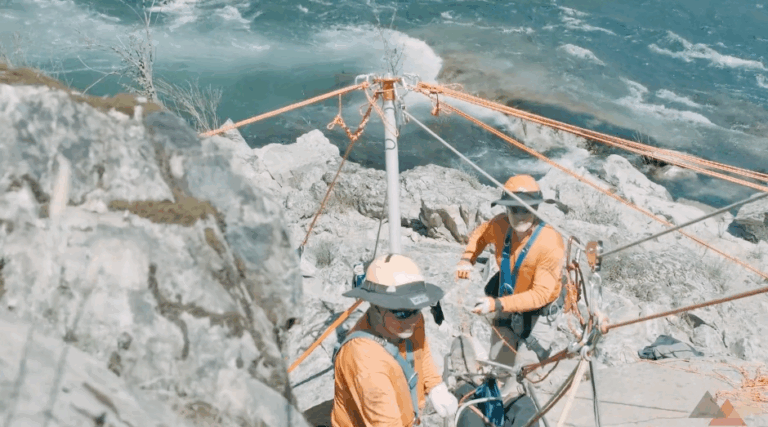
To solve this, rescuers use dynamic directional hauling, which means redirecting the rope path using multiple artificial high directionals (AHDs).
In this scenario, we combine two key tools:
-
A-frame: Placed over the entry to manage vertical lifting.
-
Monopod (gin pole): Placed nearby to offset or redirect the load at an angle.
This allows the team to change the direction of pull without changing the goal: a smooth, controlled rescue.
How the System is Built
The system includes:
-
Twin tension rope setup: Two fully tensioned ropes (not a main and belay).
-
Mechanical devices: MPDs, Petzl IDs, or similar devices are used on both lines.
-
Mirrored control: Each operator manages their side independently—but in sync.
Together, this creates a fully redundant, load-sharing system that can raise or lower without shock if one leg fails.
Why This Matters
This isn’t just a fancy setup. It’s a functional solution to a real problem.
-
You can haul from bad angles.
-
You can move a load out of tight spaces.
-
You reduce edge friction and redirect force safely.
The A-frame handles vertical force.
The monopod redirects lateral force.
The team balances both with rope devices that lock, lower, and haul cleanly.
Force Management in Action
Two directional tools means two sets of angles. Without careful setup, this creates new risks. That’s why:
-
Anchor points must be solid and triangulated if needed.
-
Both devices must be rated for directional loads.
-
Vectors must be planned based on the expected direction of movement.
This system works best when movement, force, and terrain are all mapped ahead of time.
What Makes This Setup Ideal
-
Confined space rescue
-
Sloped terrain
-
Obstructed vertical access
-
Need for offset or diagonal hauling
It’s a portable solution that uses gear most rescue teams already carry.
But It Only Works with Good Teamwork
Dynamic directional hauling requires a tight crew. Everyone must:
-
Understand tension balance
-
Communicate during transitions
-
Know their role during haul or lower
One person can’t manage both ropes. And without coordination, mirrored tension becomes mismatched load—dangerous and inefficient.
Final Word
This rig is about adaptability. When terrain or access prevents a straight lift, combining an A-frame and monopod with a twin tension system gives you a strong, flexible option.
It’s technical—but once you learn the logic, it becomes second nature.
Peace on your Days
Lance