Rappelling is more than just a way down—it’s a vital access and rescue technique that demands precision, planning, and practiced control. In rope rescue, deploying a rappel line isn’t about improvisation. It’s about deliberately building a path through vertical terrain with systems that protect the rescuer and ensure smooth operations.
This guide breaks down the core elements of rappel line deployment—from anchor setup to rope control and descent—highlighting proven field methods that prioritize safety and effectiveness.
Start Strong: Anchor Systems That Hold
Every descent begins with the confidence of a solid anchor. The anchor is your lifeline, and its integrity directly affects the success of the rappel. Whether you’re working with natural anchors like trees and boulders or artificial ones like bolts and structural steel, the same principles apply: equalize, isolate, and build for redundancy.
Before anyone goes over the edge, your anchor system must be:
-
Rated to hold the full expected load (including dynamic potential)
-
Configured for directional stability
-
Verified through inspection and test loading
-
Built using bombproof or redundant points—never trust a single element
In a rescue context, you may be managing two-person loads or navigating unknown terrain, so your anchor choice must reflect both the technical and environmental challenges at hand.
Rope Management: Deployment Without Drama
Tangled ropes cost time—and in rescue, time is precious. Proper rope management starts before deployment:
-
Flake and inspect the rope before use—check for damage, dirt, and soft spots.
-
Use a rope bag to feed line smoothly during descent.
-
Avoid tossing the rope over an edge, which can trigger rockfall, snag hazards, or injure people below.
A rope bag carried by the rescuer allows for controlled feeding of the rope while descending, especially helpful in windy conditions or around structural clutter. Alternatively, lowering the rope from the top is acceptable in static environments but limits control during the rappel.
Edge Transition and Descent Setup
Approaching the edge is often where rescues go sideways—literally. Controlled descent begins with a secure transition:
-
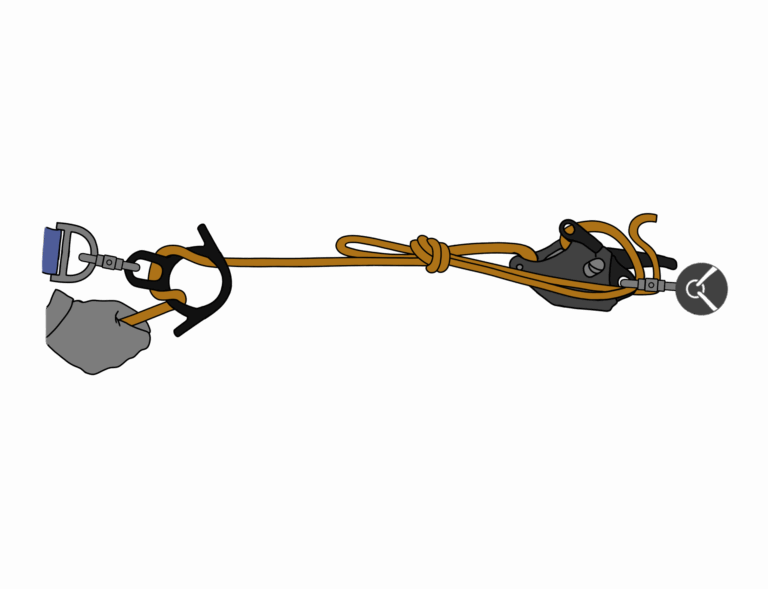
Use a self-belay system (e.g., handled ascender or friction hitch) to manage body position as you approach the drop.
-
Maintain two points of contact whenever possible.
-
Communicate clearly with your team—call out edge transitions, readiness, and descent status.
A belay system should always mirror the main line to provide backup in case of equipment failure or loss of control. The descent itself is managed through your device—ID, MPD, or other friction-based tool—and requires attention to friction, brake hand position, and line tension.
Rope Deployment Options in the Field
Depending on your environment and mission, rope deployment can follow one of several proven methods:
Preferred Options:
-
Rope bag with rescuer – Best for control and efficiency in cluttered or unknown vertical environments.
-
Lower from anchor – Useful when terrain is clean and visibility below is clear.
Use with caution:
-
Throwing rope – Only in clear, unoccupied terrain. Risk of dislodging debris or entangling equipment makes this an option of last resort.
Regardless of method, always ensure the rope reaches the intended target and maintains a clean path without obstruction.
Final Thoughts: Rappel with Intent
Deploying a rappel line isn’t just a technical task—it’s a critical piece of operational flow. From anchor build to rope deployment to final descent, every step is about reducing risk and maintaining control.
Remember:
-
Anchor systems must be verified, load-rated, and built with redundancy.
-
Rope must be clean, managed, and deployed with intent.
-
Edge transitions and descent control require training and attention to detail.
-
Belay systems are mandatory, not optional.
When the only way forward is down, the quality of your rappel deployment defines the margin for success.