

Choice of Carabiners for Attaching the Rope to the Anchor
Introduction
Selecting the right carabiner for attaching ropes to anchors is a critical decision in rigging. The carabiner serves as a vital connection point, often under long-term use and minimal monitoring. Understanding the requirements and risks associated with carabiners in anchor systems can enhance safety and efficiency.
Key Considerations for Anchor Carabiners
Carabiners at anchors face unique challenges. They remain stationary for extended periods, and access for monitoring can be difficult. Here are the main considerations:
- Durability: Carabiners must withstand prolonged tension and environmental exposure.
- Ease of Installation: One-handed operation can be essential in challenging setups.
- Load Distribution: Multiple items may need to attach securely without overloading or misaligning the carabiner.
 Key issues and risks
At the anchor, carabiners stay in place over a long period of time; monitoring them during use is difficult or irregular.
Requirements and needs differ depending on the situations, and the equipment to be connected.
During installation, there are often several items to be attached to the carabiner. The anchor is not always easily accessible; installation must sometimes be done with one hand.
Recommendation on carabiner and accessories
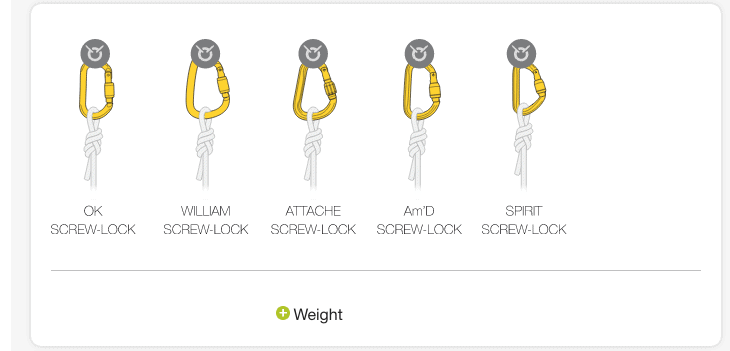
Recommended Carabiner Features
- Screw-Lock System
- The SCREW-LOCK mechanism is ideal for anchor setups. It allows the user to lock the carabiner securely with a single action at the end of the installation process. This system is particularly useful when one-handed operation is required.
- Unlike auto-locking sleeves, which require two hands and repeated operation, the SCREW-LOCK provides simplicity and efficiency.
- Material and Shape
- Aluminum vs. Steel:
- Aluminum is lightweight, suitable for recreational or lightweight systems.
- Steel is robust, making it ideal for industrial and heavy-duty systems.
- Shape: Pear-shaped or symmetrical carabiners distribute loads effectively, even when attaching multiple ropes or devices.
- Aluminum vs. Steel:
Precautions for Safe Use
To ensure safe and effective use of carabiners at anchors:
- Monitoring: Plan for regular checks to ensure the carabiner remains locked and positioned correctly, especially if movement or rubbing is possible.
- Anticipate Risks: Consider potential situational hazards like cantilever loading or unexpected vibrations.
- Back-Up Systems: Always back up your anchor system to avoid sole dependency on one carabiner.
- Proper Orientation: Rotate the carabiner during installation so that vibrations or gravity encourage the sleeve to close rather than open.
- Final Check: Before use, confirm all connectors are securely locked and positioned.
Why Choose Petzl Carabiners?
Petzl carabiners, such as those with the SCREW-LOCK system, are designed for reliability and ease of use. Their innovative locking mechanisms and durable materials make them an excellent choice for rigging and rescue operations.
Explore More at Rigging Lab Academy
Conclusion
Choosing the right carabiner for attaching ropes to anchors is more than just selecting a piece of hardware—it’s about ensuring safety, efficiency, and reliability in every operation. By understanding the key features and precautions, riggers can make informed decisions that meet the demands of their systems.
Peace on Your Days,
Lance



Comments are closed.