When to Choose an Offset Instead of a Highline in Rope Rescue – One of the most common choices in rope rescue is deciding between a highline and an offset system. Both can move a patient or load across complex terrain, but they solve the problem in very different ways. A highline acts like a suspended bridge, stretching between anchors to carry a carriage across a span. An offset relies on coordinated lowering and hauling systems, passing the load from one anchor to another without fully tensioning a track line.
The decision has serious consequences. It determines how much gear is required, how long the setup will take, how much stress is placed on anchors, and how safe the entire evolution will be for the team and patient. This article provides a practical framework to help rescuers know when offsets are the smarter choice over highlines.
Offset vs Highline: Terrain Factors
-
Offset Systems work best when terrain is irregular but still offers anchor opportunities along the path. Rescuers can manage progress with slopes, ledges, or ridges while staying close to the ground.
-
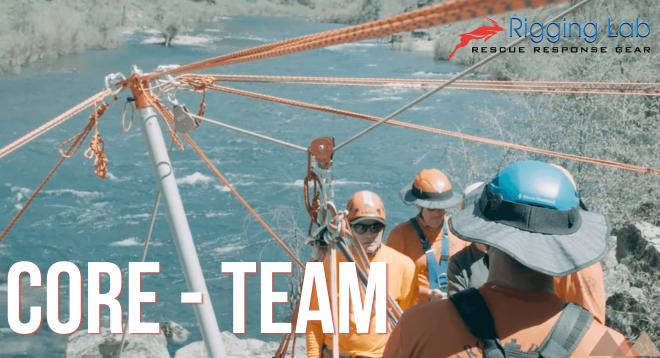
Highlines are better for wide gaps where no intermediate anchors exist — such as canyons, rivers, or collapsed structures.
Rule of Thumb: If the terrain gives you anchor points along the way, choose an offset. If the only way across is to span the entire gap, a highline is required.
Offset vs Highline: Anchor Forces
-
Highlines create very high anchor loads due to vector forces. Anchors must be bomber, equalized, and carefully monitored.
-
Offsets distribute load more vertically, often producing lower forces at each anchor.
Decision Point: When anchor strength is questionable, offsets provide a safer alternative.
Offset vs Highline: Manpower and Logistics
-
Highlines require extensive rigging — track lines, carriages, tensioning, backups — and often demand a large team.
-
Offsets are faster to build, use less rope, and can be managed with fewer rescuers.
Field Reality: Small teams or time-sensitive missions benefit more from offsets.
Practical Applications
When to Choose an Offset
-
Moving a litter down one slope and up the other side.
-
Navigating around obstacles such as trees, cliffs, or boulders.
-
Operations with multiple strong anchors available.
-
Rescue environments requiring speed and minimal gear.
When to Choose a Highline
-
Crossing wide, open spans with no terrain support.
-
Urban rescue over collapsed structures.
-
Situations where smooth, continuous horizontal transport is necessary.
Advantages of Offsets
-
Faster rigging and less gear required.
-
Lower stress on anchors.
-
Easier communication with the patient, since the system stays near the slope.
-
Greater flexibility to adapt to terrain.
Limitations of Offsets
-
Requires multiple reliable anchors along the path.
-
More transitions for the load.
-
Not suitable for very wide or clear spans.
Decision Framework Summary
-
Choose an Offset when terrain offers anchors, when forces need to be minimized, when teams are small, or when speed matters.
-
Choose a Highline when spanning wide gaps, when anchors are strong, and when smooth horizontal movement is critical.
Offsets and highlines are not competing techniques — they are complementary. Skilled rescue teams know both and choose based on context, not habit.
Conclusion
The choice between offsets and highlines is not about preference; it is about matching the system to the mission. Offsets provide efficiency, flexibility, and reduced forces when terrain and anchors allow. Highlines deliver reach and clearance when spanning wide gaps. By using a clear decision framework, rescue teams can save time, minimize risk, and operate with confidence.
Peace on your Days
Lance