
On a cold February day, as we reflect on the future of rope rescue and rigging, it’s clear that the strengths and dynamics of individuals play a vital role in shaping the success of teams. Whether in the fire service or search and rescue (SAR), recognizing and utilizing personal and collective strengths can drive innovation, efficiency, and safety. Here, we’ll explore five key strengths—Futuristic, Strategic, Input, Activation, and Maximizing—and how they intersect with the technical demands of rope rescue.
1. Futuristic Thinking: Vision Drives Innovation
In rope rescue, those with futuristic tendencies bring a visionary approach. They think beyond the current problem, imagining new techniques, tools, and strategies that could revolutionize the field. This mindset is essential for adapting to evolving challenges, such as urban SAR or wilderness scenarios, where innovation can save lives.
- Example: Pat Rhodes, a Rigging Lab Academy instructor, exemplifies futuristic thinking. Through his work at Smith Rock State Park, he integrates forward-looking techniques into courses like Elements of Rigging and Horizontal Rigging. These courses not only teach the fundamentals but also explore cutting-edge applications, preparing rescuers for the challenges of tomorrow.
Actionable Insight: Leverage futuristic thinkers in your team to explore new tools like high-efficiency pulleys or hybrid rigging systems. Encourage experimentation with simulations to test their ideas in controlled environments.
2. Strategic Thinking: Anticipating Problems, Creating Solutions
Strategic individuals excel at identifying problems before they occur. In rope rescue, this strength ensures that systems are planned with precision, from anchor selection to mechanical advantage setups. Strategic minds often consider all variables, including terrain, load weight, and team resources, to devise optimal solutions.
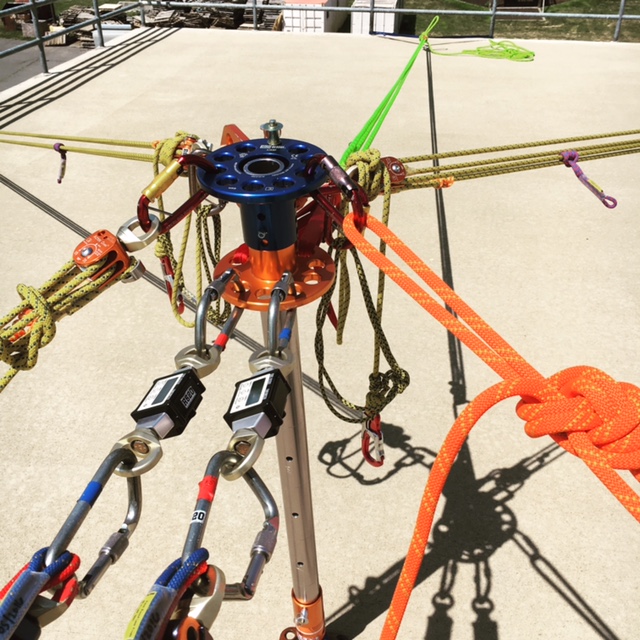
- Example: The adaptability of the V-anchor system, a cornerstone of Rigging Lab Academy content, reflects strategic thinking. Whether used for top belay, rappelling, or monopod setups, the system showcases how anticipating needs results in versatile solutions.
Actionable Insight: Empower strategic thinkers to lead pre-operation planning. Their ability to foresee challenges and generate contingency plans can enhance safety and efficiency.
3. Input: The Need to Know and Share Knowledge
Input-driven individuals thrive on acquiring and disseminating knowledge. In technical rescue, these are the team members who stay updated on the latest NFPA standards, new equipment like the Petzl Tibloc, and best practices for using progress capture devices. Their thirst for knowledge fuels the team’s expertise.
- Example: The blog “Understanding Friction in Mechanical Advantage Systems” dives deep into how progress capture devices like Prusiks or mechanical ascenders affect efficiency. This is the kind of detailed analysis input-driven rescuers relish and share.
Actionable Insight: Assign input-focused individuals to research and training roles. Their passion for learning ensures the team stays at the forefront of innovation and compliance.
4. Activation: Stories That Drive Action
Activators bring urgency and momentum to rope rescue operations. They transform training into actionable skills, ensuring that teams move quickly and effectively in high-stakes situations. Their drive often inspires others to act decisively.
- Example: Richard Delaney of Rope Lab demonstrates activation by diving into the finer details of maximizing efficiency in pulley systems. His insights, shared in Rigging Lab Academy’s Advanced Rigging Physics: Friction course, motivate teams to refine their mechanical advantage systems for real-world applications.
Actionable Insight: Use activators to lead drills and live rescue scenarios. Their energy ensures that training translates into rapid, confident execution in the field.
5. Maximizing: Achieving Peak Efficiency
Maximizers are the networkers and problem-solvers of the team. They find ways to optimize resources, ensuring that every tool, technique, and team member is used to their full potential. For example, in TTRS (Twin Tension Rope Systems), maximizers might refine the system to reduce friction and increase efficiency, ensuring smooth operations.
- Example: A maximizer’s mindset is like a 10:1 mechanical advantage system—once in motion, the results are transformative. They might advocate for using devices like the CMC MPD or integrating dual monopod systems for enhanced stability and efficiency.
Actionable Insight: Involve maximizers in post-operation reviews. Their ability to analyze and improve processes will elevate team performance over time.
Applying These Strengths to Rope Rescue Teams
Build a Solution-Oriented Culture
- Rope rescue and SAR teams thrive when individuals with diverse strengths collaborate. Like elements dissolved into a solution, each person retains their unique abilities while contributing to a cohesive and adaptable team.
Encourage Cross-Training
- Allow team members to learn from each other’s strengths. For example, strategic thinkers can teach input-driven individuals how to anticipate challenges, while activators can help maximizers focus their efforts on immediate goals.
Leverage Technology
- Use tools like Rigging Lab Academy’s online courses or blog resources to provide continuous education. Courses on advanced rigging physics or TTRS can deepen team expertise and strengthen collaboration.
Conclusion: The Future of Rope Rescue Is Strength-Based
By recognizing and harnessing individual strengths, rope rescue teams in the fire service and SAR can achieve unparalleled efficiency and effectiveness. Whether planning future operations, solving immediate challenges, or optimizing existing systems, these strengths ensure that every mission is approached with foresight, strategy, and skill.
Explore More:
Peace on your Days
Lance

Comments are closed.